

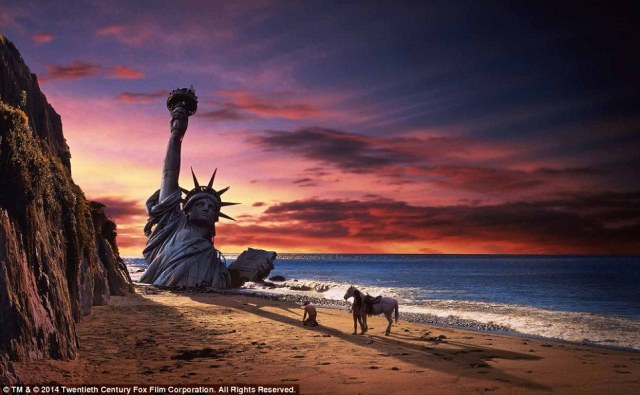

By way of contrast …. a story.
In the 1960s when a proposal was tabled to sell a Crown-owned asset, an island, the then New Zealand Prime Minister, Keith Holyoake asked, “But what will we tell our grandchildren?” The proposal was then taken off the table.
That is about as good a seven-word description of ‘sustainability’ as you will find. Not just in terms of a goal – create legacies for a future society – but also in terms of a process – think about whether an act is good before you do it – not for selfish expedience, but for a confident future; for our grandchildren.
It is more than being sustainable. To be sustainable is to be civilised, at least in the eyes of historian Kenneth Clark who thought a ‘sense of permanence’ was what separated opportunists like the Vikings from civilised folk. 

Well, ethical in almost all theories. There is Egoism – care about no one but yourself – extolled by neo-liberal economists, those corporate-funded fundamentalist faith-worshippers who have driven policy in New Zealand and internationally since Reagan and Thatcher.
Yes, yes, they’re still here. Never mind that ‘trickle-down’ was a hilarious con. It has been a gush upwards at the expense of the bottom 80 percent. Never mind crash after crash, market con after market con, various debt-fuelled Ponzi schemes, the ever-extending
creed of corporate inhumanity. That little boy keeps pointing out that the neo-liberal emperor is stark naked, as well as stark raving mad, but it’s just not working out like the fairy tale.
Our values have shifted since Holyoake’s time from the civilising values espoused by Clark, to the values of short-term expedience. The depression and war generation valued development for the common good, generally building legacies to create a more resilient world for their children. Many of their children then grabbed hold of egoism and short-
term thinking for their own ends, and mined those legacies. We get the rise of cynicism and the fall of confidence in who we 

The consequences of losing grasp of fundamental values – the perennial philosophies of good – are dire. Ariel Durant observed those patterns in history. So did Clark. In The Big Short, a film about the excesses and corruption that led to the 2008 Global Financial Crisis, Steve Carell’s character points out that for 15,000 years fraud and short-sighted thinking have never worked.
Civilisation has its critics. Many writers refer to the historical loss of connection with nature that has resulted from our shift into the city. Whether that loss is due to civilisation per se, or to the industrialisation and objectification of people and place – reducing them to mere ‘resources’ without moral consideration – is a moot point. Those writers against civilisation are more against 

Many think civilisation is necessarily pathological. But any solution that requires a return to the hunter-gatherer is ridiculous. A return to a value-based civilisation that neither objectifies people, nor denies community, nor sees land in some vile factory image, is a far more promising and realistic project. Agrarianism and the City perhaps.
Writers like John Armstrong and Clark take a more philosophical than historical approach to the virtues of civilisation. The real underpinnings of civilisation, argued Clark, were particular human values. Not ‘resources’ properly priced by the Lord Market, but the energy that comes from a belief in a culture. 


Civilisation is not founded on failed autocratic attempts at ‘efficiency’ that reduce humanity to wage bills and prescriptive job descriptions. It is built on the confidence, aspirations and inspirations that makes people visualise and then lay the first stone of a cathedral they’ll never see finished, or a tree they’ll never see at its flourishing best.
Critical values, said Clark, included both this social ‘energy’, and ‘confidence’ in themselves as a people. But the most important value of all was what he called ‘a sense of permanence’. That means thinking about all of our grandchildren as Holyoake did.
Conversely, the biggest threat to civilisation is a loss of belief and confidence, resulting in an exhaustion and fear – at its worse when we

Rather than building legacies for our community’s children, we sell those legacies our grandparents built for us. The greater focus on self overrides any sense of belonging to something more permanent than our own short-term thrill of the gusher, or the hope of the pokie win, both fuelled by greed and fear, even despair. We lose our confidence and energy, and then we inevitably lose what we most fear losing, living the good life. Examine history and all the lessons of expedience are there: the Viking raiders; the rush-to-destruction mentality toward natural ‘resources’; those who attempt domination without self-restraint. All resulting in civil, environmental and economic collapse.


The perennial values of civilisation has no room for a dominant culture of neoliberal opportunism. We need a shift in values from a focus on the Viking raids of expedient fortune. We need to do once again what is civilised, sustainable and ethical. We need a strategy that builds value rather than destroys it. We need to ask Holyoake’s question of policies, “But what will we tell our grandchildren?” again, and again, and again.
If we cannot tell them honestly that we are building legacies, then we should pause, and think again.
Chris Perley
Thoughtscapes
Chris Perley is an affiliated researcher at Otago University’s Centre for Sustainability with a governance, research, management and policy background in provincial economies, rural sociology and land use strategy.
Donation to Thoughtscapes Blog
Donations are welcomed with my sincere thanks. You can simply click the multiples of $5 donations, then click on the Paypal or any of the Credit or Debit Card symbols. It also allows me to get rid of the pesky advertisements! And it’s a nice way to say thank you. So thank you 🙂
$5.00