


Carol Black has written a beautiful and insightful essay on connection between children and the outdoors, knowing, and what education ought to be. It resonates with me. I think looking back that I was blessed with land and having my brother Andrew with whom to escape into the land and explore. Meals brought us home. We were blessed with our own New Zealand version of this …..
“A free child outdoors will learn the flat stones the crayfish hide under, the still shady pools where the big trout rest, the rocky slopes where the wild berries grow. They will learn the patterns in the waves, which tree branches will bear their weight, which twigs will catch fire, which plants have thorns.”


George Monbiot makes the same point in his book Feral: Searching for Enchantment on the Frontiers of Rewilding. To know the world, you have to live in it; embrace it with all our senses; see it, sense it and feel it with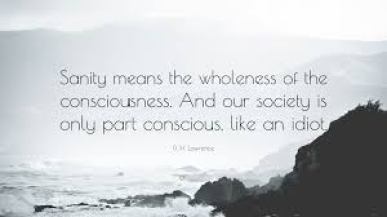

Ball’s Clearing – a lowland podocarp hardwood forest remnant near the Kaweka Ranges of inland Hawke’s Bay – was the start of a journey for me. That place of enchantment and its uplifting overload of sense experience, transcendence, awe and joy. Try and measure that.
I remember ‘getting’ the years of learning the foundations of forest ecology lying on my 

Keystones shrieked their ephemeral presence – in this particular place, in this particular time, within these defining yet not easily definable rhythms and dynamics of life. The wider statistics of the forest don’t measure life; they don’t indicate these particular place-based connections, and the place didn’t exist in the aggregate models because we dealt beyond single plots in broader scales of vegetation types, means and standard errors – the world of STEME (science, technology, engineering, mathematics, economics). We lose the fine resolution of things in our programmes of convenient standardisation, especially if our focus is ‘resource’ rather than ‘ecology’. And we lose something more, a wise persepctive.
The whole Modern programme (for a discussion on Modernity as a ‘way of seeing’ read Ways of Seeing I: Paradigms of Progress – the Rise of the Machine) – with all its measures and murdering to dissect, its certain, controllable 

There is madness here, but we don’t
call it so. Its perspective is mad in the sense that the world is defined as a certain mechanical path, walked upon by looking through a telescope, within a realm of mists surrounded on all sides by multiple treasures and mortal traps, beyond the ken or concern of myopic men.
Mr Magoo meets Jurassic Park.
Its purpose is mad in believing not only in the framework of the machine, a thing outside ourselves, but in an unquestioned destiny of eating the home that gives us breath. It is unknowing, unwise, and extends to the classroom, Black’s focus in her article.
“The purpose of school was to “elevate” children out of their [“totally depraved”] natural state and train them to take their place in man’s grand project of “subordinating the material world to his use”.”
Black continues …
“These original purposes, as John Taylor Gatto has pointed out, were so effectively built into the structure of modern schooling –– with its underlying systems of confinement, control, standardization, measurement, and enforcement –– that today they are accomplished even without our conscious knowledge or assent.
They are not, of course, accomplished in the ways that the social engineers had in mind. These visionary men assumed human nature to be infinitely malleable; children were to be molded and fashioned like any other industrial raw material into a predetermined finished product, and industrial utopia would be the result. But they did not count on the power of children’s instinct for dissent. The wild mind strives to protect itself the way a horse under saddle does, with a thousand strategies of resistance, withdrawal, inattention, forgetting; the children won’t do what the authorities say they should do, they won’t learn what the experts say they must learn, and for every diligent STEM-trained worker-bee we create there are ten bored, resistant, apathetic young people who are alienated from both nature and their own chained hearts.”

The world as machine. A child as a machine with a chained heart. The proto-Picasso manufactured into an accountant.
We know there is a problem. We know we need to fix it. And we respond – in the best Modern mechanical way – by using the same reductionist, analytical and ‘objective’ – meaning disconnected – thinking in an attempt at solution …
“There is some dawning awareness these days of the insanity of raising children almost entirely indoors, but as usual our society’s response to its own insanity is to create artificial programs designed to solve our artificial problems in the most artificial way possible.”
We are at risk of creating the vicious circle of myopia breeding myopia breeding myopia, where the seer who points out the nakedness of the emperor is the one considered the mad witch.


Modernity is bad enough, but in our Neoliberal Age it is even worse – Modernity on steroids – we frame land and people as measured ‘resources’ with a dollar market price attached, to be used, disassembled, dominated, controlled, instructed, and exploited to achieve another madness, measured – unnaturally – in someone else’s dollars.
Perhaps the worst insanity of all is to assume that you can know the world from a classroom desk. Aristotle wrote about this in Nicomachean Ethics in his profound discussion of the four intellectual virtues.
- Knowledge that can be taught in a classroom is the lowest form (Episteme).
- Knowledge learned by doing – being in the land, with other people, acting – higher (Techne).
- The rudder of a considered life and moral virtue – the Core.
- The practical wisdom and judgment (Phronesis) – the decision of what to do regarding this issue, in this place, in this time, with these unfolding consequences – the Queen.
We reduce both knowledge and wisdom by assuming Episteme will define our future within our mechanical world. And we risk falling into an alligator pit we cannot even imagine.
Aristotle’s wisdom is being rediscovered by brilliant thinkers like Bent Flyvjberg and Alistair MacIntyre; who summed up the need for connection to people and place in order to be wise ….
“that it is only by participation in a rational practice-based community that one becomes rational.”[1]
And yet our approach to education seems to be the opposite; that it is only by non-participation in the real world and all its complexity that one can be rational.
Strangely, that is exactly the point of view that 

We were ‘captured’ by the sector by knowing. We were ‘subjective’. They, in their non-participation in life itself, liked to consider themselves ‘objective’. Their faith in the technocracy of Episteme and Techne as the replacement of ken and wisdom was complete.
Is this, perhaps, the nadir of the Modern mechanical age; where thought and perspective is divorced from the real world we experience as unchained hearts searching for eels along the banks? We are breeding GM dreams, aquifer frackers and water thieves; the unleashing of the Hyenas of Corporate commerce, reducing our complex world to expendable things, to means for others’ ends.
We have cast aside the moral rudder; discarded practical wisdom in favour of an input:output equilibrium model, 

And this is madness too; Mr Magoo is breeding the naked emperors amongst the alligators, both of whom he cannot see.
And perhaps we have lost the ability to teach a different way of seeing. Carol Black thinks so.
“But the truth is we don’t know how to teach our children about nature because we ourselves were raised in the cinderblock world. We are, in the parlance of wildlife rehabilitators, unreleasable. I used to do wildlife rescue and rehabilitation, and the one thing we all knew was that a young animal kept too long in a cage would not be able to survive in the wild. Often, when you open the door to the cage, it will be afraid to go out; if it does go out, it won’t know what to do. The world has become unfamiliar, an alien place. This is what we have done to our children.
This is what was done to us.”
I hope I am right in thinking that in New Zealand we have yet to reach that point of no return. But we do need to treasure our connections to doing things within family, community and place, in order to be learn to be rational and wise.
Teach your children well.


Chris Perley
Thoughtscapes
Chris Perley is an affiliated researcher at Otago University’s Centre for Sustainability with a governance, research, management and policy background in provincial economies, rural sociology and land use strategy.
[1] Quoted in Hauerwas, S., 2007 The Virtues Of Alasdair Macintyre. First Things. https://www.firstthings.com/article/2007/10/004-the-virtues-of-alasdair-macintyre
Donation to Thoughtscapes Blog
Donations are welcomed with my sincere thanks. You can simply click the multiples of $5 donations, then click on the Paypal or any of the Credit or Debit Card symbols. It also allows me to get rid of the pesky advertisements! And it’s a nice way to say thank you. So thank you 🙂
$5.00