Reframing our Water as a Commons

I’m reblogging this because the current (Spring) sprinkler ban by Hastings District Council has once again raised the whole issue of why – oh for heaven’s sake why – we give our water – *our* water – away to an outside water bottling plant, rationalised with all the empty rhetoric and clichés like “this is simply the market allocating resources,” or “investment, jobs and GDP.” Such ordinary thinking. Such ignorance of our wider world.

Some are now calling for ignoring the sprinkler ban in order to highlight our discontent. It has certainly raised the issue and kept it in the public eye – and hopefully it will make the councillors responsible realise that they need to demonstrate thinking beyond merely the wording of the regulations and ‘resource management plans’. We are not happy with your financial deal maker thinking on this issue Mr National Party politician, though for most it will be enough to make a vocal stand, and keep our sprinklers off.

Posted in Thought Pieces | Leave a comment

A Forest Flows

Have to repost. The whole idea of a mechanical world is destroying us, and it is a wrong view. It doesn’t have to be this way. It cannot continue to be this way. There are ways of seeing that are so much more beautiful and meaningful than being integrated and subsumed into the Borg Collective.

A Forest Flows

Posted in Thought Pieces | Leave a comment

Can Neoliberalism and Social Democracy be Compatible?

Where does Social Democracy finish and Neoliberalism start?  Can both co-exist at the margin between the two?  Some argue that they are on a continuum.   I’m not at all convinced.  That seems a Third Way argument, heartless mechanical Neoliberalism with some Dorian Grey inspired make-up to hide the hidden beast beneath.

There are activities that both Labour and National governments have done in New Zealand since 1984 that are clearly in the social democrat camp – social liberalisations and inclusions relating to identity, the rights of children, gender, victimless pursuits, etc.  Generally less so for the Nats of course, especially since they’ve decided that large Mega-corporates are their very special friends – both as funders and key clients at the expense of the planet and the future of our people.

The special interest of selfishness.jpgBut I don’t think we will not see serious reframings such as the recognition of rights of nature and communities, or the duties thereto by more powerful interests, or the control of corporate influence in politics, while the neoliberal/corporate nexus remains at the policy levers.  They have far too much at stake in pleading in the interests of selfishness and greed.

There is no question that particular liberal, loosely ‘social democracy’ projects can be promulgated under a Neoliberal ‘Third Way’ framework, but the threats being created by the Neoliberal agenda to our foundations of social and planetary function far outweighs such window dressing.

Where I think there is a clear distinction between Neoliberalism and Social Democracy is in the dominant assumptions underpinning policy.  And I think they are incompatible.  They are on very different continua – one dominated by the metaphor of a machine where people have their meaning reduced to a dollar, there to serve the economy as measured by GDP; the other by the metaphor of interconnectedness and constantly shifting system where individuals, communities and place are all moral patients and the economy is there to serve them.  To be a social democrat requires an appreciation of the reality of society, and of the deeper Economy serves the people.jpgconnections and interdependencies of people to other people, and to the places on this planet whole to which they belong and on which they depend.

Neoliberalism has no appreciation of those connections, even to the point of framing everything as ‘resources’ or cogs within a controllable and predictable factory model of life, rather than a functioning and inherently complex and adaptive integrated system where resilience to shocks and adaptability are fundamental capacities.  Their respective metaphysics are more than incompatible – they are also incommensurable to the point where they cannot talk with each other in the same language.

State Communism came from the same mechanical and essentially autocratic stable as Neoliberalism; with the same destructive and dehumanising factory standards.  Their lack of resilience was manifest.  Our current dominant model is no less so.  An adaptive empowered and resilient Social Democracy, and any workable future Complex adaptive system.jpgpolitical movement, cannot coexist with such meaningless mechanical ‘dys’-connected views of people and place.

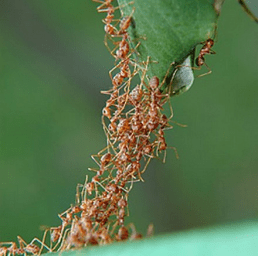
How did we get here?  We shifted in 1984 from a far deeper understanding of what makes up a history as a colony, a nation, a community, a person and an economy to one dominated by assumptions that we are all part of a machine of selfish individuals, utility maximising, equally powerless, competitive, a world defined as ‘resources’ allocated best by an ‘unfettered’ market; completely devoid of any understanding of humanity.  All the breadth and depth of life was expunged by a religious creed masquerading as a science because it had complex maths to cover its incredible (and I do mean *not* credible) assumptions.   And so we empower the power-hungry, the selfish, the colonisers and the antcolonycoopextractors; and we disempower the nation, the community, cooperation, and the creative potential of both individuals and our economy.

Of course, because so many scientists and humanities minds – which the public sector used to have in spades – refuted this incredibly simplistic view of the world, they had to be expunged, silenced.  And so amidst their claims of freedom and liberalisation, Neoliberalism shut down thought, and difference, and art, in favour of their standardised construct of the world.  Freedom is lost while they drown out the voices of freedom using large megaphones screaming “Freedom!”  And they unleashed the Hyenas of Commerce upon the world.neoliberalism-and-freedom

We became inhuman and inhumane, and designed all sorts of public organisations in the image of a certain, controllable, quantitative machine – standardisation, jobs defined by outputs, schools as factories, corporate-style hierarchies and autocracies, people as cogs, loss of thinking, dialogue, compassion and cooperation, the assumption that the worst ‘rational’ and short-term self interest would magically create a better world.

David Suzuki is quite right when he gives the example of planetary destruction of slow cycling natural systems as economically rational – and therefore nothing short of rationalised insanity; brain damage.  It is rational within Neoliberal constructs to liquidate and reinvest in more liquidation, to discount virtues and duties as well as the future until you have a large McMansion on a hill and all else is gone.  And any claims that constructing ‘externalities’ will prevent that i-only-exist-when-you-need-somethinghappening are rubbish.

You cannot know what you need in the future if you are looking at your feet through short-sighted lens.  You cannot price those consequences because you cannot measure the impact over distant time and space, and you cannot even conceive of the many meaningful things – the loss of a butterfly in flight.  You cannot measure because the framing as a set of resources is false: forests, fisheries, water, soils – not to mention our climate – are far more than mere static sets of resources; they function, they interact, they flow, they dance; they are far more verbs than nouns; murmurations, not bricks.

The neoliberal creed of Treasury is blind to what is our home (eco), and so have absolutely no idea how to manage it (eco-nomics).  They certainly don’t understand the importance of ethos, compassion, spirit, motivation, changing behaviour in the public, small enterprise vs. large, public vs. private complexities, or the environment.

maslow-classic-economic-theory-based-as-it-is-on-an-inadequate-theory-of-human-motivation-could-be-abraham-maslow-121068That is the greatest distinction I would make between Social Democrats and Neoliberals.  Neoliberals have no sophisticated view of either people or society (how it actually works), or the environment (how it actually works).  They have no ecology.  They have no sociology.  They have no psychology.  They have no history.  They have no philosophy.  They have modelling and mathematics … and false assumptions.

They presume a society and a planet are a collection of disconnected reducible quantitative and measurable things, and therefore you can make it work by emphasising the presumed mechanical nature of things. And so a multitude of negative consequences ensues because – patently – the world (people and planet) are *not* a certain controllable, reducible machine – they are embedded socio-ecological complex adaptive systems within which there are lives that have meaning.

With that view the outcome follows – a bigger ‘economy’ measured in dollars as a collective rather than with any reference to the meaning and life of one soul.  The presumption is that the cog will rise with the collective machine.  I cannot imagine a more dystopian view of life.corporate-capitalism-is-not-democracy

Until we sort those roots, and dig them out, we’ll be dominated in our policy making by Neoliberal madness.  It doesn’t matter if we liberalise the expression of particular identity differences if life is reduced to a meaningless struggle up the hierarchy.  That doesn’t mean they care.  It is far more about maintaining control than creating a future where life is meaningful and resilience to the uncertainties we face.

I don’t think we will have social justice or any form of social democracy until Neoliberalism is expunged from Treasury, and the public sector restored to something where the mad ideas of the corporate/neoliberal nexus are exposed to the glare of the real world.  They are that incompatible.  They are positioned that far distant on incommensurable continua.

There can never be a Third Way.  We can have a resilient meaningful Social Democracy, or  we can continue to head down the path to a dystopian Corporatocracy.

And if it isn’t climate change that gets us, it will be something else.

Chris

Posted in Thought Pieces | Leave a comment

Principles of Truth, Open Dialogue and Compassion …. and Trump

when-science-becomes-politicisedThe Guardian’s Oliver Milman has written that Trump is to scrap Nasa climate research in crackdown on ‘politicized science’.  It is an ironic title.  His politicised science framed as cracking down on politicised science.  Orwellian.  Corporate science is truth.  My science is truth.  Tell me what I want to hear.

This seems so incredibly crass and ignorant that it needs confirmation.  Is this rumour, speculation, or for real?  Trump ‘choosing’ his science is a complete shift from the Elizabethan public service code – “I want your free and frank advice without fear or favour.”

If it is true, it represents the loss of a fundamental social institution (kaupapa is a far better word – the principles, connections and processes of how we engage and act etc.).  In this case, the principle that we make the best decisions by being informed instead of surrounding ourselves with those who are far more interested in currying favour or presenting the world as it seems through their eyes.  The quiet road to Hitler’s bunker anyone?   A return to the Court of Henry VIII and massive social upheaval and debt?   (Lucky they had the Channel.)

 
Jane Jacob’s Dark Age Ahead warns of this loss of fundamentals.  I think we have lost so many since the rise of Neoliberalism and the mega-corporates.  The world has become a good place for con artists.  Our judiciary, academia, independent science (i.e. untainted by money and power), and public intellectuals are the last bastions.  The public service is long gone.  Many departments and councils have become toxic autocracies of nightmare action.  And there are those that are after those bastions.  They represent inconvenient truths if your focus is some variant of totalitarian command and control rather than life and lives with action-without-visionmeaning into the future beyond.
 
Is Trump one of them?  Are the corporates so short sighted that they do not see the potential disasters they are unfurling that will eventually engulf themselves?  Actually, the second is easy.  They are the least wise.  
 

Jacobs was interested in why otherwise successful civilisations have failed because of – in her analysis – the breakdown in fundamental institutions.  From there, the unravelling begins – interconnected, deeply social such that any attempt to measure it within quantitative ‘resource’ based models completely misses the point.  You lose your kaupapa – your connections and treatment of truth and others – and you can very easily lose the meaning of life.  

Our blind neoliberals again, with their empty eyes shining bright with deluded faith, and trancelike enigmatic smiles reflecting nothing except the screen.
 
Jacobs sums up the danger thus: “Losers are confronted with such radical jolts in circumstances that their institutions cannot adapt adequately, become irrelevant, and are dropped” (p. 20).  The jolt – or a series of incremental dismantlings – leads at some point to a cascade effect – cascade-effect-chronic-fatiwhich to understand you need a little systems background – the complex adaptive systems of socio-ecological things.  The straw that breaks the camels back, the threshold over the edge of which the unravelling begins, the ball that flips out of the bowl to some new attractor point and system state that absolutely no one can predict with any certainty.  Likely the closest one to predict that new state (if they survive) will have been considered slightly batty.
 
Jacobs writes specifically about the vulnerability of democracies when certain types of people get into power ….
 
“powerful persons and groups that find it in their interest to prevent adaptive corrections have many ways of thwarting self-organising stabilisers — through deliberately contrived subsidies and monopolies, for example.” (p. 21)
 
And by suppressing these “self-organising stabilisers” in our society, we risk it all.  I really don’t think the technocrats get this.  They don’t get the critical importance of key social institutions in the functioning of our people and our land – good science without the never-be-afraid-to-raise-your-voicetaint of big money and narrow goals; open dialogue; channeling a corporate money, money, money message of meritocracy and other myths; reforming the public sector into a corporate autocratic functionary state for the reward of group-think and train-scheduling technocracy, where conceptual thinking is banned.

We have, since  the 1980s and the “Revolt of the Elite”, changed our institutions away from truth and open dialogue, and compassion for others and the earth.  And it is those institutions, those principles, that kaupapa of truth and open dialogue and compassion, that are fundamental to our future success or failure.  

None of them will you find in an economist’s model.  None of them will be relevant within the technocratic quantitatively obsessed minds who cannot see the world through wider senses.  We presume such people are wise only because we have been brainwashed to see wealth and an expensive suit as symbols of wisdom and merit.  Look to the other side.

But the onus is really on us, not them.  To never stop may-your-choices-reflect-your-hopesspeaking on the side of truth and compassion.  To think for ourselves and never be afraid of seeing things differently.  To make choices based on our hopes, never our fears.

And that has relevance for whom we choose to govern.  Do they care?  Do they dialogue?   Do they tell the truth or hide behind glibness and spin?   Do they love the machinations of deals and “gotcha!” moments.  Do they reflect our hopes?   Do they, in any way, work on our fears?

Search into their hearts.  If they do not have hearts, then look for those who do.   They are the future we deserve.

Chris Perley

Thoughtscapes

caring-communities-hands-up

Posted in Thought Pieces | 1 Comment

The Trumps of History

In the 20s, the Weimar republic – post WW I Germany – had hyperinflation; wheelbarrows of money, widespread penury.  The Allies had imposed vengeful and immoral reparations.  Most people suffered.  Austerity reigned.

There are system effects; consequences. Suffering creates resentment.  Resentment wants a target.  It wants to hear that it was someone else’s fault.   Who did this to us?

The IMF was here.jpg

That target might become the Establishment, and most of the Establishment have a sense that that is a possibility.  They remember when Versailles lost its glow and the people turned. So they work to become an ally of the resentful, lest they cast the veil from their eyes and look to the Dukes – of commerce or Orleans or creed. The self-appointed Dukes cause much of the misery, and wrap it in myth. “We are worthy.  We represent the values of the folk. Look over there, there is your villain.”

But there is still resentment.  A sense of a deeply unfair world.  A lack of hope that things will ever get better.  The Establishment must protect themselves by refocusing that resentment on to others, to those outside of society – outside the sense of ‘nation’ of those who suffer.

Trump.jpg

You can manufacture that idea of Nationhood, of ‘folk’.  You can embellish the myths of foundation and destiny.  A Great Nation that can be great again.  Having an enemy is always good.  Wave lots of flags.  Put on parades.  If you can, go to war; Orwell’s constant state of war in his 1984.  Using such Nationalism to hold the people in check is always popular.  Argentina goes to war over the Falklands when the Junta gets a bit wobbly.  Invade Iraq – Operation Iraqi Freedom (nothing to do with internal politics or oil of course).  Turn it into really bad movies.

Another tactic is scapegoating *within* society.  Divide.  Set the divisions apart from the Nation and Folk.  Make it the fault of some ‘other’ part of society that you like to think is not part of *your* society – those outside yourselves – those with whom you do not identify.  Separate them from the idea of ‘nation’.  Depersonalise.  Reduce them to ‘resources’ or ‘costs’.  Those that are poor or sick, wrapped up in the myths that they deserve it because they are inferior.  Or they ‘choose’ their lot. It wasn’t us. It wasn’t me. It was them.

Differentiate and label: those with different ethnicity or over the political border stones someone defined in our minds. Those in the towns and cities, or those in the country.  Those over the river.  Those who dare to be different and shine a spotlight on the truth through art.  Those that worship differently.

And one of the best tactics as the Ring to Rule them All is developing a cult of leadership; a ‘Leader’ synonymous with ‘going forward’ and other vile clichés – with making your lives better.  Surround the leader, Das Fuhrer, in a mystique of destiny and belonging and hope – because people call out for hope and belonging.  Because we are social before we are rational, and reaction against a symptom is so much more satisfying and adrenaline pumping than actually considering, let along identifying and addressing, what is the root cause.  Thinking is hard, and one of the first things the Establishment attempts to control.

Das Folk, Scapegoat & Blame, and Build Das Fuhrer

Build a cult of Nation, Divide, and develop the mystique of Das Leader.  And so you get Stalin, Mussolini, Tojo and people named Adolph, and Donald, and our very own John.

OzymandiasThere is a very great problem with this recurring theme of the subjugation and ‘othering’ of people and place.  At some point, someone gets carried away with their own delusions of grandeur and decides to invade a metaphorical Poland. And then the unraveling begins after a brief spurt of triumph, and you end up in a bunker or strung up from a lamppost in Milan.

It is a far better strategy in the long run to simply care about people, now and into the future.  And to shine a light on the delusions of entitlement the Establishment can foment in their own minds.

Chris Perley

Thoughtscapes

ozymandias1

Donation to Thoughtscapes Blog

Donations are welcomed with my sincere thanks. You can simply click the multiples of $5 donations, then click on the Paypal or any of the Credit or Debit Card symbols. It also allows me to get rid of the pesky advertisements! And it’s a nice way to say thank you. So thank you 🙂

$5.00

Posted in Thought Pieces | 7 Comments

The Art of Space – Realising the Potential of our Lands and CityScapes

I am struck by the similarities we face when we look at land and cityscapes.  Patterns, connections, things that do many things at once, that mean this as well as that.  You have to hold a few ideas simultaneously in your head to get the best out of land.  To see it in different lights.  To see potential for more than one thing.  To see meanings in multiples.  To see the shapes and patterns and connections and shifting relationships.  Contingent.  Conditional.

Multifunctional Landscape.jpg

This is how water shifts.  This is where stock move; where they sit at night, how they graze along the ridges and spurs, and then the bottomlands, leaving the south faces until last.  This is how the pasture composition changes, and where the woody plants appear as the forest tries to come back.  This is where it is mostly wet, or mostly dry.  This is where the trees do well and the grass does poorly, or where the grass does well and the animals keep returning.  Pattern laid on pattern, connection on connection; soil, moisture, climate, a type of animal, grazing, pasture composition, woody vegetation.  Functioning dominates.  Flow.  This is not a flat factory of a mere few variables.

Bring them all together and you get the rich warp and weft of potential.  Do we – honestly, *do* we? – make a habit of seeing this potential?  Or are we too wrapped up in the myopia and analysis of things through a narrow lens many see as superior – as more ‘objective’, as more ‘factual’?  Objectifying people and place; *dys*connecting, *dys*functioning; narrowing meaning to some branch of technology and industry.  Make it all the same.  Look through one lens of grass production, or traffic volume, or drainage rates.

The world cannot be known by that approach, nor the potential realised.  This place is where people could sit all day and listen to the hum of insects and the morning call of blackbirds.  This is a place where in order to understand it, you have to be in it; to belong, to connect.  This is where the space is cold and windy in the easterly, or hot beyond tolerance in the Northwest.  This is a place where you could sit and watch the world go by, stretch out on the grass with a coffee and a book, a place to play music in the shade.  This is where you can find your muse, and a poem.  This place, created this way, could make this city come alive, or this farm sing far far more than a single note.

The artist notices shapes and patterns.png

I am struck by why it is we give such importance to the technocratic view, the quantitative view, when there are so many questions and ideas the analytical mind cannot begin to imagine.  Can we please bring the artists back into our lives before we devolve into the Borg Collective?

We need the artists to see, we need those who can keep many opposing views in their mind at once; this is a stream, and an ecosystem, and a playground, and a place to learn, and a swimming hole, and a beautiful thing if we add this here and hang a rope from that tree there – and, yes, it is also (but never only) a drain.  What would the technocrat see?

Street Lamp copy 2.jpeg

A lamppost in Hastings, from a different perspective – Photo Sarah Cates

We need the artist to see the vision of future possibilities, new solutions to old problems, to raise questions that the administrator could never imagine.  Because without asking the right questions, the answers are meaningless.

We need those who can pause, and find a thing, and shift their gaze to another position because they know, somehow, that this position will reveal something new, something beautiful.

If we want to realise the potential in our forests and farms and our cityscapes we need the minds of artists to see the vision, see the potential, and ask the questions.  Technocrats have a role in realising that potential – but we ought not have the person who sees only a drain, or a milk factory, or a traffic flow, or an expenditure account, ever determine our direction in life.

They will not realise our potential.

Chris Perley

Thoughtscapes

Biblio:

Bundy, Peter P. 1999 Finding the Forest.  Excerpt

Posted in Land Use, Thought Pieces | 2 Comments

Is the Banality of Evil Back Again?

Reading about Hannah Arendt, who wrote about the Banality of Evil and the Eichmann trial. He was everybody’s functionary. Think the postal clerk with no moral concern for the purpose of his office – just act as part of the ‘machinery of pursuing’.  OK, I’m obsessed with her findings; that evil can flourish through non-thought.

eichmann_in_jerusalem_book_coverBecause I saw it happen in my years working for the public service – we went from an ethos of public service and a clear purpose outcome-focus (though we never used the word ‘outcome’) with engagement expected within the professionals (you were expected to think, and we had some incredible characters who could express!)

….. to a machine of transactional relationships – instruct & obey – job descriptions of tasks – assumptions that this sort of autocratic hierarchy was ever going to be effective – the promotion of the B graders and C graders. I saw the least cooperative and the least motivated by any concept of a better world promoted.

And then I read what Eichmann said when he was interviewed in Argentina, ….

“Where would we end up if everyone would have his own thoughts?”¹

Riot police.jpgNaturally, I laughed. Such a small mind. Such a dangerous mind. Such an autocratic mind. A pure functionary. Scheduling trains without thought of the inhumanity of what he did … in the interests of obedience and a certain, mechanical, hierarchical world. Who would not reject this view?  It is not what a life should ever be.

It. Should. Never. Be.

And then I recalled an ex-colleague manager reporting to a friend that he was told by his CEO ….. in 2016! – our current oh-so-much-more-enlightened age than the age of state totalitarianism pre and post WW II …. this …

“You are not paid to have an opinion.”

And I thought, how similar is that statement to Eichmann’s.

free-society

Read the book!  Explore the idea!  Talk about it!

What a similar mind to Eichmann must he have to have said such a thing?

This banality of evil could happen again.  IS happening again.  It is happening in our public departments and in many mega-corporations.

hugo-boss-uniformInhumanity dressed up as “just doing my job.”

It just isn’t dressed in Hugo Boss designer SS uniforms with those lovely boots.

Chris Perley

1.  From Willem Sassen’s Interview with Eichmann in Argentina as quoted in the docudrama Eichmanns Ende.

Posted in Thought Pieces | 1 Comment

Have some Bliss

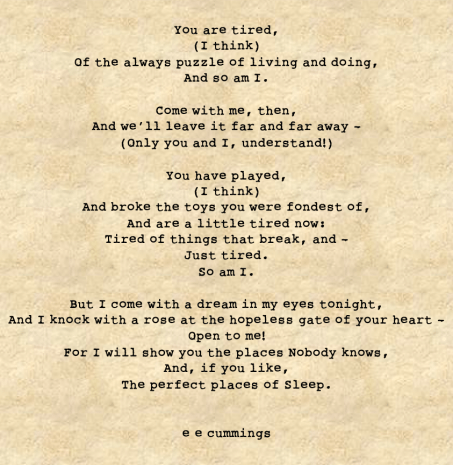
I remember studying ee cummings’ poems in high school.  He always spoke to me more You are Tired ee cummings.pngthan Shakespeare and the great British romantics.

Partly it was the interesting fact he went all lower case with his name. Rebel!

But he also left these beautiful autumn leaves floating quietly to the earth, shimmering in the wind and light, compelling you to watch and wonder, and feel a little quiet bliss.

Have some bliss.

Chris Perley

Posted in Thought Pieces | Leave a comment

Coping with Uncertainty – What does it Mean?

Encapsulating thoughts for the day.  I struggle to get across what it means if you accept you cannot determine your future.  What it means to build resilience.  How does this make life different?  How does it change our focus in life?  What do we seek to build as means to an end if you can never be certain of those ends?

The inherent uncertainty and mcmansionuncontrollability doesn’t mean we shouldn’t have an end, an outcome we consider good. Though I would say that any outcomes ought to be well
considered.  Having a goal of a tasteless McMansion or to be as rich as Croesus is about as shallow as saying we want a red bicycle. To what end?  So we can look good? What, are we suffering from status anxiety?  So the house is merely a means – and we have no greater sense of being?

Dig deep inside ourselves.  What do we want in life?  What purpose?  What is that ‘good life’?  What do we want to feel in those last days?

And then ask how to best get there, knowing that nothing is certain. We can never know where and what our child will be in 20 years time. We cannot know. There is no model that will tell us.  I’m talking about the absence of mathematical predictability within complex, interconnected and continually adapting space.  Also known as ‘life’.

Life in the land, the economy, in our communities and the places with which we identify is a lot more like raising a child than building a machine with mechanical certainty.

Faced with the uncertainty, some choose to I'm in charge.jpgcontrol, to command, to establish hierarchies and order, to have only room in life for one thing and to be ‘efficient’ in that, to live within the delusion that they can eliminate surprises.  Within their imagination, they build a brittle castle around themselves, convinced of its iron strength.  Deluded by the paper bulwark they build against the tidal shift.

Some desire such mechanical certainty as their goal.  This is their ‘good life’.  This is their delusion.

Let them have their faith.  But not at the expense of me and mine, of the people and the place I care about.  Let them *not* have the power to build their dystopia on the bones of others.  Theirs is no good life.  It reduces others – people and place – to mere means and objects, ‘resources’ and cogs, parts for the mills, or grist for the grinding, all to appease a self-appointed and immoral king.  We live within this delusion today.  Know malevolent power.  Call it for what it is.

life-is-unpredictableThere is another way.  We provide best for our children by providing the *capacities* and the abilities that are the prerequisite for a good life of their free choosing.  Resilience and flexibility.  The capacity to live life to the fullest; to bring forth every Picasso and never command them into being an accountant.  The ability to see and be wise, to relate and feel.

To laugh, to love, to share, to have the unpredictable-beautyenthusiasm for open dialogue without the arrogance that takes offence.  To rejoice in the beauty, to accept when it changes you because there was a moment that was so profound that you can only stop and drop into the bliss.  To embrace, to sit and contemplate, to be broad or focused whenever the need arises.

To be independence of thought, unconstrained by convention, to treat all clichés as the empty vessels they are.  To treat triumph and disaster the same.  To not be over-reliant on any one thing that may vanish into dust tomorrow.  To cooperate because no one is an island, yet have the ability to stand with autonomy as a moral actor.  To have self respect alongside the respect for others.  To know what belonging is.  To take responsibility, to have integrity and not expedience.  To strive when the needs arise; and to have the moral strength to stand together or alone and say “no” when it is time.

Manaakitanga - mycommunitiesThis is indigenous thinking.  Belonging and resilience go together.  Those that try to set us apart, or reduce us to parts within a transactional machine, destroy them both.  Being Native to a People and Place is incompatible with ideas of trade-off, exploitation and attempts at engineered certainty, because you are arguing for the insanity of eating yourself.   We can reject the machine as life’s metaphor and replace it with belonging.

Those same principles we build in our children – of building capacities and abilities – ought to be the focus of what we build in our land, communities and economies.

Because there will be surprises, and we need people, communities, land, and economies that can foresee, cope and adapt. Societies with vision, and people who belong.

Our choice.  Build resilience and the capacity to realise potential and adapt, or continue with a mechanical rigidity that suppresses the soul and puts Beethoven on the assembly line?

Chris Perley

Thoughtscapes

wooded-landscapes

Posted in Thought Pieces | 2 Comments

An Economic Doctrine cannot start from the Assumption that we do not Belong

no-such-thing-as-society.jpeg
One of the assumptions I found so bizarre in Neoliberal ‘thought’ was the idea of asociality – that people are individuals outside of any society, making selfish, ‘rational’ ‘utility maximising’ decisions as if we do not belong. It is the very opposite of the indigenous view of whakapapa – our belonging to land, people and community.
From this cultish Neoliberal perspective, when someone makes what are patently unethical decisions – perhaps abusing power, or not considering others or our land, or the noam-chomsky-the loss of society.pngfuture of our culture – then that is somehow OK.  “The market will provide,” and other cliches (whenever you read a cliche, take it as a red flag – a thoughtless functionary mind).

And then we start hearing the rhetoric that greed is good, and that those with power have demonstrated ‘merit’, and the narrowness of perspective creeps into our way of life. Our society erodes.  George Monbiot typically writes well about that phenomenon.  An assumption of disconnection leads to disconnection, which leads to negative system effects beyond the ken of narrow men.

Because we think society is not there, it does not matter.  Because we frame the world as a set of infinite resources with an ‘all-knowing’ market, there is no ‘belonging’ to consider – only allocation at the appropriate price.  Yes, the market theoretically knows all about the the certain and controllable collapse that’s coming, and so naturally it won’t occur – no need to worry.   Welcome to the Machine.

When people challenge – for example a sociologist demonstrating that people are social animals, or some historian, anthropologist, land use profession pointing out the nature of belonging, the need to conserve functions, or the constant history of environmental, social and economic collapse (I mean … Hello!!) – the arrogance worthy of a weird cult dismisses it.

whos-afraid-of-academc-freedom

Authorities fear thought, and claim they speak for the common good.  And then they collapse under the weight of their own hubris and arrogance.

Worse, they set up structures as happened in our public sector where blind obedience is a career imperative (they call it ‘freedom’ and ‘merit’ – let’s take some words and do the exact opposite to them). The weird cult also dismissed the importance of wider ethics like duty, rights & virtue that go far beyond the ‘rationalised’ injustice that is common when relying on ‘utility’ calculations – dollars as happiness measures for me, today.  And they dismiss the reality that our place is patently *not* a set of resources but is first and foremost a functioning system (as we have a functioning social system), whose function can be destroyed by short term and narrow thought.  And you cannot predict how, when, where, or what straw will break the camel’s back.

I wonder how such an ungrounded, untrue, unethical, narrow and destructive perspective can permeate into our thought and action.  I really do.  It demonstrates the power of myth.  It also demonstrates how very *irrational* we are outside of a deeply social context – a paradigm of belief.

And that is the biggest irony of all.  The cult and culture *within* the Neoliberal clique is palpable.

“Economy” is the management of home.  There are wonderful economists who get that. You can tell who they are because they don’t talk in the framework of simply markets and dollars – they understand power for what it the-economy-is-linkedis, the planet for what it is, community and belonging for what it is, ethics for what it is, merit for what it is.  They understand people and the things that make us whole – our creativity and spirit, our sense of belonging.  They also understand that a ‘thin’ economy with all the money at the top and no demand in the rest of society is doomed to stall.  The small businesses suffer; health and crime rise; the potential of individuals, communities and landscapes lies moribund.  Greed eats the soul of our home, but the greedy can never see that because they aren’t looking.

We need to change this world, and one of the first steps toward a better future in uncertain times is to critique Voltaire’s Neoliberal Panglossian dreamers who think we live in “the best of all possible worlds.”  We need the critical voices, and the loss of those voices *within* our
public and private peterson-political-positioninginstitutions (companies, departments, research, policy, community) is a very serious concern in my view.  We become rigid, autocratic, centralised and hierarchical rather than flexible, dialogic, decentralised and empowered.

But Neoliberalism doesn’t understand the importance of those two cultural distinctions because (well, for a start they are cultural, and culture doesn’t exist) they think they know our world through their incredibly narrow lens.  It is why our Neoliberal Treasury was behind the changing of our public institutions with the State Sector Act 1988.  They created corporate autocracies, and destroyed dialogue and connection.  Read about it here.

And the 1992 science reforms were of the same thinking.  The myopic minds cannot see culture anywhere in their models.  There is no ethos of care, a long term view, a sense of breadth, esprit de corps, institutional knowledge, connection to practice in the field and other colleagues, a focus on cooperative public service goals, an ideal of excellence and inquiry.  There is only self interest and personal utility maximisation.  So it is written in their texts.  Never mind the real world around you.  All for one and one for all.jpegYou have to look beyond the mechanics of the model to the system to appreciate those core community qualities.  Sports teams understand it, the better managers, any half competent military unit.

Like dissent against state communism – to constructively dialogue and openly disagree is a sign of an extremist from the point of view of an extremist.

If any economic doctrine starts with the assumption that we can reduce our home to disconnected ‘resources’ (individuals included under the banner resources) that relate through transactional allocation outside of society, then I’d rather take advice from the soothsayers (and I seriously mean that), because such thinking actively destroys the things that make us whole.

It turns us into zombies and orcs, mere unthinking cogs who act on the whim of whatever ‘meritorious’ authority has schemed their way to the top.  The better soothsayers at least recognises what we all know – that we are part of a society.

Chris Perley

Thoughtscapes
Posted in Thought Pieces | Leave a comment

Teaching Wisdom – To Know the World, you Have to Live in the World

child-in-nature“To know the world, you have to live in the world.”

Carol Black has written a beautiful and insightful essay on connection between children and the outdoors, knowing, and what education ought to be.  It resonates with me.  I think looking back that I was blessed with land and having my brother Andrew with whom to escape into the land and explore.  Meals brought us home.  We were blessed with our own New Zealand version of this …..

“A free child outdoors will learn the flat stones the crayfish hide under, the still shady pools where the big trout rest, the rocky slopes where the wild berries grow. They will learn the patterns in the waves, which tree branches will bear their weight, which twigs will catch fire, which plants have thorns.”

the-wonder-of-a-childFor us it was eels, cockabullies, birds nests and bees – and about any other thing that involved water, trees, mud and a live (or dead) thing, as well as the community activities on the land from mustering to dusty yards smelling of dung.  We were curious beyond measure. But it was never about measure.  It was about awe, reverence, contentment, and fun.  I’ve written about relationships to landscapes and people in my blog here and when trying to explain what is this thing we call a forest.

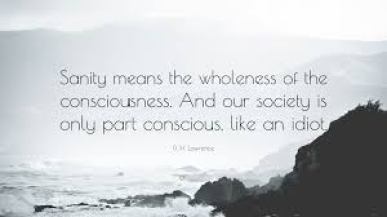
George Monbiot makes the same point in his book Feral: Searching for Enchantment on the Frontiers of Rewilding. To know the world, you have to live in it; embrace it with all our senses; see it, sense it and feel it withsanity-wholeness-of-consciousness both sides of our brains. Belong; to the wholeness of life, of consciousness. Realise the connections, and that you are connected to others and the landscape.

Ball’s Clearing – a lowland podocarp hardwood forest remnant near the Kaweka Ranges of inland Hawke’s Bay – was the start of a journey for me. That place of enchantment and its uplifting overload of sense experience, transcendence, awe and joy. Try and measure that.

I remember ‘getting’ the years of learning the foundations of forest ecology lying on my podocarp_forest.jpgback recording bird counts where all the connections of a particular spot, with particular qualities, were in play. The fact that it was a great spot for kereru had made the place in which I lay.

Keystones shrieked their ephemeral presence – in this particular place, in this particular time, within these defining yet not easily definable rhythms and dynamics of life.  The wider statistics of the forest don’t measure life; they don’t indicate these particular place-based connections, and the place didn’t exist in the aggregate models because we dealt beyond single plots in broader scales of vegetation types, means and standard errors – the world of STEME (science, technology, engineering, mathematics, economics).  We lose the fine resolution of things in our programmes of convenient standardisation, especially if our focus is ‘resource’ rather than ‘ecology’.  And we lose something more, a wise persepctive.

The whole Modern programme (for a discussion on Modernity as a ‘way of seeing’ read Ways of Seeing I: Paradigms of Progress – the Rise of the Machine) – with all its measures and murdering to dissect, its certain, controllable the-earth-does-not-belong-to-us-we-belong-to-the-earthfocus on predictability and technology – is, to me, a risky enterprise in unwisdom; in UNeducating the mind.

There is madness here, but we don’t
call it so.  Its perspective is mad in the sense that the world is defined as a certain mechanical path, walked upon by looking through a telescope, within a realm of mists surrounded on all sides by multiple treasures and mortal traps, beyond the ken or concern of myopic men.

Mr Magoo meets Jurassic Park.

Its purpose is mad in believing not only in the framework of the machine, a thing outside ourselves, but in an unquestioned destiny of eating the home that gives us breath.  It is unknowing, unwise, and extends to the classroom, Black’s focus in her article.

“The purpose of school was to “elevate” children out of their [“totally depraved”] natural state and train them to take their place in man’s grand project of “subordinating the material world to his use”.”


Black continues …


“These original purposes, as John Taylor Gatto has pointed out, were so effectively built into the structure of modern schooling –– with its underlying systems of confinement, control, standardization, measurement, and enforcement –– that today they are accomplished even without our conscious knowledge or assent.

They are not, of course, accomplished in the ways that the social engineers had in mind. These visionary men assumed human nature to be infinitely malleable; children were to be molded and fashioned like any other industrial raw material into a predetermined finished product, and industrial utopia would be the result. But they did not count on the power of children’s instinct for dissent. The wild mind strives to protect itself the way a horse under saddle does, with a thousand strategies of resistance, withdrawal, inattention, forgetting; the children won’t do what the authorities say they should do, they won’t learn what the experts say they must learn, and for every diligent STEM-trained worker-bee we create there are ten bored, resistant, apathetic young people who are alienated from both nature and their own chained hearts.”itsnotyou-itsyourcage-stuart-hardy


The world as machine. A child as a machine with a chained heart. The proto-Picasso manufactured into an accountant.

We know there is a problem.  We know we need to fix it.  And we respond – in the best Modern mechanical way – by using the same reductionist, analytical and ‘objective’ – meaning disconnected – thinking in an attempt at solution …

“There is some dawning awareness these days of the insanity of raising children almost entirely indoors, but as usual our society’s response to its own insanity is to create artificial programs designed to solve our artificial problems in the most artificial way possible.”

We are at risk of creating the vicious circle of myopia breeding myopia breeding myopia, where the seer who points out the nakedness of the emperor is the one considered the mad witch.

Modernity is bad enough, but in our Neoliberal Age it is even worse – Modernity on steroids – we frame land and people as measured ‘resources’ with a dollar market price attached, to be used, disassembled, dominated, controlled, instructed, and exploited to achieve another madness, measured – unnaturally – in someone else’s dollars.

Perhaps the worst insanity of all is to assume that you can know the world from a classroom desk.  Aristotle wrote about this in Nicomachean Ethics in his profound discussion of the four intellectual virtues.

  1. Knowledge that can be taught in a classroom is the lowest form (Episteme).
  2. Knowledge learned by doing – being in the land, with other people, acting – higher (Techne).
  3. The rudder of a considered life and moral virtue – the Core.
  4. The practical wisdom and judgment (Phronesis) – the decision of what to do regarding this issue, in this place, in this time, with these unfolding consequences the Queen.

We reduce both knowledge and wisdom by assuming Episteme will define our future within our mechanical world. And we risk falling into an alligator pit we cannot even imagine.

Aristotle’s wisdom is being rediscovered by brilliant thinkers like Bent Flyvjberg and Alistair MacIntyre; who summed up the need for connection to people and place in order to be wise ….

“that it is only by participation in a rational practice-based community that one becomes rational.”[1]

And yet our approach to education seems to be the opposite; that it is only by non-participation in the real world and all its complexity that one can be rational.

Strangely, that is exactly the point of view that i-see-humans-but-no-humanityTreasury took relating to policy analysts from the 1990s. We were told that knowledge of a sector wasn’t required. Economics would be the ring that binds them all.  Not merely necessary – itself debatable – but sufficient. More, that any practical and professional knowledge within the field and within communities was a disadvantage.

We were ‘captured’ by the sector by knowing.  We were ‘subjective’. They, in their non-participation in life itself, liked to consider themselves ‘objective’. Their faith in the technocracy of Episteme and Techne as the replacement of ken and wisdom was complete.

Is this, perhaps, the nadir of the Modern mechanical age; where thought and perspective is divorced from the real world we experience as unchained hearts searching for eels along the banks? We are breeding GM dreams, aquifer frackers and water thieves; the unleashing of the Hyenas of Corporate commerce, reducing our complex world to expendable things, to means for others’ ends.

We have cast aside the moral rudder; discarded practical wisdom in favour of an input:output equilibrium model, mr-magoodisconnected from any real world in this universe.

And this is madness too; Mr Magoo is breeding the naked emperors amongst the alligators, both of whom he cannot see.

And perhaps we have lost the ability to teach a different way of seeing. Carol Black thinks so.

“But the truth is we don’t know how to teach our children about nature because we ourselves were raised in the cinderblock world. We are, in the parlance of wildlife rehabilitators, unreleasable. I used to do wildlife rescue and rehabilitation, and the one thing we all knew was that a young animal kept too long in a cage would not be able to survive in the wild. Often, when you open the door to the cage, it will be afraid to go out; if it does go out, it won’t know what to do. The world has become unfamiliar, an alien place. This is what we have done to our children.

This is what was done to us.”

I hope I am right in thinking that in New Zealand we have yet to reach that point of no return. But we do need to treasure our connections to doing things within family, community and place, in order to be learn to be rational and wise.

Teach your children well.

every-child-is-born-a-naturalist


Chris Perley
Thoughtscapes

Chris Perley is an affiliated researcher at Otago University’s Centre for Sustainability with a governance, research, management and policy background in provincial economies, rural sociology and land use strategy. 

[1] Quoted in Hauerwas, S., 2007 The Virtues Of Alasdair Macintyre. First Things. https://www.firstthings.com/article/2007/10/004-the-virtues-of-alasdair-macintyre

Donation to Thoughtscapes Blog

Donations are welcomed with my sincere thanks. You can simply click the multiples of $5 donations, then click on the Paypal or any of the Credit or Debit Card symbols. It also allows me to get rid of the pesky advertisements! And it’s a nice way to say thank you. So thank you 🙂

$5.00


Posted in Land Use, Thought Pieces, Virtues, Ways of Seeing | 9 Comments

Everything is Connected: Make it Sing

parts-and-whole-we-are-connectedI’ve used this diagram often when talking about land use. But it is so much more than that. The connections between and among things, patches, processes, dollars, functions of soil, stock, trees, wetlands, water and thought – many not quantifiable, even definable in any consistent way because they shift, and sometimes die, and sometimes create something new – like life or consciousness – out of something that wasn’t a part of any part.  It’s why I like murmurations of starlings as an allegory on life – shapes come into being … and then dissolve into nothing but air.  You cannot understand it all by reductionism.  You have to see things as both whole and parts – Arthur Koestler’s holons.

I’ve used it to try to show a land defined by Sophie Windsor Murmurationfunctions and processes contingent on time and place, changing with the breeze and the season (verbs of relationships) far more than objects (nouns of measured things).  Land isn’t a ‘unit’ of anything we can visualise as a ‘resource’ – not in any meaningful way.  That is as blunt and brutal as looking at an individual and measuring ‘it’ in terms of how much soap you can make out of the body. There is so much more, and that is where morality and wisdom lies – outside the machine.

This is my stream of consciousness in the cold where nesting birds fight against the sound of traffic and men at work with mowers.

….

In land, patches and functions connect and make the whole sing. If you think within a confined space – perhaps a spreadsheet with a few quantitative variables and absolutely no nuance – you can destroy the very things that make the song.  Not can.  You probably will.

Overuse fertiliser and your carbon goes, so your infiltration and water holding goes, so you are more drought prone, and downstream has more floods, and you add to the very risk of climatic drought and flood …. because everything is connected …..

….. and you overstock the capacity of the soil to cope, and damage other functions, and you lose more nutrients and soil through overland flow, and the loss of soil reduces the land sponge further, and you increase overland flow even more, so you lose more soil, and more sponge, and the positive feedbacks go into an overdrive of degradation, and the stream is polluted from the things that are good on the land and need to be replaced with more money, which makes you poorer and increases your risks …. because everything is connected …..

…. and what flows off that land doesn’t just degrade the land, and your pocket and reduce your resilience, it also pollutes the stock water which reduces their productivity and increases health costs, so you are poorer still, but we continue to think in the mechanical world of rigid certainties reducible to parts when the kicker – the keystone – the thing that makes the place sing – is not in your spreadsheet, because who puts in their spreadsheet infiltration rates and water holding capacities, and the health of the pasture diet and soil, nutrient and organic matter loss, and soil biological health, or the feeling of contentment an animal gets when it can chew cud in the shade – let alone water quality or the flood to the village downstream ….  because everything is connected, even if your spreadsheet implicitly presumes it isn’t …

… and because you have lost these things, you have to rebuild them, but all the cries are to intensify and increase ‘efficiencies’ of the scale of one thing, and trees and wetlands are “a waste of good land,” because grass is god and everything else is an ‘ineffective’ area, and so you run faster to catch up and drain the swamps and take the trees off the steeper slopes and narrow gullies to make more ‘effective’ your machine that isn’t, and so you lose more soil, and beneficial biodiversity goes, and where are the bees, and why are the stock dying and lack the gloss from browse, shelter and shade, and there are less productivity (input:output) efficiencies, and you lose more money trying to keep the land from going back to the land cover it wants to be because these areas will always be low production and higher cost in pasture but beautiful and contributing in wood or wet, but we are not taught to look for the synergies of diversity or – heaven forbid – the horrible unquantifiable things like a happy land, but you don’t see that because the technocratic advisor thinks all efficiency is about increasing the scale of one thing, reducing diversity, simplifying not adding, rather than building a biophysical systems that sings, and creates new things you never even knew about like a harvest of flowers wild and adventitious, or the call of a tui and the beat of a kereru’s wing … because everything is connected …

…and you reduce the diversity of the pasture, take out the legume and replace it with another input made from oil, which creates a dependency, and addiction, for a finite thing that increases our climatic risks even more, and degrades our happy land even more, and all the deep rooting drought-resistant ‘weeds’ that used to be the stock medicines our grandfathers took for granted are gone, replaced by the “high production” shallow rooting new swanky patented grasses (or GM) that don’t grow roots of any length making the drought worse while there’s water at depth to roots that are no longer there to find it … because everything is connected ….

…. but you don’t even think about the drought resilient capacities of land and woody plants to reduce evapotranspiration and soaking-in soils and wetlands in the swales to capture runoff and all the goodies, and clean the stream and keep it flowing because the technocrats say drought is about rainfall not land health and exposure to hot dry winds because of a lack of shelter, and we can’t do anything about the rain can we . . and the stock are less healthy, and for each new condition you don’t think of the connections of climate and water and diet and being a happy animal – you just add to the vet’s bill… and ask the advisor for a new technofix – but don’t think about the future consequences to that fix, that thought-drug of dependence, unforeseen and unwritten on the ever-so-certain prescription on the packet that came with the bill – from the technocrat who studied in a silo of maximised and measured things and a belief that a machine can heal a soul …. because everything is connected ….

…….. and your place no longer has the pheasants and the pleasant places, and the joy starts to go, and then the hope, and you produce commodities without a market position so the price keeps coming down and the kids don’t want to own the farm, and you have to have a bigger farm (factory) to survive because the only thing you know is single function production system where building scale and sameness rather than diversities and patterns is seen as the only way because that is how we are ‘educated’ – and so you get into debt to buy the neighbour’s farm, or sell to the neighbour or corporate from Auckland….. because everything is connected …

….. and you spiral down and hope for the next technofix because it’s not about the way we see, it’s about bad luck and ‘this is what we do’ because you are not taught to look at *any*thing as a broader interconnected system – you’re taught to see the farm as a mechanical world of hydroponic inputs, and it’s simply a matter of getting hold of more fertiliser and more irrigation and more GE this and patented that, and you grind the system down and lose more market position, and so the prices come down again, because no one wants to eat the food they consider unsafe and dubious, and you lose more money, and the cultivar that does so well in Templeton on their silt loams and irrigation doesn’t seem quite so well suited where cattle actually graze it rather than shears harvest it, and on this hot dry exposed place ….. because everything is connected …

.Comes the Upshot Kids in the river.jpg

.

… but we could look at land differently.  And a human and the employee – not a soap resource – in the same way – connected to whanau and community and place and what they eat and how they hope and dream and play, and what ideas they have that create new ideas and things emerge out of the system that sings, and we get more diversity and more connection and more opportunity and morale and enterprise in a positive, virtuous cycle …. because everything is connected ….

…. and you can look at a region in exactly the same way – that the hopes and fearlessness of people leads to greater cultural expression and enterprise, and if you don’t treat people like cogs, and a ‘town’ as a traffic grid with car parks, and a river as an irrigation ditch and a drain, but start with people and place; streets as places to sit and meet and walk and play; rivers as ours to be joyous in ……..

……. then things happen – and you can’t predict what it will be because life is not predictable any more than you can predict your own child’s future … because everything is connected, and you won’t know the connections all, ever …

…. but you do instinctively know to nurture and to build the outlook and capabilities of our children, and learnings, and an outlook of hope, and a few rough lessons, and the ethos of care toward others and protection from and censuring of the bullies who think it is all about them and their power, because you are family, and connected – and that your nurture gives the best chance of a good life for them, because you care, where the predictability of it all doesn’t matter because that is part of the joy of life …. because everything is connected …

cafes-bars

… and so why is it we don’t treat the raising of our communities and local economies in the same way we raise a child?  Why do we think the way ahead is to see like a technocrat with a spreadsheet and a machine for a brain who would not know esprit de corps without someone giving a number to it. Why do we think it’s about attracting big outside business with our low wages and subsidies and free ‘resources’ to give away, and the right to take and pollute.  It can only be because we see like a machine and cannot hear the song; we cannot imagine there can be a song.

We cannot see that a better environment attracts and saves costs and raises our produce to where we demand a fair price, and the high value leads to long value chains and local ownership which constantly innovates and constantly differentiates, and fosters ideas and more creativity, and more ….

… because we are free to create and recreate … and everything is connected.

Chris Perley

Thoughtscapes

24th September 2016

Posted in Land Use, Thought Pieces | 1 Comment

Looking after Local Enterprise and Life (Part II)

This is the second part of an article looking at why do we put local government money in the big rather than the small?   Especially when the big tend to extract, while the small are so integral to a creative and vibrant place? I’m trying to argue why.  The first part is published here.  

————

There are a number of stories in why we have conveniently forgotten the evidence in favour of small local enterprise over outside owned corporations. The early work was done by Goldschmidt (in rural communities), Mills and Ulmer (in manufacturing) just after World War II.  They studied the benefits to communities and places dependent on small local in direct contrast with large outsiders.  But the work was buried with a heavy critique.  It had to be.  It was a direct challenge to the rise of the corporation as the 1941_jeep_assembly_linemodel for business following World War II.  Cognitive dissonance took hold.  The rise in the ideal of the corporation was the first explanation for our wilful amnesia.

Corporations were the showpiece of mass war production, even though it was fed by and dependent upon many layers of subcontractors and government (conveniently forgotten, all that wider context).  Stacy Mitchell put it like this, “….postwar policy was built on the idea that big business was more efficient and therefore would provide higher incomes and this improved social welfare. In the following decades, a wide range of government policies would work to promote the concentration of capital and the rise of big industry.”[3]

Well, the idea that the workers would all benefit from ‘trickle down’ assumes an equitable power between disconnected owner and worker, and surprise surprise, it didn’t happen.  But I’m sure some tinadoctrinaire Neoliberal economists are still looking at their models and believing that it will.  This is the second reason for our amnesia – the rise of Neoliberalism.  Strongly associated with it was the fall of empiricism within the economic discipline, having its nadir with the cult–like Neolibs, upon which all reference to the real empirical world was lost.

Read in a machine voice,

We are an infinite number of equally powerless firms and individuals where there is no such thing as exploitation by the non-existent ‘powerful’, just willing buyers and willing sellers with perfect knowledge who rise and fall on their own merit by making rational choices to maximise their utility in an asocial context where location of ownership doesn’t matter and the world is a set of unlimited land, labour and capital resources whose transaction price – and only meaning – is determined by Our Lord Market. All hail.

Well, that all makes perfect (non)sense. It doesn’t matter who owns, or where?  Seriously?  A place is not a functioning social or environmental system, it is infinite piles of ‘resources’ just waiting to be allocated at a completely fair price by the benevolent market?  Do you have *any* knowledge of the environment and society at all?  Apparently there is no need to look at history or the real world smacking you over the head with a large dead fish then.

Much of much of the economics discipline – the doctrinaire model-worshipping parts – would do well to seek an understanding of ‘organised complexity’ and systems.  You cannot see the world as a machine, any more than the raising of your child, and be wise.  You simply cannot.  Jane Jacobs wrote very well about how to look to a local economy as complex and evolving socio-ecological system in her The Nature of Economies (reviewed and discussed here.)

The trouble with all this hero worship of both corporations and Neoliberalism is that it is all stark raving bonkers.  Here’s why.  Are corporations more ‘efficient’?  No …. and yes. The idea of more ‘efficiency’ is only true relative to costs and production of masses of identical widgets, great for a war.  But an economy does far more than that.  It innovates, it builds community, it fosters thought, it differentiates, it works within a moral framework, it adapts, it protects local values, it is concerned with far more multiple values that a beast churning through ‘resources’ and making profit.

And how do large corporates stack up to those functions against local enterprise?  Not well at all.  Not very ‘efficient’ in that context then.

‘Efficiency’ of one is those meaningless words unless there is a context to go with it.  I can ‘efficiently’ exploit if I can use my power to influence the laws.

stream work bulldozer efficiency.jpg

I can far more ‘efficiently’ destroy a stream with a bulldozer than a shovel.  A corporate can be very efficient in one thing.  Small enterprises can be very efficient in many, many things – the supporting values of community and place mentioned above.  Corporates can efficiently destroy those same values.

Neoliberalism is also bonkers.  The love of large-scale and more wealth as merit is so linked with Neoliberalism ideals. If you fall under the heavy crush of a corporate foot, it’s merit.  You deserved it.  They won.  You lost.  Made bad choices.  They’re better.  You have less merit.  Willing buyer-willing seller. Rational choice.

There is apparently no need to make a distinction based on power, scale and location of ownership because none are relevant to the model.  So we treat all enterprise the same again, and give more public dosh to the big guys.

No power relations???  So perhaps colonisation and empires never happened.  Did we Europeans just politely come to New Zealand, smile, and invest much needed capital for the good of all?  Mr Key might think that – and he is quoted as effectively saying so – but it is a false and distorted view.

But our politicians from 1984 until the present day, love this new age neoliberal religious faith.  It’s either love, or they are just completely devoid of an ability to either synthesise or dig deep into philosophical assumptions.  Or they are, frankly, not very bright.  I haven’t decided yet. Ruth Mother of all Budgets Some time in the early 1990s, flush from the Mother of All Budgets, then Finance Minister Ruth Richardson made the comment, “What’s good for business is good for New Zealand.”[4]

She was wrong.  It very much depends – of course – on the type of business.  Blood diamonds anyone?  A slave economy of cotton?   All business is good???   The mafia perhaps.  Union Carbide and Bhopal?  A grinding monster chomping through people and earth, stamping on the little man, spouting toxins and dumping slag to the detriment of we natives, and for the benefit of some colonial master far, far away is no one’s idea of ‘good’ …. unless you are that colonial master.

This was a part of the early history of our country; a feeding frenzy of power, destruction, extraction and taking from others who didn’t have the gunboats and the regiments in red.  We should have learned from that, because it could, and is, happening again.  Big and central is attempting to dominate over small and local.  And we, the people, through subsidies to corporations (I need not mention tax havens, blind trusts and tax cuts for the very top), are helping them.  How on earth did that state of affairs evolve?

No region benefits when the city dominates. No small country when a larger threatens. No small local business benefits when the large business dominates.  No people benefit when some oligarchy with a sense of entitlement sets all the rules.  The growth in power of a few is destructive to our own.

Smith Beware commerceAdam Smith recognised and wrote about this – keep checks on the powerful, their political influence, and on immoral behaviour.  Once that is done, regulate lightly, because the village looks after itself – but his words have been twisted.  The Neoliberals who hold Smith up as some saint for the ‘free market’ don’t mention his warnings and lessons of immorality and power, his preconditions of fairness and equity to free commerce.  They don’t mention that before we deregulate, we need to ensure we have both an ethos of care, and checks on those who would use and grow their own power to influence the field of play.  Power and morals don’t come into it remember.  Just utilitarian calculus – if the mob’s happiness is greater than the innocent’s they happen to be lynching, then that is the ‘rational choice’.  All good.  All calculus, with each dollar a unit of happiness.

How times have changed.  We used to know about the influence of the big over the small as a given.  Now if you mention it, you’ll probably be called a bolshie pinko lefty activist. We pinko negative lefty antis like to call it “a pretty damn basic knowledge of history.”  After all, we’ve had feudalism, and empires, and robber barons, and J P Morgan et al., and the industrial revolution with children under the cotton looms of Manchester, and manufactured famines, and colonisation, and, and, and.  I mean, for heaven’s sake, power relationships go back to the cave, and into almost every social setting you can imagine – the home, the classroom, the workforce.

And now we have the corporate kind of power.  Who wouldn’t know about that?  Who could teach any Economics 101 class and unthinkingly talk of meritocracy and equal powerlessness?  But they did, and still do.  And most quietly take down their notes.

And we know, but do not teach, that a community with many locally owned enterprises outperforms those communities dominated by outside-owned corporates in so many ways – socially and economically.  Adam Smith’s village of smaller enterprises is superior to oligarchies and outside owners. theownershipsociety1 Ownership matters.  What size and dominance it has, and whether those owners are part of a community and place or distant geographically and without a sense of belonging.  This is what we need to look after; our structures of ownership that drive creativity alongside a motivated people and a healthy landscape. Beware the Vesteys and the oligarchies.  Build de Tocqueville’s democracy; Jefferson’s vision of agrarian democracy.

As a country, New Zealand once acted upon that awareness.  Around the turn of the previous century, the Liberal Party under Richard Seddon imposed land reform, broke up the 50,000-acre estates and parcelled out the landWalmart to the many.  Our policy people were not then so blind that they saw no difference between the local hardware store and our then equivalent of Walmart.

We understood that power needs tempering, it needs to be looked on with if not suspicion, at least an open awareness.  We know that some will act on the basis that, if they made more profit by exploiting the less powerful, then they will do it.  If they can privatise the gains and socialise the costs, then why not.  If they can degrade the land and water, then leave, then they have no moral responsibility beyond the profit on the spreadsheet.  They don’t belong to that place; their children will not be affected by the consequences; it is not their large company’s concern.  And believe me, with slow cycling natural systems like forests, soils, water, fisheries and climate, as well as with the social ‘capital’ of a community – it is very profitable indeed to degrade and walk away.  And they call that ‘efficiency’.  It is ‘efficient’ to degrade if you don’t think as a connected local and long-term.

Integral to why big business are not great for local communities is because of how they frame the issues.  What are people for?  What is the river for?  Or the land?  What defines them?  The post WW II glorification of the big business ideal has led to a loss of meaning of people and the planet, reduced to a short-term dollar.  People and land became more like expendable, substitutable cogs.  Grist.  Things to mill.  Inanimate, unthinking parts in the machine.

The mechanical, hierarchical, impersonal and autocratic approach is now the norm in many large organisations; where engagement, dialogue and creativity are crushed by rigid box-ticking and obedience.  Cogs are not expected to think or have anything relevant to say.  Who needs thought, foresight, adaptability, vision, dialogue, laughter, love, when the world is certain and controllable.

It is no wonder a town dominated by corporate thinking results in a less vibrant and diverse economy alongside the reduction in social and environmental foundations whose health and integrity is essential to all, including – and here the irony begins – the large impersonal corporations themselves ….. because the world is not certain and controllable, and they will *need* those who can foresee and adapt.  Evolution and extinction are very relevant nature metaphors alongside the complexity of ecosystems; far more meaningful that the reduction of complexity to a machine of producers and consumers.  Because without those who can foresee and adapt, and without the resilience that comes from diversity, they will fail …. eventually.

Unless the people bail them out again, of course.  After all, what are the taxes we pay (but they don’t) for, anyway?

Adam Smith and all the other thinkers about community and place – the Jane Jacobs, quote-it-is-a-city-of-villages-closely-connected-each-village-dedicated-to-a-different-way-nancy-spain-117-57-75Christopher Alexanders, Lewis Mumfords – are right.   Think local.   Don’t get seduced by some swank from the metropolis with the big cigar.  Look to the artisans in the back alleys.

Preserve our neighbourhoods.  Create a network of villages in our towns and cities; places to gather and sit; each with its own cultural expression.  Make it fun.  Remind people of who they are and where they came from.  Build an ethos of moral and enlightened care.  Build beauty and patterns that connect.  Places to be and belong.  Inspire and encourage the weirdness of continually differentiating expression.

Maintain the integrity of people and place.  Call ugliness for what it is.  Create checks on power and its influence on local economies and policy, especially on those who would

presume to be aristocrats and corporate thinkers (profit whatever happens to our legacies and beauty) who live outside any place and moral code.

Then we can live lightly.  Look to the village and the town as more than just a market place of transaction; as a place and a community to be part of, living within a wider environment – the Shire, a green and pleasant land – unravaged by Sauron and the dark satanic mills.

This is not some naïve vision. It is the alternative to a potentially very bleak future dystopia.  I think we need to stop thinking that bigger is better, and that autocratic hierarchies of command and control are more ‘efficient’.  That’s straight out of Sauron’s business manual, and we are not yet Orcs.


Chris Perley

[3] Stacy Mitchell (2006) Big Box Swindle: the true cost of mega-retailers and the fight for America’s Independent Businesses. p75

[4] https://www.nzonscreen.com/title/someone-elses-country-1996

Posted in Building Regional Economies, Thought Pieces | 5 Comments

Looking After Local Enterprise and Life (Part I)

The following was submitted to the local paper as an opinion piece.  It corresponds to the news that the local district council subsidised the very unpopular investment in water bottling by outside interests, utilising our very high quality aquifer water for no charge.  The rationalisation was more ‘jobs and GDP’, and caused a local outrage.  I wrote about it here in reference to the water being our ‘common’.  Hawke’s Bay people are also subsidising the investors in the large, corporate-scale Ruataniwha Dam.  

Alternatives like building the scope of potential of our local farms and economies are dismissed with selective arguments relating to single function ‘efficiencies’.  There are these alternatives of smaller firms and artisans who employ more and benefit life in so many more ways than the corporate agribusiness or dominant crunching mills.  But rather than building our scope, we talk of scale and bringing in the corporate investor; a pattern of preferring the big over the small, without regard to where ownership is seated, or the major benefits of local enterprise.  We are following the example of the US in supporting big business over small local start-ups.  Why?

The article is in two parts.  The first (with slight edits) was presented to the Hawke’s Bay Today.  Part two looks at some of the history, the research that has been undertaken on the benefit of local enterprise, and why it has not had a voice within central and local government policy.

————-

markets-headerThe question of how we as a region encourage a better economy and jobs for our people is not often debated.  Certainly not deeply.  We seldom differentiate.  There is an implicit view that we support new enterprises, but which ones.  I know of artisans who do incredible things with sound systems but lack the start-up capital to take the next step. Who knows what could come of them.  And yet too-big-vs-too-smallif an outsider comes in and promises a number of low paid jobs by extracting something of ours and ‘compromising’ our commons, the suits are on full display for the photo op.

Ernesto Sirolli, who visited Hawke’s Bay two years ago, challenged that ‘subsidise the big outsiders’ view.  It favours the extractive economy over the creative, with all that comes with that (I’ve previously written about it here). The challenge to what is effectively corporate welfare in the US is growing with various claims that up to $US 450,000 of central and local
government subsidy is being paid for each job created[1]. In the US at least, it has become an industry, and their trends in governance, commerce, environmental and social issues, are very much our trends, just one or two decades in front.

Outside-owned business is treated with open arms and subsidies. bakerSmall business and artisanal start-ups are just not as sexy. Perhaps it is about a sense of importance. Is there

miracle-water-suits

The opening of New Zealand Miracle Water’s water bottling plant.  Photo Duncan Brown

a provincial cringe in favour of the well-dressed swank from outside rather than the inspired and head-down artisan why might be considered – quelle horreur – an artist!  Ministers of the Crown come along to complete the perfect picture. You can have a nice lunch.  A large irrigation dam anyone? Let’s not talk about multifunctional alternatives that build the capacity of the whole landscape, economy and community. Small people live there.

The poor positioning of how we promote enterprise is beyond simplistic. We tend to come with spreadsheets from the top instead of recognise the linkages between culture, a quality environment and enterprise; all the social capital, justice and people-centred, small enterprise start-up work.

english-lower-wages-australiaWe have even heard politicians appeal to outsiders with our ‘low wages’, attempting to compete based on lower costs rather than higher quality. They are not lower costs.  Someone always pays, and it is us in lack of hope, the dulling of local enterprise, engagement and thought, and water we cannot drink and in which we cannot swim.

We have also ignored the research on how a community of local enterprise outperforms in every way those communities dominated by a smaller number of outside corporations.

A community blessed with many locally-owned, rather than a few outside owned SmallBusiness-image.jpgcorporates, has higher median incomes, less inequality, lower unemployment, better community infrastructure, streets, schools, community gathering place, as well civic and social engagement.

The findings are extraordinary. Buying local makes economic and social sense. Encouraging local start-ups makes sense. Local owners are both financially and personally vested in their communities because it is home, not a place and a people far away to be milked for profit.keep-it-local
And our dollars churn around far more as multipliers of value. The economic impact of a locally owned store is between two and four times that of a chain[2].

keep-portland-weirdLocal firms are more reliable, they do not take the subsidy money and run; they are more locally accountable; tend to buy local themselves; generate greater creativity and entrepreneurship; and care about the local identity and celebrate diversity and difference. Look at our Hawke’s Bay cafés and bars. Some of them are proudly weird. That’s Austin Texas’ small business slogan; “Keep Austin Weird.”  Portland Oregon as well.  We really ought to steal it.albuquerque  Albuquerque’s is even better and focused on buying local – “Keep it Querque.”

Why is this not a policy focus of our central and local governments? Why don’t we hear more about it? The pile of research references grows higher, and yet we encourage the big and centralised over the local and smaller.

It is time to embrace and play an active role in encouraging and assisting creative local start-ups and treat them like gold.  Build a vibrant artisanal society. Celebrate the ideas. Make Hawke’s Bay weird.

Chris Perley
Thoughtscapes

Chris Perley is an affiliated researcher at Otago University’s Centre for Sustainability with a philosophy, governance, research, management and policy background in provincial economies, rural sociology and natural systems.

About Chris Perley

Donation to Thoughtscapes Blog

Donations are welcomed with my sincere thanks. You can simply click the multiples of $5 donations, then click on the Paypal or any of the Credit or Debit Card symbols. It also allows me to get rid of the pesky advertisements! And it’s a nice way to say thank you. So thank you 🙂

$5.00

============================================

The explanation for why we have chosen to ignore much of this evidence is discussed in Part II to follow – Looking after Local Enterprise and Life (Part II)

This article also relates to my blog on Extractive vs. Creative Economies.

=============================================

[1] http://addictinginfo.org/2014/10/31/corporate-subsidies-cost-americans-456000-per-job/

http://www.forbes.com/sites/taxanalysts/2014/03/14/where-is-the-outrage-over-corporate-welfare/#dae6c8e6881b

http://www.goodjobsfirst.org/sites/default/files/docs/pdf/subsidizingthecorporateonepercent.pdf

http://thefederalist.com/2013/09/30/calculating-the-real-cost-of-corporate-welfare/

[2] The two pioneer studies include [Rural communities] Goldschmidt, Walter R. (1947). As You Sow: Three Studies in the Social Consequences of Agribusiness. Montclair, N.J: Allanheld, Osmun and Co. Publishers, Inc.;

[Manufacturing centres] Mills, C. Wright, and Melville J. Ulmer. (1946) Small Business and Social Welfare. Report of the Smaller War Plants Corporation to the Special Senate Committee to Study Problems of American Small Business. 79th Cong., 2nd sess., Document 135.

They were dismissed by the new emphasis on big is better policy development, and with it research initiatives, until rediscovered in the late 1990s by Dr Thomas Lyson from Cornell University and others. They expanded the research with large scale statistical studies over 3000 US Counties testing the relationships between small businesses and social conditions.

Irwin, Michael, Charles Tolbert, and Thomas Lyson. (1997) How to build strong home towns. American Demographics 19: 42-49.

CM Tolbert, TA Lyson, MD Irwin (1998) Local capitalism, civic engagement, and socioeconomic well-being. Social Forces 77(2): 401-427

Irwin, Michael, Charles Tolbert, and Thomas Lyson. (1999) There’s no place like home: nonmigration and civic engagement. Environment and Planning A 31 (12): 2223-2238.

Lyson, T. A., Torres, R. J., & Welsh, R. (2001). Scale of agricultural production, civic engagement, and community welfare. Social Forces, 80(1), 311-327.

Tolbert, Charles M., et al. (2002) Civic Community in Small‐Town America: How Civic Welfare Is Influenced by Local Capitalism and Civic Engagement. Rural Sociology 67 (1): 90-113.

http://www.amiba.net/resources/multiplier-effect/

http://reclaimdemocracy.org/independent_business_local_ownership_pays/

https://bealocalist.org/benefits-of-locally-owned-businesses/

Posted in Building Regional Economies, Thought Pieces | 8 Comments

Rethinking our World – Ethics Really Matters

Reading Aldo Leopold blew my mind a few decades ago – the grace and cadence of his words, the context and logic of his arguments, his recognition of respectful harvest as part of who we are and must be, and his deep and personal connection between people, and between land and community.

His own ‘seeing’ of the world shifted from seeing it as an object, and favouring utility – the deer over the wolf – to ‘seeing’ it as a system where every part has its place in the whole. “The first rule of intelligent tinkering is to keep all the parts.”

And his take on ethics was more than the dryish study of Aristotle, Kant and Bentham. He summed it up in other ways – the limitation of freedom of action, distinguishing between social and anti-social conduct – and ethics as interdependent things evolving modes of cooperation.

Isn’t that so very different from treating everything as disconnect, as apart from oneself, as competition, as valuing a thing through a narrow measure of utility (in dollars), as us and them, as either-or, as “sensible balance”, as “progress”, as self over others, as the rationalisation of degradation and mining of slow-churning and finite systems – soils, forests, fisheries, waters, climate – because my discounted cash flow says that is the ‘profitable’ thing to do.

The myth of progress.pngWhich highlights two things.  How you see the world – as mechanical device with people and land as measured cogs, or as a system of mutual interrelationships and necessary cooperation – is one.
The other is that ethics – as Leopold saw them (social conduct and rules of cooperation) – really, really matters.

Chris Perley

Candidate for Hastings District Council
Posted in Thought Pieces | 5 Comments

An Ethos of Care Matters in Public Life

People-don’t-care-how-much-you-knowHawke’s Bay Kaumatua Des Ratima quoted to me once “People don’t care how much you know until they know how much you care.” Actually, I have to take a notebook with me when I meet Des because you can guarantee you’ll have to write a few things he says down!  Yesterday it was “That’s bricks and mortar.  Where’s the *soul*?”

And it’s true. Philosopher Annette Baier worked within feminist ethics (a kiwi who studied philosophy at Otago, then went overseas and became famous, and then returned to Dunedin). She argued that people act not on credentials and information, but on a sense of trust in the messenger. The presumed ‘objectivity’ of the message is not enough.  You have to ‘subjectively’ connect to that messenger.  A mother will trust the teenager next door to baby sit her child because she has a long-standing relationship with that teenager – an extended community of concern.  A mother will not take the credentials of a PhD in babysitting until they know that person.

People have to know that you stand with them and for them, and – in the case of our institutions such as government, science, technology and commerce – that you stand for the truth and independence, and not just self.  A challenge to the spin doctors.  Spin too much, and you risk losing complete faith.  trust is like paper.jpgAnd then it won’t matter what you say.  Our trust in politicians has fallen from well over 50% in the early 1980s, to 23% in 1992 after a history of lies and not listening from Roger Douglas, to Jim Bolger promising “a decent society” in 1990 and giving us Ruth Richardson instead.  Now it is at 8% under the regime of overt justification for the selfish and destructive agendas of mega-commerce.  Who patently, obviously, demonstrably …. do. not.  care.


The idea that there is a cultural setting – a humanities, a moral setting – that needs to be
considered in any work we do is a foreign concept to many technocrats who insist that the ‘objectivity’ of the message will sell itself.  It is divorced, some of them think, from any value set.  It is a strange perspective for me.  Thomas Kuhn showed how much observation is theory and value-laden.  We perform our kuhn paradigm shifts‘normal’ science from within a theoretical construct.  Most we think of as completely true.  Most probably are.  But we also know that in 50 or 100 years time some precious theories and constructs will probably be rejected and replaced with another.  The history and philosophy of science clearly demonstrates it – geocentric to heliocentric, the four elements to Lavoisier’s chemical revolution, Aristotelian to Newtonian to Einsteinian to Quantum physics, static plate to plate tectonics, eugenics and physiognomy to “what race?”  And it is still goes on, with a current shift from mechanical determinism to complex adaptive systems where the focus shifts from the parts to the relationships within particular and shifting settings.  I was taught climax ecology in the early 1980s – the idea of a predictable succession to a ‘natural state’ climax, and then along came patch dynamics theory.  What is true?


Believing (and it is a value, rational_choice (1)
a belief) that the “objectivity of the data” will sell itself so smacks of the atomised view of neoliberal economics, where there is no such thing as society or culture, just a reducible collection of rational calculating all-knowing individuals with spreadsheets for brains.  It is not a credible view.  Any witness to history can see that.


And nor is this a story about the ‘irrationality’ and ‘subjectivity’ of the plebs.  Technocracy can rationalise insanity and immorality.  It can The kestral's viewbe blind to the bull charging because it is closeted within a bubble, looking at its feet.  It assumes that their view is the only view.  They would presume to know the kestrel from a position in another world.

Everyone is ‘subjective.’  We grow up in a society, a view of cosmology and categorisations, within a language that subtly frames how we see the world.  We have these nouns, verbs and adjectives – another language has others often completely untranslatable.  Everyone has paradigms of belief.  Some think themselves to that position and have examined the underlying philosophies bounding a point of view.

It is written.pngAt the other end of the continuum people speak in cliches to justify an unexamined life – “the market will provide,” “it is written,”  “the financial analysis demonstrates,”  “we need to be science-led.”

No it won’t, no it isn’t, no it doesn’t, no we don’t.

The context by which each of us sees the world deeply matters, and people look to that instinctively.    The questions are implicit.  What are their values?  Can I trust this person and his worldview?  And people will judge, not on Ghandi your beliefsdata, but on those values they presume you hold.  If, for example, you are tainted with a short-term or narrow worldview – or profit before people – or what people see as narrow technocracy – then you may lose peoples’ trust to the point where they will not care one iota what is said; *even* if you speak the truth.  Others, of course will think you are a fine fellow because they share those values others find appalling.   If you are insincere, it eventually shines like a warning beacon.
I wrote about this in a previous blogpost on the need for trust and integrity – for our economy as well as our society.

I have seen this in action in both the past and present. There were forestry processing developments in the south where the lack of trust in the company involves, as well as their ‘outside’ gucci-shoed consultants, meant that what I thought was a reasonable proposal didn’t go through.  I suggested they develop some trust.  Show they meant well.  Engage with the community.  I even mentioned Dr Baier’s work on the importance of trust.  They disagreed.  They thought the ‘data’ and the ‘objective’ appraisal would do the job, and then they shut their doors, appeared more and more secretive and untrustworthy, and to top it all, made simple mistakes about even some local technical issues that if they’d bothered to listen and ask would never have happened.  Credibility gone.  Attitude and competence matter if you want to build trust.  We have a Ruataniwha Dam debacle that constantly finds itself on the rocks for similar reasons.

pravda-manchette.jpgI’ve seen councils use spin and propaganda to such an over-the-top extent, which alongside an attitude of arrogance and actions that are more to do with self-preservation than solving a problem or listening to either staff or community, with the result that trust completely goes.  People get to the point of thinking, “if it speaks, it probably lies.” Eventually the Soviet people thought that whatever the Communist Party paper Pravda (which means ‘truth’) published was probably a lie.

Within public engagement processes, you always start with shared and motivating values rather than instruction, whatever the outcome desired. You may have an outcome of more wetlands & woodlands for both a better rural economy and environment? What are their motivation and beliefs?  If it is about profit, or risk, or ecology, or clean water, then work within those beliefs and become a part of it.  Inform, discuss, don’t instruct.  Have an open heart and care.  When selecting staff we shifted to a value-based selection criteria.  Technical expertise is necessary but not sufficient.

Innovative communities.png

National Innovative Communities Conference

 If you are dealing within our rural community and are a completely arrogant arsehole, we didn’t want you.  If you are always positioning yourself and not open to rigorous discussion without taking or giving personal offence, then you won’t be able to serve the community well.  And you won’t learn about this place.

Trying to get a handle of why what some might consider completely rational (e.g. putting woodlands and wetlands within farming systems) is why I started to look at the economics of microsites, and the systems effects of different landscape patterns. You can readily redesign farmscapes that produce multiple positives.  Seek system positives across the field, not some pat instruction manual developed from on high and from a point of view that may be shared by the people, or be completely contradictory to it.

What was hugely ironic was the technocratic and quantitative justification for *not* redesigning integrative land use patterns for the simple reason that the agricultural economists who did that work had no idea about what patterns were there.  They assumed a farm as a uniform flat paddock with a mechanical factory system of agronomy.  Completely false, but with numbers to three significant figures.  You see this sort of nonsense form the most myopic of technocrats and you get a real feel for why so many Tyranny of experts.jpgpeople don’t trust the outside ‘expert’.  They distrust their competence until they prove themselves able to think within a space.  But once a technocrat who understands the field, you encounter more problems from you ‘expert’ colleagues.  I you counter the false analysis by referring to complexity and pointing out that their analysis is framed too simplistically,  then you risk – within the technocracies – being called “anti-science.”  Been there, had that, many times.

Some forestry researchers used to argue discounted cash flows with farmers and try to convince them to become someone they were not – a forester.  Epic fail.  Care about who they are, point out how woodlands and wetlands can make a farm better in so many ways, and farmers – who are farmers first – may listen.  And be completely honest.  If you don’t agree, then disagree.  I’ve told farmer discussion groups in a good natured way that they’re a bunch of chainsaw-happy bastards that just want to cut every tree down from the point that it makes a crash.  We laugh.  But they listen if they trust – not your every word (they’ll still think about it for their context), but at the fact you are trying to do something for the greater good.  Because they know you care.  You can argue and dialogue with people who know you give a stuff.  They may not agree with everything, and they’ll probably be RIGHT in a lot of cases – dare I say the majority.  And so you learn as well.  Everybody learns, everybody teaches.

The learning and communication of information relies on shared beliefs.  Without it, people don’t want to know.  Truth is secondary to belief.  I could put it another way: I can bury someone in literature and ‘data’ and technocratic and scientific ‘evidence’ about the nutrition and sustainability and methods blah blah relating to cooking a dog, and I can give money in order to allow people to buy a dog, but it won’t change many.  This is what so many technocrats do not understand.
It is heart first, not head.  And you *cannot* fake it, certainly not for a lifetime.  They can see it in your eyes, and sense it in your voice.  They can witness the results.  Look quote-we-ve-had-trickle-down-economics-in-the-country-for-ten-years-now-and-most-of-us-aren-molly-ivins-115-74-99at the failures of neoliberalism.  Belief fades when the results don’t come.  Spin becomes a liability because it suddenly stands in sharp relief.  We hear the words “trickle down” and we laugh.  They don’t say those words any more.  They know their power is gone for good.
Advocating a culturally horrifying dog-eating fete at least is not so bad as that.  We see dog eating clearly as a cultural difference rather than a self-serving advocacy (unless you have a dog farm).  Where spin really hits a negative is when the interests of the advocate are so obviously self-serving.

And that pursuit of self-interest replacing any sense of care or community belonging has been the accelerating pattern over the last – I would argue – 30 or so years.  I may not have agreed with all the politicians then, but I did sense that they had the interests of our future generations at heart, bar the odd slimy exception.  They just liked to eat dog.  Fine.  Not for me.  But I didn’t distrust, I merely disagreed.  Discussion and innovationThough now to disagree and discuss is dissent.  And so I trust even less because who can abide a frozen mind in the head of bully.  We have lost a great deal with that loss of care for others from our political and commercial heads.

But the erosion of trust is indicative of a mode of behaviour within particularly big business and politics; and it is working its way down into local government politics.  I would also argue that it has tainted science and taken us from an ethos that sought to communicate, dialogue and understand how to *solve* things, to a more disconnected approach dominated by ‘business management’ rather than caring scientists, such that our once world-renowned public science institutions are now far more focused on creating and then selling a commercial product.  Not all, but the taint is there.  I trust corporatised science far less because there is a lack of care associated with salesmen trying to sell me a water filter in the middle of a campylobacter outbreak (yes, this happened in Havelock North, I kid you not).  Commercial public science, the blind and foolish application of neoliberal market fundamentalism, has degraded our hopes for both science.  The ever-concentrating corporate ownership, and the vampire squid morals of owners like Rupert Murdock, have done the same for the corporate media.

But there is hope.  Extremes can shift so

Yin yang tree

Yin & Yang – one journey creates the prerequisites for another

dramatically.  The world is a ‘complex adaptive system’ with feedbacks and thresholds, not a linear machine reducible to parts.  We are defined far more by uncertainty and complex interactions and behaviours than predictability.   And I think we are reaching that threshold point.  You can’t fool all of the people all of the time.  I think the erosion of public trust means that spin is now far less effective.

Eight percent trust in politician in New Zealand is pretty compelling.  We now expect spin.  We know the word.  We have witnessed the rise of power, and the continued justification of what amounts to immoral ends from people who are so obviously self-serving and narrow in often commercial agendas.  We saw the Global Financial Crisis.  We see the housing crisis justified by neoliberal economists telling us “the market will provide,” and we see the property developers and slum landlords with far too close a connection with – and certainly no condemnation from – the politicians currently on the government benches.

And now we see the chickens coming home to roost with land use intensification’s direct lights flickereffect on our communities and local businesses.  We can connect the dots.  We can see the red light flickering on the dash.  We can see the spin and deflections away from any possible blame on intensive land use, and irrigation, and attempts to make our land a factory to suit the narrow commercial ends of mega-corporate thinking.  Giving our best water to overseas owners is “just the market in action,” they say.  Oil and gas fracking over the catchments feeding our precious Hawke’s Bay aquifers is “great for jobs and GDP.”  The Ruataniwha Dam will bring prosperity and free ice-cream for all.  Wadeable water is fine says Minister for the Environment, Nick Smith.  Campylobacter has nothing to do with the drive to more irrigated land use.  Blame Tai ChiThe people in the regions do not need a democracy to decide whether they want industrial agriculture and GMOs because they are all flat-earth plebs who don’t understand the science.  That’s why we gave Canterbury an appointed commissioner in place of a democratically elected council …. twice.  Totalitarianism by stealth.  And we won the last election by a whicker because a nice German created a fiasco that scared the public, so we should try that getting-rid-of-democracy game again.  It’s a good one.

We don’t trust you anymore.  You don’t care about us, you care about yourselves.

We don’t trust what you say.

Why don’t you go away.

Chris Perley


Chris Perley is standing in the 2016 Local Body Elections for Hasting District Council

Posted in Thought Pieces | Leave a comment

Connections – Harm People and the Land, and you Harm Your Future.

Letter to the editor sent to the Hawke’s Bay Today 28th August 2016.   Context.  We are currently experiencing polluted drinking water, the result of intensive farming locally.  Some old people have died from infections impacting on underlying health issues.  Water pollution nitrates.jpgOur aquifer water has always been superb.  We did not need systems of water management that had to treat for such things as campylobacter.  The impacts on people and local business has been extremely hard.  A great local butcher, our high quality food producers and cafes.  And we are a region known for the quality of what we produce – quality water, quality food, quality environment, quality experience.  

And yet we have heard, and still hear, the short-term narrow thinkers that dominate our policy making with their corporate influence arguing for more compromises on our environment with the promise of “jobs and GDP.”  Which rhymes with “more for me.”

There is a very strong lesson here for those who want to think about it.  And the tactics of both the government and the local Hawke’s Bay Regional Council to point the finger at the Hastings District Council Mayor and their bores is a cynical spinning of distraction away from their own thoughtless thrust for more industrial and corporate land use intensification, environmental degradation and the marginalising of people as wages – the lower the better.  They are both advocates for the strategic nonsense of GMOs and local fracking because it suits their extractive corporate take on the world.  The Hastings District Council – whose functions rest under the Regional Council – deserves praise for their ability to strategise and protect our region, and our economy, from both GMOs and fracking.  This has not made them popular with the industrial thinkers in other governance positions.

Ask yourself who are the better governors, and who deserves the questioning of their actions?  

============

Connected thinkingThe key lesson with the Havelock North water crisis is the need to acknowledge connections. We so often think of the environment, community and business as silos to trade-off one from the other. That is the sickness of our modern economic age, and it is a deadly idea.

Poor environmental practices impact on our environment, then our community and our local business. You cannot push one small part of our wider system to excess without impacting on the whole. We need to build the integrity of that whole.

It is no wonder that the hurt of our local communities has seriously impacted our local enterprises, and their pain kicks back again to those that rely upon their income, and their lack of income hits back at local business in yet more reduced demand. And so can a downward spiral begin.

Short-term and narrow thinkers that disconnect environment, society and economy don’t get these system effects. They don’t get that we live within an uncertain world and that building resilience means retaining and building our social, environmental and local business legacies.

We should be mindful of this when we hear any suggestion that we ought to ‘compromise’ and trade-off our community or our environment for short-term commercial gains – especially if they are commercial gains to outsiders who do not live and spend in the Bay. Such thinking – fracking, GMOs, excuses to reduce water quality, degrading working conditions, the industrialisation of life itself – will eventually negatively impact on us all, local enterprise included.

Chris Perley

Posted in Land Use, Thought Pieces | 1 Comment

The Horrid Mechanical Screech of Modern Conformity and Order

Hannah Arendt was the author and philosopher of the Auden Golden HoursNazi era of inhumanity; of totalitarianism, of the ascendancy of soulless mechanical acting where humanity loses itself in instruction, obedience and order.

She described the behaviour of such functionaries as Adolph Eichmann as “the banality of evil” where people who we would not necessarily consider ‘bad’ do appalling things. They become part of the machine, deeply socialised – because we are as a species so incredibly social, and only act ‘rationally’ within a set of social norms and implicit beliefs. Arendt was highlighting the unthinking acceptance of this mechanical life and, with that unexamined acceptance, raised real questions about what is the essence of being human. And that unexamined acceptance raises other questions about the consequences.

Arendt quotes W H Auden.

All words like Peace and Love,

All sane affirmative speech,

Had been soiled, profaned, debased

To a horrid mechanical screech.

We were exposed to that mechanical screech with fascism, and with Stalinist state communism. But do we see that mechanistic autocracy only in hindsight? The question is; are we exposed to that infernal screech still, in other forms of administration and policy framing? I think we very much are.

And yet we are ‘accepting’. To not accept is to be radical, extreme, out of step, a wishy-washy artistic type, irrational. Perhaps a poet. Quelle horreur.

Feeding_the_corporate_machine_by_jonnyrosebush-d7woxleWe hear the screech with the metal on metal jarring of the corporate automaton; the hierarchical order of a machine reduced to outputs, tasks and ‘accountable’ measures. Human as machine; animal as machine; society as machine; economy as machine; corporation as machine; planet as machine. We hear it in the accosting of good science and quantitative disciplines into a rationalisation of the insane. We see it with the reduction of the whole damn planet in all its glorious complexity to a neoliberal economic defining of all things as weights and dollars – yes, life included – to infinite and measured ‘resources’. We see it in the pursuit of ready money, quantitative ‘instrumental rationality’ without the guiding rudder of ‘moral rationality’, transactions and markets.

We hear it with the hubris of technocrats who

Another brick in the wall

Just another brick in the wall

would synthesis and control life itself for commercial ends. We feel it with educational ‘standards’ and hierarchical autocratic organisations where dialogue is dissent.


We hear it. We see it. We are told it will achieve ‘results’. Certainty and control, order and hierarchy – and with it the diminution of a stream to a measured irrigation ‘resource’, of a pulsing life-filled landscape to industrial production, of humanity to an unquestioning obedient button-pusher, lever-puller, train-scheduler, sliding inexorably to looking upon humanity as so much fat to render down to soap at this specific price.

It is obvious that we ought to question this mode of narrow ‘knowing’ and decision-making. It would be apparent to any artist, or reader, or Peterson & Strategy copythinker, or student of humanities. It should be apparent to us all. Life means more than this. We do not live in a certain and controllable world known through numbers and technology alone. It is unwisdom masquerading as objective truth. It is monochrome presenting itself as the light from a prism. It is totalitarianism trumpeting “freedom and folk”; exploitation wrapped up in the rhetoric of sustainability. It is words like ‘balance’ and ‘efficiency’ and ‘accountability’ and the clichés of power. It is loss and eventual collapse hailed as profit, progress, jobs and GDP. They point us to the promised land, and march us toward Mordor.technocrat 2

It is insanity masquerading in a suit with a breast full of medals. Why on Earth are we seduced by the pomp and pomposity?

Ralston Saul referred to this technocratic obsession as the “dictatorship of reason,” where horrors of the mechanised logistical slaughter on the Somme and Vietnam ‘body counts’ Lennon - insane ends.jpgrationalise the pursuit of a mad end. Without a moral rudder, you can rationalise anything. Melville’s Moby Dick was about that. Only their purpose was mad; the deranged pursuit of the white whale for revenge; all by rational means – the technocracy of the harpoon and how to get close enough to thrust it home. The same ill-considered purpose of the rational Dr Frankenstein – let us build a man from body parts – the insanity but technocratically brilliant Dr Strangelove riding his precious bomb.

Technocratic knowing is not wise. Yet there are technocrats who confuse the idea that they can do a thing with the idea that we ought to do it. In Old English, it is the distinction between clever ‘wit’ and the deeper judgment of ‘ken’. D’ya ken, laddie?

The mechanical screech of technocracy holds no mirror reflecting the ways of seeing our world. It presumes to know the only truth. Only art can make us reflect that there is more than one position. Without art, it is easy to slip into the belief in objectivity, in the immutability of our mechanical world, especially when conventions and pride of position supports that myth.

Because objectivity is a myth. The ‘objectivity’ of the totalitarian state or the corporate state is a delusion. There is always a political ecology surrounding our questions, chosen measures, analyses and acts. We ‘frame’ the whole process – usually implicitly. We have this particular worldview, we have these particular power structures and knowledge networks, we ask these particular questions, we choose a method that suits that worldview and that chosen question, and we interpret the answers within that whole political ecology of accepted conventional technocratic thinking.

Conventional thinking. The acceptance of Mechanical mantotalitarianism as convention. The machine as metaphor for life. Love as chemical reaction. Reducible to that. This is how it is. This is what we do. To question is dissent. And my reductionism mechanical screech is superior to yours.

Aristotle thought that technology and science were necessary knowledge, but always within a wider knowledge system – directed by the examined life and practical wisdom. Of themselves, science and technology are certainly not equipped to lead the choice of policy and practice. Policy must have a wider sense, transdisciplinarity, an artistic view of life, steeped in humanity and the perspective of place, history and the whole; a moral rudder, the practical ability to judge what is right, and what questions we need to ask of science and technology; whose position is on tap, never on top. Synthesis before analysis; Humanities before Technocracies.

This is the nub of our avoidance of the mechanical screech. A return to questioning of dogma and of open dialogue. A re-enlightenment with the Ethos of deep philosophical inquiry, without the Dogma of the Machine. A rejection of the Modernity of Bacon and Descartes. The encouragement of placing mirrors before us, to reflect our values. A complete rejection of the idea that because one discipline deals in numbers of its own choosing – especially when its worldview is the metaphor of the machine and it embraces the religious hubris of scientism and economic dogma – that is has any right at all to set up our world in their own mechanical image. I confess to irritation when I see any form of supercilious ‘scientism’ or model worshippers expressing disdain for deeper thought.

We don’t have to look to totalitarianism tEugenics as technocracy.jpgo see the potential corruption of humanity when technocrats take charge, or corporations and economists.  The cult of Eugenics was one shared by many others besides the Nazi regime.

We so need art and the philosophies for any re-Enlightenment. Poets write about murdering to dissect, expose the lie Dulce et decorum est pro patria mori. Goya paints the horror of it all in sketches that cry despair and wrong, that drip blood and scream pain. Turner brings the storm to visceral, horrifying life. Playwrights stir the heart and prize open the cracks so the light can get in.

The real wake up that Arendt gave us is that we are all capable of “the unexamined life.” Without an Ethos of questioning and a base of breadth beyond the quantitative, we can fall so easily into the trap of doing and scheduling because ‘that is what we do’; we perform tasks and measure outputs. We can so easily lose any sense of wider purpose and morality, or any thought of strategy and the deeper questioning of concepts and meanings.

Without either that self-examination or the moral courage to voice, even disobey, we can so easily fall into the role of functionary; easily following orders; another cog in the machine; another brick in the wall. And so we risk ending up playing our small part in scheduling the trains filled with innocents to some horror beyond the horizon whose concern is not ours …. until we reap the whirlwind.

It comes down to whom we choose to trust and hear. The precursors to the mechanical screech are those who seek to dwell secure in their dark narrow hierarchies of self-importance and secrecy. A will to power is a sign: a focus on self and position. Conspicuous consumption with no sense of whakapapa and connection to community and place.  Mark them.  Avoid them.

Or we can look to those who choose to think, feel, care, express, and live a life worth living; those who are obviously asking what is that life.

Between a double-bass playing (or yes, even a mandolin playing) Bohemian and the ambition and hubris of a smiling business suit, I’ll take the wisdom and perspective of the Bohemian any time.

Or else we risk only having the Suburb of Dissent.

But where should we find shelter

For joy or mere content

When little was left standing

But the suburb of dissent.


Chris Perley

Thoughtscapes

Lennon - insane ends.jpg

Posted in Thought Pieces | 4 Comments

Thinking About Energy – Uncertainty is a Certainty

Welcome to the Bay

Photo Paul Taylor, Hawke’s Bay Today

Now we sit out this storm. No power because the Napier-Taupo road is being hammered at the moment. It has been down for 30 odd minutes. It was blown out last night as well for two hours.

The Napier-Taupo road is closed. It’s snowing up there and down to 200 metres which is *really* low for Hawke’s Bay, famed for sunshine and warmth.  And there is only one major power line that comes into Hawke’s Bay.  And this is a southeasterly, which almost always brings three days of heavy rain to the East. Normally the farmer’s and forester’s friend. Unless it’s during lambing.

Certainty is an absurd assumptionThe one line thing is such a topic here. Like Auckland CBD 15 odd years ago where the reliance upon a single line of power led to a major failing for six weeks.   They did not heed advice from wise engineers arguing for the need of back-up options and resilience.  Their obtuseness led to a major national economic disaster.  And these same financial administration-type ‘managers’ – these narrow technocrats with spreadsheets for brains – argued during the disaster that their purely financial focus (and their assumptions of certainty and controllability) indicated a “well-run” business.  Interviewer Kim Hill was almost speechless in response.  There is no power in the most important CBD in New Zealand and you say it is a well run business??!!

All relevant for us in Hawke’s Bay. We have an energy ‘strategy’ meeting next week, run by the HB Regional Council; the same organisation that thinks the Ruataniwha dam is a good idea .  At the last energy strategy meeting, the convenor (some engineering PhD who did not impress me at all with his obsession with The certainty of uncertaintyquanta as the only basis for decision making) was unable to grasp principles of policy and strategy.  He *could not* grasp the concept of a decentralised system with modularity (different ‘module’ subsystems that can keep going if the “centre does not hold”) and with built in resilience to shocks and uncertainty.  Solar and other potentially decentralised systems – micro-hydro, wind etc.- may be more expensive.  They certainly were within the contexts within which he chose to place them.  He had a spreadsheet, so that’s ok then, it must be true.  And so, it follows within his chosen myopic space, then obviously the large centralised mill approach is just the berries.  We keep failing to think.  We get more narrow and hierarchical and autocratic, and the narrowest non-thinkers and administrative types climb and climb well above their level of incompetence.

This is New Zealand’s obsession with the narrow efficiency approach, rather than system resilience and multiple outcome thinking. It’s why we like building big centralised dams, and centralise our public sector so they live in Wellington with less and less attachment to Stop being busy start being strategicand engagement with the complex real world outside.   There is this strange conjunction between desires for power, ignorance, arrogance and technocratic thought.  And they build castles in the sand with nonsense assumptions of control, and by so doing set up the conditions for not less, but *more*, uncertainty and uncontrollability by pushing us toward thresholds they do not see.

And the same guy is convening next week’s meeting. We argued for a resilience approach last time (some of us) and a scenario analysis approach – what if? Another Napier-Taupo failure. Climate change. Fossil fuel constraints of availability or price. etc.

Technocrats are not wise. They work within a bubble, a tiny world that is certain and controllable, the inside of the Peterson Graph (below). This is a big part of New Zealand’s economic, social and environmental problems. We are dominated by the technocrats, the tyranny of narrow ‘experts’.

Peterson & Strategy

We really should always be thinking out where the real world is – where so much is uncertain and uncontrollable. And we that are trained as technocrats need to be educated (which is different than training) to think in that wider space.

embracing-uncertainty-graphic-2You cannot predict when the storm may hit, or what type of ‘storm’ it will be (economic, social, environmental, a structural failure), or its effects.

But you can at least include within your assumptions the fact that there *will* be a storm … at some time … and some place.  Uncertainty and uncontrollability are certainties.

*That* should be our prime assumption.

Chris Perley
Thoughtscapes
chris@thoughtscapes.co.nz

Chris Perley is an affiliated researcher at Otago University’s Centre for Sustainability with a governance, research, management and policy background in provincial economies, rural sociology and land use strategy. 

Donation to Thoughtscapes Blog

Donations are welcomed with my sincere thanks. You can simply click the multiples of $5 donations, then click on the Paypal or any of the Credit or Debit Card symbols. It also allows me to get rid of the pesky advertisements! And it’s a nice way to say thank you. So thank you 🙂

$5.00

Posted in Thought Pieces | Leave a comment

Always Question: Never Simply Function and Obey

The brilliance that is Hannah Arendt. She wanted to look deep in what made Adolph Eichmann tick – the proverbial scheduler of trains from – was it Budapest? – to the death camps during World War II. But first you have to bring it into a human focus. You collect people from their homes (imagine the horror), put them on trucks (smell it, hear it), hold them somewhere, take them to the rail yards (again the trucks), and then you put a frail little old lady into a cattle wagon (how is she ‘put’?). And a mother with a swaddled baby in her arms. Imagine it’s winter. The cattle wagons are packed tight. There is a bucket in the corner, and a small speck of light above their heads. The trip will take many days. If there are delays, weeks. Many will die. The baby perhaps. The frail elderly grandmother.

What do the officers and guards feel?

How could people do this? Arendt referred to “the banality of evil.” Collective action by people who are not necessarily even antisemitic.  Ordinary folk.  Cliche spouting, not too bright, unquestioning group thinkers (that is, non-thinkers).

And then think about today and our current blindness and cliches – the market will provide, there is no alternative, it will all trickle own, we live in a meritocracy, the private sector does it better, John Key knows what he’s doing, Labour taxes and spends, the Greens are a bunch of fruit loops (JK said so).  Arendt is highly, highly relevant today.

This is what she wrote about collective action. The unthinking mob. The technocratic madmen and women who simply function without deep thought.

“I want to talk about Eichmann. Collective action, where many act together – generates power. You are never powerful when you act alone, no matter how strong you are. The feeling of power generated by acting together is in and of itself absolutely not evil. It’s a normal human trait. But it’s not good, either. It’s simply neutral, something that is simply a phenomenon, a phenomenon of being human that must be described as such. There is a pronounced feeling of pleasure involved in such action. I’m not going to start quoting you examples – I could go on for hours just with examples from the American Revolution. And I would now say that the *real perversion of action is functioning*; that the feeling of pleasure is still present in such functioning; but that everything that is present in action – namely, we confer with one another; we arrive at certain decisions, we accept responsibility, we think about what we’re doing – *that is switched off in functioning*.

You have here [with Eichmann] a pure function without a goal, a running in neutral. And the pleasure in pure function – that pleasure was quite evident in the case of Eichmann.”

Quoted in Marie Luise Knott (translation 2013) Unlearning with Hannah Arendt p7.


This ‘functioning’ – becoming a functionary – is a human trait, not particular to any one people.  We have it.  How do we avoid it other than by recognising it, and setting up strong cultural institutions that identify it in the thoughts and actions of others, and when it is without moral compass, temper and shape it to do good? It is why so many of us talk about being outcome-focused, not – ever – simply task-focused. “Doing my job,” is not a reason for anything. The broader purpose is the reason.This dangerous cult of functioning is tied up with another human trait of our age – Peguy called “the family man” “the grand adventurier du 20e siecle … an involuntary adventurer, who … for wife and children … was ready to sacrifice his beliefs, his honour, and his human dignity.”  Ibid p27.

Arendt was deeply uneasy about one question: Could it be that there were people who had never had any convictions, honour, or human dignity in the first place?And that question is more and more relevant today as Neoliberalism raises to powerful positions the unethical, self centred, and avaricious personas at the expense of those with honour.

Chris Perley
Thoughtscapes

chris@thoughtscapes.co.nz

Chris Perley is an affiliated researcher at Otago University’s Centre for Sustainability with a governance, research, management and policy background in provincial economies, rural sociology and land use strategy. 


Donation to Thoughtscapes Blog

Donations are welcomed with my sincere thanks. You can simply click the multiples of $5 donations, then click on the Paypal or any of the Credit or Debit Card symbols. It also allows me to get rid of the pesky advertisements! And it’s a nice way to say thank you. So thank you 🙂

$5.00

Posted in Thought Pieces | 7 Comments

Trust … in our Economy

Trust on the mountainThey don’t think of ‘trust’ much when they talk about the economy. They split it up. They, the technocrats. They put such things as ‘trust’, ‘integrity’, ‘truth’ and ‘justice’ in the box marked ‘social’; something to deal with “after we get the economy right.”

The ‘economy’ is presumed to be about measured outputs and inputs, jobs, resources, costs, returns, GDP. The environment is even more disconnected. It’s just a set of ‘resources’. Easier to exploit when you remove moral consideration for generations to come, or of any need to understand how an environment and a society actually work in the long term.

It leads to an engineered future in a world they think is certain and controllable, to autocracy, hierarchy and obedience, to small set tasks, to the grind of life within a corporatised machine where free thought is a risk, and where expression of that thought – whether from inside or from the public – is seen as dissent, even open revolt. And then we begin to distrust them. Who are these people who presume to rule?

Such limited economic and social thinking is so dry, it’s combustible.

It is also dangerously wrong.
If you were to ask the question of what it is that makes a community, a workplace or an economy work, then looking at it through numbers in a computer model alone is as blind, blinkered and stark raving bonkers as raising a child without any ethical ethos of care. Which, come to think of it, some mechanical thinkers have proposed in the past – and still do with such things as national standards in education.

Some better-educated political economists see the world within a richer space outside the delusions of computer models and assuming what cannot be counted doesn’t count. Manfred Max-Neef refers to the need for ‘people-centred’ development; building essential capacities for engaged and hope-filled communities. If development is just focused on ‘resources’ and building the next big mill with land and people as mere grist, then it does more harm than good. Easy exploitation is the consequence of treating land and people as lifeless lumps, as numbers.

Amartya Sen researched the need for justice, without which economies don’t perform. Why? Because why bother achieving anything if someone with more power, worse morals and less merit will cut off the poppy before it can even flower. Are we building or degrading justice in our world?

But the real clincher is the work of Robert Putnam. He researched what he termed ‘social capital’, and the links with the resilience, dynamism and diversity of local economies. And he found something profound; if you want to build a strong economy, or any highly Social-Capitalperforming organisation, then build the social capital – the trust, participation, sense of belonging, engagement, spirit of cooperation and collective action. You cannot create that culture if you don’t have integrity, a real regard for the greater good, and for truth.

You could – and we do – pursue a Viking raider type extractive economy based on the exploitation of some finite resource like coal, gold or oil; or on the degradation of a slow-revolving natural system such as a forest, a fishery, water and soils. But such an economy won’t last, and it won’t build a strong society.

But build a strong society, and you’ll build a strong and creative economy without the exploitation. Putnam’s work in the late 1990s was such a challenge to those economists who can only see the world through models and nonsense assumptions, that they promptly ignored him. Better to be the ostrich than look out into the real world. And yet it is such a hope-filled message. The control freaks are wrong. The technocrats are not wise. Culture matters. An openhearted, openly dialoguing democracy is gold.

And the same lessons apply to 6 keys to relationshipsorganisations.  If they have strong cultural capital – open dialogue, participation and engagement that goes far beyond cynical box-ticking tokenism, honest reporting and integrity – then you build trust and the cultural freedom to see beyond boundaries in time and convention, to innovate, to live and work to greater goals than any prescribed task.

That is a culture of learning, dialogue, wisdom, innovation, diversity and achievement.

Which all raises the question about where we are heading within New Zealand and our provinces. Trust in our Members of Parliament has fallen to 8 percent. In 1992, around the time leading up to the MMP debate, it had dropped to 23 percent from over 50 in the early 1980s. We thought then that 23 percent was bad!

tricks-and-treachery-are-the-practice-of-foolsWe now live in an age where many of the people and practices within our public service departments, large corporations and our parliament are far more interested in deal making, back room collusion and the manufacturing of truth. The erosion of integrity has lead to an erosion of trust. That cannot be disputed.

But what those responsible ought to realise is that this erosion of our democratic culture and our trust in the agendas and integrity of key institutions is costing our economy. It is eroding the very spirit and function that is its foundation.

Chris Perley
Thoughtscapes

Chris Perley is an affiliated researcher at Otago University’s Centre for Sustainability with a governance, research, management and policy background in provincial economies, rural sociology and land use strategy. 

Donation to Thoughtscapes Blog

Donations are welcomed with my sincere thanks. You can simply click the multiples of $5 donations, then click on the Paypal or any of the Credit or Debit Card symbols. It also allows me to get rid of the pesky advertisements! And it’s a nice way to say thank you. So thank you 🙂

$5.00

chris@thoughtscapes.co.nz

An edited version of this article was published in the Hawke’s Bay Today.

Posted in Building Regional Economies, Linkages, Resilience Thinking, Socio-ecological Systems, Thought Pieces | 5 Comments

Expedient ‘Government’: Build the Slag Heaps of Tomorrow for New Zealand

Ruins of Lindisfarne_Priory_1797

Lindisfarne Monastery

Is our whole New Zealand economy a bubble built on speculation, the Christchurch rebuild, the Viking-raid exploitation of society and place for short-term gain, financing expenditure out of debt, the promotion of extractive big business over local enterprise, immigration to create demand, and the hope that undifferentiated price-taking commodity prices will rise?  This is an economy living on the short term buzz of crack cocaine.  People eventually sell their furniture, their homes, and their future to fuel the habit.

I want to confront an idea that keeps New Zealanders from seeing where we are going.

That idea – supported by the corporate media – is that this current National government is somehow a good economic manager. The idea is delusional, and it is a collective delusion for many of our people.  What we are creating is the wreck of a ruin.  The hollowing out of a people and a place for the pillage of short-term gain.  A Viking raid on a monastery.

The mythology is made up of these components. Each is a mirror of the opposite reality, and yet it is the delusion that is trumpeted as the ‘truth’.

Myth: ‘John Key knows how to run an economy because he is a financier.’ Truth: Financiers as a set neither understand the functions of what makes an economy tick, nor do they understand society, nor the environment that both underpin our economy.   Nor do they tend to care.  They are on a different planet. They see the world through a spreadsheet and short-term commissions. Transparent accountingJohn Key has no capacity to think strategically (other than how to jolly the public to get himself reelected), only fiddle at the edges of his ideology – an asset sale here, a deregulation to allow more exploitation there, a tax cut over the horizon. We have never – I would argue – had a more disconnected PM with less concern for our nation, our people, or our future..

Myth: ‘The economy is doing well coming out of the Global Financial Crisis and the Christchurch earthquake.’ Truth 1: this government has borrowed
to ‘balance the books’. We had c. $17Billion of public debt in 2008 because Finance Minister Michael Cullen paid down debt over Labour’s previous term in government, and resisted the then National Opposition’s call for tax cuts at the top.  By the last election in 2014, National had increased government debt to over $60B. It has doubled in the two years since. Anyone can borrow to ‘balance’ a cashflow account.

Truth 2: The earthquake was a crisis gift (allowing
the classic Neoliberal ‘Shock Doctrine‘) to argue for more privatisations and centralisations, as well as the rise of the large at the expense of the small.

A comparison with Napier in 1931 would Corporate worldbe a very useful exercise. Large Corporates were given the rebuild of Christchurch, with small firms and public agents marginalised. They even have gagging clauses in their small firm contracts so they cannot speak their grievances about Fletcher Building shenanigans to the media.   One said to me that eventually all the small firms will be little more than contracted labour.  This process of gutting our small & medium enterprises (SMEs) to make a corporate even wealthier is just what happened to Iraq post the last invasion with Dick Cheney’s Halliburton et al. ‘rebuilding’ Iraq and subcontracting all the local – and highly competent (after all, they built the original infrastructure) – Iraqi SMEs.  Christchurch has become an exercise in corporate welfare once again.  The earthquake gave a boost to GDP, because rebuilding destruction does that.  GDP is a measure of money flows that takes no account of the loss of an asset – an environmental asset, social capital, or built infrastructure.  And so it is illusory for the National Party to claim GDP ‘success’ when that was always going to be a consequence of the quake. Half truths galore.

Housing bubble

Is our whole economy a bubble built on speculation, the Christchurch rebuild, the Viking-raid exploitation of society and place for short-term gain, financing expenditure out of debt, and the hope that undifferentiated price-taking commodity prices will rise?

Myth: The government does not print money as they did with quantitative easing in the US & Europe.

Truth: Yes they do – through the growing real estate bubble. As house prices rise, people use the book value equity to spend & consume more, and to invest in housing speculation. A drop in house values would have a negative effect on spending in the economy relative to the degree of the inevitable drop. This government is propping up a Ponzi scheme asset bubble for short-term political and economic ends – whatever the long-run consequences; whatever the effects on removing investment from productive investment to conspicuous consumption and property speculation ….. because the alternative is a horror story waiting to happen. Our crisis in available and affordable housing that affects our least well off is directly related to this economic mismanagement. The longer they delay dealing with the underlying drivers, the bigger the negative consequences and the slag heaps will be in the future.

That speculative bubble is supported by both very high levels of immigration and access by overseas investors in our property market.  Neither of those policies are likely to continue in the long term.  Buyers beware.

Myth: The government keeps taxes where they need to be. Truth: Any mayor can get elected by promising to hold or reduce rates. The easiest way to do that is not to invest in infrastructure maintenance – physical, environmental or social. The problems then come after they have gone. They mine the wider asset base, the slag heaps happen on the next watch, and then they will blame the new government for those slag heaps of their own creation.  This government is doing exactly that. It gave unaffordable tax cuts to the least deserving top, in the next breath scapegoated the poor and now turns a blind eye to mega-corporate rip-offs and domination of our own SMEs whose health is vital to a local economy.  And then in pursuit of ‘balancing the books’ with productive assets sold and taxes cut to the rich, it grinds down the social, environmental and local economies of regions. Yes, you can ‘balance the books’ that way, but you are destroying the bedrock of what makes a country perform in the future.


Myth
: This government cares about regional economies. Truth: The provinces have suffered greatly relative to the large cities since the emergence of Neoliberalism in the mid-80s. The provinces were the traditional preserve of the ‘compassionate conservative’ side of the National Party.  The other side of the National Party is now dominant – the big city-slicker wide boys, financiers, greedy commission salesmen, deal makers, nouveau riche wannabes. They do not give a toss for the regions.  They are more interested in concentrating power in the centre and for the 1%, and are motivated by the thrill of dealing with those rich and famous who benefit from the mess.  This is who and where they want to be.  Amongst the entitled.  Many National Party regional electorates are now held by the city-slicker corporate types trying to act like community-minded farmers and small local business owners.  They are not.

Myth: This government is strategic in its thinking. Truth: nothing could be further from the truth. Their economic approach is to sell on price, not on quality, to produce more and to cut costs.  A colonial commodity approach World Ag Commodity graphwith declining real prices.  They do not understand value or market position.  They do not understand resilience or diversity and continuing differentiation.  They do not understand that ‘leaving it to the market’ alone (where power *does* truly exist, though the Neoliberal priests assume otherwise), is tantamount to leaving it all to the powerful.  That does not mean locally owned, batch-processed, long, high value differentiated value chains; it means the opposite.  It does not mean that we create value, multiply value locally, retain value in a place, and then attract value because we build a vibrant cultural life; it means the opposite: a latter-day version of extractive colonisation by corporations.  What culture?

This government support policies that suit the large corporates who deal at the low-cost, large-scale end of the business spectrum.  Their focus is on maintaining short, low-value commodity, increasing outside-ownership with centrally-processed supply chains where less value is created, multiplied and retained locally.  They extract rather than create.  As such, they are the new agents of colonisation where we ‘colonies’ provide the cheap raw material and the cheap labour for their overseas profits.  But deal makers are not history buffs.

Colonisation is a great strategy if you are a mega-corporate, but simply appalling if you care about New Zealand as a nation or your region. And that is why the corporate giants back this government.

This Government’s focus on increasing exports by extracting more, producing more undifferentiated dross (National have resorted to calling it “high value commodities” – an oxymoron), irrigating more, polluting more, degrading both environmental and social standards, concentrating ownership away from local economies, is a Viking raider approach to economic management.

They are riding on the Pure New Zealand market position while seriously and very quickly degrading that essential narrative. That is either economic stupidity or economic sabotage or both, without any concern for long-term consequences.  Strategic?  Or simply expedient?

Once again, you can see the short-term expedience of getting a vote and feeling the glow of a new ‘big irrigation dam’ loaded with promises of “jobs and GDP” for the unthinking and the desperately hopeful.

It’s a deal to make, a corporate whiskey to share, a clap on the back for good old Sir Michael, a message to spin, a perception to manage, a game, a con, next month’s opinion poll.  It certainly isn’t motivated by our future.

And the slag heaps of tomorrow are none of their concern because they live in the now, and won’t be there tomorrow.  They’ll be in a metaphorical and tasteless mansion in Honolulu.Tar sands before & after

My personal belief is that this government is setting us up for failure; an overdose of the drug ‘short-term expedience’ that will occur in the future and that they will attempt to blame on others.  If the corporate media are on their side, they may well get away with it.  The whole Neoliberal Age has eroded the things that both matter and are the essential underpinnings of a decent economy – a functioning environment and a strong adaptive society without autocratic institutions and fear.  A society with an Ethos of Care for others and for our place.

I think we are raiding the cathedrals for the gilt, and building tacky houses on the Honolulu hills with the proceeds, with the slums at the bottom.

All ideas are contestable.  Anyone want to dialogue. Have I got anything wrong?  Have I forgotten anything?

Chris Perley
Thoughtscapes

Chris Perley is an affiliated researcher at Otago University’s Centre for Sustainability with a governance, research, management and policy background in provincial economies, rural sociology and land use strategy. 

Donation to Thoughtscapes Blog

Donations are welcomed with my sincere thanks. You can simply click the multiples of $5 donations, then click on the Paypal or any of the Credit or Debit Card symbols. It also allows me to get rid of the pesky advertisements! And it’s a nice way to say thank you. So thank you 🙂

$5.00

Posted in Building Regional Economies, Thought Pieces | 15 Comments

Is This our Neoliberal Meritocracy?

Autocracy

I know many people who are truly amazing.  They think outside the box, they practice an art, they connect to community and to land, they have passion for some goal, they can hold a humorous conversation and be great company in any context.

And many tend to be ‘underemployed’.

I find this very, very curious. Isn’t the cream supposed to float to the top – at least in the sense of being closer to the inspiration and big decisions?

Under conditions of tyranny it is easier to act than to thinkMost of these amazing people are not the dull conformists who keep the trains running (sorry, I know that is important).  The schedulers are the same people who now get promoted to positions where it isn’t operational scheduling that is the necessary attribute, but thought and the ability to create a motivated, adaptable team who genuinely care about the direction, rather than just the task.  Thinking strategically and adaptively requires an understanding of culture and having both a broad and long term view.  You need more than technocratic spreadsheets for brains.  Seeing a bigger picture recognises potential opportunities and threats, and of the wider system feedbacks you will not find within a spreadsheet.  That sort of capacity to both see and think is increasingly lacking, in both the individuals we have promoted to the top, and in the organisational cultures technocrats and megalomanians promote within.

We have raised acting above thinking, tactics above strategy, lies above truth, dispassion above passion, technocracy above art, tyranny above freedom, my current expedience above your hopes and dreams of tomorrow.  And where is morality?  Or is simply where the supply and demand curves meet on the two dimensional graph?

Raised acting above thinking.pngWhy does this happen?  Why do we promote the excellent train schedulers above those who have a bit of free-thinking art and connection in their lives?  Perhaps Hannah Arendt on the rise of totalitarianism has it right.  Under tyranny, it is far easier to act than to think.  Caring becomes a career threat; one of the great dystopian literary themes.

We have to think about this.  Have we shifted to a form of totalitarianism where thinking is discouraged?  Have we shifted to exactly the opposite of a meritocracy?

Yet we are told we live in a meritocracy.  This is, frankly, a lie.  I have seen less and less merit at the top.  I once worked in a public sector whose staff genuinely cared about service and New Zealand, had no concept of separating managers from staff (no one was The ideal subject - Arendtcalled ‘manager’; you were senior, principal, deputy, officer in charge amongst other officers, etc.), and where you got brownie points for thinking and where there was explicit concern for your personal development and career path if you had a particular personality and skill set.  Your art was nurtured, encouraged and promoted.

We genuinely admired the competence that rose.  That went from the 1990s after the State Sector Act 1988 started to kick in.  And then the rot accelerated; because while A-Grade people hire A-grade people, B-Grade people hire C-Grade people, and they in turn hire D-Grade people until ……..

I’ve worked in the resulting rigid hierarchies where the top ‘managers’ were separated into largely two types (with bright exceptions who were generally looked at sideways).  The first type were those who were incredibly dull and concerned about their positions.  Administrators.  Not thinkers.  Some were good train schedulers but completely divorced from big picture outcomes and incredibly focused on tiny measured outputs.  Little results, not big achievements – Just tell me what to do, I don’t want to know about greater purpose.  I’ll go in any direction, so long as you instruct me where to step.

Grey box utilitarian buildings.jpgBeing particular and obedient gets promoted.  And with that comes reductionism and the machine.  The solution to a flood is to build higher stop banks, not build water holding capacity in the upper landscape.  Deal with the symptom you can measure, not the root cause you need a conceptual mind to see.  The solution to a drought is a simple – a dam.  Measure only one thing and spin a story to defend your small idea.  The solution to P is to declare war, not ask multiple questions “why?” to dig into the social system and, god forbid, immeasurable psychology of belonging and hope, or culture or art.  Utility trumps grace.  Stark grey boxes replace the sense of place you can build with a tree, birdsong, good company and good coffee.

Resistance-is-useless-VogonWith conformity comes rigidity – and any demand for immediate innovation or adaptation results in a headless chicken panic (change!! uncertainty!!!), and any questioning dialogue about how we are going relative to a purpose resulted in shock, more rigidity, denial, anger and blame, reference to the manual, intakes of breath, and Vogon guard behaviour where Resistance is futile!

And then there were the second type, megalomaniacs, who played the game to rise.  Like the train schedulers, not particularly bright, usually very narrow, also taking any dialogue as dissent and personal attack.  And often in serious need of dealing with some deep wounding personal issues about self worth.  Invading Poland, Abyssinia, Libya and the Baltic States is the usual therapy they prescribe themselves – or just build a physical monument to mammon.  Ozymandias built a statue in the sands.  Other build an irrigation dam.

I was blown away by Terrence Malick’s Tree of Life.  A thing of pure beauty and depth.  He made a distinction about how we live our lives – a life of power or a life of being – the way of nature and the way of grace.  Both the megalomaniacs and the train schedulers use the way of nature as their management style – only want to please themselves and so build and demand command The way of nature and graceand control of a minutely regulated machine with hierarchical layers of instruction and the expectation of blind obedience.

None use the way of grace, the building of a ‘can do’, open-hearted, adaptive team.  Personal ego doesn’t matter, it is the purpose and being above us all that acts as life’s normative rudder.  A team committed to an outcome, where ideas and dialogue are a way of being, an esprit de corps, the very essence of high performance.  Yet I’ve heard such approaches explicitly referred to as “bad man-management” (yes, man) by those who subscribe to command and control.  Allowing dialogue was apparently a sign of weakness.  You instruct.  They obey.

This is partly McGregor’s Theory X versus Theory Y management.  Theory X presumes people are inherently individualistic, selfish and lazy, and so set up structures and procedures to control.  Theory Y presumes people naturally want to be a part of a community and do a good job, and so focuses on freedom within a framework, and a culture of resilience and performance in the context of a wider purpose and way of thinking and being – a kaupapa.

We know we are in trouble when X is the way.  You may note the association with some Manaakitanga - mycommunitiesassumptions of Neoliberalism; “there is no such thing as society, just a collection of individuals.”  Look after number one.   Assume that is the way.  Never think that there are such virtues as Manaakitanga, Whanaungatanga, Kaitiakitanga.   Never imagine that we could have a world that is better because at the centre of it all is not control, or a desire for power, or selfish ends, but an Ethos of Care.

Neoliberalism and the authoritarian and petty Way of Nature go hand in hand.  Neoliberalism, and a sense of belonging and the purpose to care and create something bigger than ourselves, are mutually exclusive.  You can have or the other, but not both.  One extracts, the other creates.  One demolishes, the other builds.  One represses the meaning of life, and the other looks to meaning as the core of things.

I think Neoliberal Economics has not only degraded the concept of community and care,

and discouraged questions about purpose,

and displaced a culture of deeply critiquing assumptions and the consequences of short-term selfish actions with a perverse faith in greed and expedience ….

…. it has also actively fostered the rise of autocratic hierarchy.

exit_voiceDialogue is dissent.  Only the megalomaniacs and the train schedulers rise.  And for the rest, we have as Albert Hirschman argued, three options: We can Exit, we can Voice in the hope of effecting change, or we can become actively or passively Loyal to the growing power of the dispassionate machine.

But when the D-graders (and Z-graders) and megalomaniacs are holding the reigns, what then?

I once had a CEO say these words to me after I was discussing the importance of an engaging and purposeful culture over organisational structure, and how the constant restructurings under Neoliberalism adversely affect morale, a quality culture and performance (a wise friend once renamed ‘restructuring’ ‘DEstructurings’ after we had seen babies thrown to the winds, and bathwater preciously coddled).

The CEO said in dismissal of my concerns about morale, “You can have high performance or high morale, but you can’t have both.”  I was incredulous.  Conversation was pointless after that.  If you advance that sort of belief, then you can have absolutely no faith in the organisation’s future.  If voicing doesn’t work, you have to exit.  Loyalty to that idea would eat your soul.

We have created less adaptive, less thinking, less committed places… built more on blind obedience than foresight, thought and adaptability ….

…and there is less and less room for my friends who are truly amazing; who exited for the sake of their souls.

The Neoliberals claim they are Work will set you freethere for ‘freedom’, while in the meantime they construct signs over the factory gates with new versions of Arbeit Macht Frei.

And when there is no one left Voicing from within because they have either Exited or become Loyal for the sake of their mortgage …… what then?

Chris Perley
Thoughtscapes

Chris Perley has a background in embedding himself in our landscapes and fields, in management, policy, consulting and research relating to land use, the environment, provincial economies and communities.  He is an affiliated researcher at Otago University’s Centre for Sustainability.

Donation to Thoughtscapes Blog

Donations are welcomed with my sincere thanks. You can simply click the multiples of $5 donations, then click on the Paypal or any of the Credit or Debit Card symbols. It also allows me to get rid of the pesky advertisements! And it’s a nice way to say thank you. So thank you 🙂

$5.00

Posted in Neoliberalism & Corporatism, Thought Pieces | Tagged , , , | 2 Comments

Putting Culture back into Nature

Guided_growth_rootbridge_882x300We have spread across and changed our world.  Change is the constant.  But it is maintaining the integrity of our systems that is more important than whether there is any particular ‘natural state’.

I doubt there is any such thing as a natural state.  I was taught climax ecology in the early 80s, but by the mid 80s Pickett & White and Daniel Botkin were strongly suggesting that the idea of a deterministic path to some natural ‘climax’ was very dubious indeed.

Pristine landscapes

It has been thousands of years since the Earth had pristine landscapes.  A new article identifies four major phases when humans shaped the world around them with broad effects on natural ecosystems: global human expansion during the Late Pleistocene; the Neolithic spread of agriculture; the era of humans colonising islands; and the emergence of early urbanised societies and trade.  Credit: po808 / Fotolia

The whole idea is a hang up from Modernity: certain predictable deterministic paths governed by mathematical ‘laws’ that science will discover through time.  Never mind that Lorenz showed that even within a deterministic system with only a few variable, you got chaotic predictive patterns with slight ‘butterfly effect’ changes to initial conditions.   Then along came complexity theory, complex adaptive systems, the inseparability of observer and observed, and the whole challenge to reality that came about in the 20th century with Heisenberg and Einstein.

Pick your place, then pick your geological epoch, then pick your discordant harmony and patch dynamic, then see the particular structure and composition of individuals and associations.  They are never constant.

And then you add humanity to the disturbance mix ….

The nature-culture debate is always an interesting issue. What do we mean by ‘pristine’?  In what context?  Does it simply mean completely devoid of human influence?  What, both direct and indirect?

Yet we breathe and we connect.

We used to ask three questions within environmental philosophy and ecosystem health workshops at Otago University. We were trying to challenge embedded assumptions of Modernity, and all its dichotomies – nature from culture for e.g. – all the analytical separateness, mechanisation, seeing through Newtonian-like mathematical laws – Wordsworth’s ‘murdering to dissect’.

The questions ….

Are humans ‘a part of’, or ‘apart from’ nature?

Does direct human interaction (harvest etc.) necessarily harm?

Do preserves necessarily protect?

Some great discussions, and students were seriously challenged.  You can imagine the discussion.  Context is all.  Yes in these contexts.  No in these.  Contingency.  Under these conditions, not those.  Suddenly you had to define a system space, a locus of action, a nexus of considerations that went beyond the environment to encompass society, culture, specific community … even economics.  Everything is connected.  We live in a system.  Extend yourself out to synthesis and connection and meaning before you draw down to the analytical detail.

We needed students to dig deep into our assumptions of our human relationships with nature. We clearly cannot think of the environment in an industrial utilitarian ‘resource’ way – outside, separate from ourselves – and hope to care for either our ecosystems, the many values associated that are beyond economics, or our future generations.

But the flip side of the dualist Modernity coin that sees humans as separate is the idea that the only ‘healthy’ ecosystem is one without people in it – preserves.

“Pristine” in the context, the narrative, of people not being involved, ever, at all.  …… Consider, if you will, the values around that view of “pristine.”  Are we bad?  Do we always do bad things?  Is pristine good per se, always?

Think only of that context that removing culture makes a place ‘pristine’, and you create a a type of Faustian bargain with the other Modern thinkers who would treat the land and people as utilitarian ‘resources’.   Both views are deeply Modern.  Both views segregate people from the land.  Both views emphasise one thing – economy or environment – without a context of connection.

And then the battle begins about where to put the fence between the two camps – factory and the preserve.  It is a form of partnership in separation – in segregation of culture from nature – which then marginalises examples and exemplars of the very systems of integrated socio-ecological relationships that represent our future.

Modernity

Human specimens (resources) in a jar

Preserves in a jar – the people and land as resources; the land without cultural meaning.

Because if you happen to be a little Tolkein Shire of close relationship – the forest people of South East Asia, a New Zealand family that lives within and from its Kauri forest – you will tend to be looked at askance by both the industrialists and those who can only think of conservation as preserve. There can only be one fence – on one side land as Mordor and on the other the Wilderness, sans the elves. The Shire dies.

Nature preservesCase in point ….. The equatorial tropical forest zone is a hot bed of how we look at socio-ecological systems. Authorities are still trying to get people out of the forests, either to make them preserves (is that ‘making’ a natural or an anthropogenic process?), or to turn them into the local equivalent of a Palm Oil plantation.


So what is ‘good’ within an environment: a context of social exclusion, or one where the processes of renewal and ecosystem health are maintained and enhanced?

Land Health LeopoldThe challenge I think is to shift from a structural/compositional (noun) view that any disturbance and harvest is a negative – to a functional (verb) view that a healthy system is one where the integrity of all the functions is maintained above all else – the fertility, reproduction, recruitment, dispersal functions etc. In the long run, culture can only survive within that framework.

Being *a part of* does not mean a static world. It is much more defined by verbs than nouns – processes and relationships, not things like ‘resources’. Harvest is not ‘bad’ per se. What is bad is extraction and degradation that destroys the functions and connections that ensure renewal.

Making the shift away from Cartesian dualities means thinking as integrated socio-ecological systems which cannot be known by dissection (see www.ecologyandsociety.org).

Modern times Chaplin

Chaplin’s Modern Times

Modernity is not working. We cannot solve the problems created by mechanical deterministic metaphysics (Modernity) unless we shift away from thinking of an economic system as *separate* from an social system, itself *separate* from an environmental system.

It’s why I also like an integrated landscape approach to environmental conservation issues rather than a focus on preserves. We need preserves *as well as* a functioning landscape that involves ‘working’ lands …. and people.  Leopold we abuse the landTurning those lands into factories that separates and treats everything – EVERYTHING – as a ‘resource’, simply and inevitably leaves the reserves as dysfunctional elements within an environmental desert. It inevitably degrades.  It all degrades because it is all connected, each is integral to the other. That degradation includes cultural values because it is valued by neither the ‘resourcists’ nor preservationists. And it inevitably includes the loss in the end of the gold ‘rush to destruction’ economy.

Most indigenous cosmologies see themselves as embedded, including European Celtic and Germanic roots. It is only the current Modern age since Bacon & Descartes 400 years ago that posited the mechanical analytical view.

I suspect that if you were an indigenous culture *without* that cosmology of being a part of nature, then you wouldn’t last long (relative to ecological time scales).

And that applies to our current culture as well.


Chris Perley
Thoughtscapes

Chris Perley is an affiliated researcher at Otago University’s Centre for Sustainability with a governance, research, management and policy background in provincial economies, rural sociology and land use strategy.

Donation to Thoughtscapes Blog

Donations are welcomed with my sincere thanks. You can simply click the multiples of $5 donations, then click on the Paypal or any of the Credit or Debit Card symbols. It also allows me to get rid of the pesky advertisements! And it’s a nice way to say thank you. So thank you 🙂

$5.00

Posted in Land Use, Socio-ecological Systems, Thought Pieces | Tagged , , , , | 1 Comment

Our Land is not an Industry

“To heal is to make whole.  This applies as well to the ‘industries’ of landscapes: agriculture, forestry & mining.  Once they have been industrialised, those enterprises no longer recognise landscapes as wholes, let alone as homes for people and other creatures. They regard landscapes as sources of extractable products.  They have ‘efficiently’ shed any other concern or interest.”

Wendell Berry.  Our Only World p6

Landscape children

This quote by Wendell Berry above sums up why I do not like the name (and explicit framing) of our renamed public department ‘Ministry of Primary Industries‘.  It disturbs me when the technocrats, especially those who see the world through the myopic lens of dollars and markets alone, have the power to fundamentally shift from a metaphor of culture – agriculture, silviculture, apiculture, horticulture, viticulture, aquaculture – to a metaphor of ‘industry’.

I think we ought to ‘see’ landscapes in a broad sense, as places of potential for people and the planet, without the industrialised overriding assumption of ‘trade-offs’.  We cannot see potential synergies (win-wins in policy speak) if we don’t have a sense of the shifting patterns of a place; its mysteries and its beauties.

And this is the point that the industrialists and narrow technocrats don’t get.  They also lose in this new industrial framing.  They do not see that a woodland, a wetland, a tall pastoral ley, a soil that sings within a pastoral setting does many things that not only provide for people and the landscape wonders with which we share our home, but also are better at the hard business considerations of cost savings, input reductions, risk reduction, productivity (output per input) and profit.  They think that their ‘efficiencies’ and focus on mechanical homogeneity and scale makes our world better when it does the very opposite.

Their ideas of landscapes are analytical without a prior synthesising perspective. These ideas are not ‘real’, they are a social construction from within their moulded minds – their learned dys-integrated myopias made narrow by a particular education. Their technocratic perspective is blind to either potential or problem.

And so they fail to realise the opportunity, and continue adding more costs and struggles to the people within their land, ever sicker.

You cannot heal a place by industrialising.  But you can create Mordor, where inevitably the people ourselves are reduced to meaningless ‘resource’, ‘waste’ and ‘tradeoff’.  That way leads to work camps and death.

The heart of any healing perspective is to see through the eyes of culture and the fullness of landscape, never industry.

Chris Perley
Thoughtscapes
Chris Perley is an affiliated researcher at Otago University’s Centre for Sustainability with a governance, research, management and policy background in provincial economies, rural sociology and land use strategy. 

Donation to Thoughtscapes Blog

Donations are welcomed with my sincere thanks. You can simply click the multiples of $5 donations, then click on the Paypal or any of the Credit or Debit Card symbols. It also allows me to get rid of the pesky advertisements! And it’s a nice way to say thank you. So thank you 🙂

$5.00

Posted in Land Use, Thought Pieces | 3 Comments

Civilisation – It’s about Values

Updated from a couple of years ago because I think those who govern no longer do so in the interests of people or our grandchildren …. and it really has to be reversed. We need a values campaign.

Chris Perley
Thoughtscapes

Chris Perley is an affiliated researcher at Otago University’s Centre for Sustainability with a governance, research, management and policy background in provincial economies, rural sociology and land use strategy. 

Donation to Thoughtscapes Blog

Donations are welcomed with my sincere thanks. You can simply click the multiples of $5 donations, then click on the Paypal or any of the Credit or Debit Card symbols. It also allows me to get rid of the pesky advertisements! And it’s a nice way to say thank you. So thank you 🙂

$5.00

Posted in Thought Pieces | Leave a comment

The Housing Crisis and Neoliberalism

Irish Famine

Listening to Morning Report this morning (25th May 2016) interview these right wing completely out of touch politicians from this government making excuses for the New Zealand housing crisis, was like a rerun of the Irish Potato famine. It so riled me – all the cliche-laden stupidity and faux “I am your leader, so trust me” emptiness and attempts to convince us there is no crisis.  Well, we’re living it.

The same dull unconcern.  The same rationalisations and talk of market supply.  Neoliberal fundamentalism without a shred of self-critique of its nonsense assumptions.  All to make the mathematics work in the model.

wheel-estate.jpg

Underlying our crisis, and the complete inability of either government or public sector to deal to root causes, are all those hollow neoliberal assumptions that price and the ‘efficiency’ of the market are dependent on where the supply line meets the demand line.  Complexity reduced to two dimensions.  I’m sure I remember a mathematical theorem somewhere that proves that such reductionism from multiple to two dimensions is completely meaningless – like reducing the raising and love for a child’s emergence as a rounded human being to measures of calorie input and output.  With nice graphs and three significant figures demonstrating precision of course (never mind that such a framing has absolutely no accuracy).

Their nonsense keeps compounding; wrong compounds on wrong; delusion on delusion; insanity on insanity.   Bewildering in its inconsistency and blindness, the neoliberals presume government ‘interference’ will create ‘inefficiencies’ and ‘distortions’ to their ‘perfect market’, while private (i.e. non-government) commercial agents like mega-Slumlord.jpegpowerful corporates and slum landlords are apparently OK.  Governments are big and evil, whereas all commercial enterprises are analogous to small and powerless village bakers.  What?  So we leave it to the property developers, speculators and slumlords?  Such nice chaps.  But they donate to the party of course.  Keep the wheel churning.  Keep the spin going.

There is a pattern here.  The view of government engagement as always the problem and never the solution; the view that the private sector is always the solution and never the problem.  Black and white, reductionist, meaningless, unsophisticated attempts at some Newtonian universal that is complete bunkum.

Actually, more than one pattern.  There is the same complete disregard for life, equity, justice, meaning, or a nation’s vision to be more than just a set of ‘resources’ for the commercial mill.  The same complete disregard for what works in the real world, and what doesn’t.

There is a reason why the State is involved in housing, education, health, the social fabric, the long-term view and justice, etc.  It’s because the market patently *doesn’t* provide those core meanings, not only because it is so often most profitable to exploit and destroy function in the short-term, but also because so many of the critical foundations of a decent society require a sense of community and place, and cooperation.  The idea that life and commerce is all about competition is a nonsense to anyone who has ever been part of a team, a family, a decent workplace, a county culture.  We cooperate so strongly at some levels and compete at others.  Cooperation is integral to any cultural life.  Life is patently not about competition of individuals divorced from any society, as Neoliberals presume.State house sales

But it’s more than that.  Life is not a market.  The market should never be the first option in policy, the prime directive.  Life is the prime directive.  Life in the long term.  Our culture.  Our reason for being.  Government at its core is about protecting and conserving our people, communities and lands to ensure we can have meaningful life into an uncertain future.

That desired goal-end-outcome is the first consideration.  And then in order to provide what we desire as a people – a democracy (now there’s a thought) – we look for policies that will provide for those ends.  The market – so long as the horror of abusive commercial power is held in check – can be one policy option, one of many.  But never the only one, just as centralised government should never be the only one.

The market can *never* be an option for our future where nuance is not understood nor even identified and considered, and where power is not held in check.  Such ‘unfettered markets’ will destroy us all.  If you allow power and short-term thinking to co-exist, then you destroy all the social functions and natural systems.  It is profitable in the short-term to mine and move on.  It is profitable to extract.  It is profitable to use power to tilt the playing field in your favour.  And it is because power is not given a central place in their thinking that neoliberal economists are not aware enough of the potential degradation of our underlying social and natural systems.

That Irish Famine period in the 1840s was arguably the first age of neoliberalism – “The market will provide,” said Great Britain’s House of Commons.  I’m sure the House of Lords was even more strident because like the Mega-corporate support for Neoliberal priests today, the Lords of the 19th Century had much to gain.

Never mind feeding people, it will all settle down with the market.  People are not actually people after all – they are ‘resources’ – and they were ‘Irish resources’ at that.  People are ‘things’.  Supply will come along as people pay higher prices for food, etc.  People make rational choices with all Evil begins Pratchettthe opportunity, connections and information available to the lords who keep taking more of their land and keep them in penury.  It’s apparently a meritocracy.  So obviously the Irish have less merit.  A bit like those struggling for a house.   This is where evil begins – with the neoliberal framing of life.

Except that people were dying in the Famine – a manufactured famine created by the power systems of the day.  Yes, a famine amongst plenty.  There was more than enough food, but it was held and controlled by the powerful – those non-government powerful that neoliberalism sees as benign.  Government bad, private sector all good.   Those Irish people ‘things’ had no money to buy, so they starved ….. to death.

WWHooperFamine1876-78GroupOfEmaciaedMenandOneWoman

Great Indian Famine 1876 – 78

Look up what happened with manufactured famines in colonial India under the administration of benign commercial chaps who bought their Lordship and you will see the same pattern of disconnection from life when you look at people as things.  Viceroy of India Lord Curzon spoke these words while between one and 4.5 million died, “any government which imperilled the financial position of India in the interests of prodigal philanthropy would be open to serious criticism; but any government which by indiscriminate alms-giving weakened the fibre and demoralised the self-reliance of the population, would be guilty of a public crime.”  Prodigal philanthropy.  Weakening self-reliance.  Wouldn’t want that sort of crime on your conscience would you chaps; far better to let them die.  Let the benevolent dice of the market fall where they ought.

You can hear that echo of neoliberalism down the ages.  You can hear the moralising of benevolent dice and merit; simply the market at work, rational choice, I can buy food and a house, so I must be better.  I’d be very surprised if neoliberals teach these famine histories, or any history of complex systems tipping points into crisis.  The economy left to the market is patently not a deterministic machine, all predictable and benevolent.  There are far too many uncomfortable moral and metaphysical questions that come along when you look at the actual real empirical world outside your models.There is no housing crisis

There are yet more parallels with our housing crisis.  Crises are used by the powerful to grow their power.  If you deny those crises, you play straight into their hands.  You keep the money churn going.  The wealthy and the deal makers can see opportunity where the public suffer.  Housing, homelessness, underemployment, environment, climate change.  All denied by this government.  All for the benefit of apparently benign commercial interests – village bakers apparently.

The Anglo-Irish colonial land owners actually used their famine crisis to take even more of the victims’ land.  Shock Doctrine Version 1.0 “You want to feed your family? OK they can work in the work house, and I’ll have your last 10 acres.”  This happened, and no person with a shred of morality can excuse that as simply ‘the market’.  It is a morally criminal disgrace, whatever its legality.

[Is it any wonder the Irish rebelled in 1916, and those same colonial ‘lords’ lost all their landholding they had previously stolen from the Irish?  Another tipping point that the models cannot predict, though any understanding of humanity would recognise as inevitable.]

We have this history in all its stark reality, and the Neoliberal economists assume an infinite number of equally powerless firms and individuals in their models.  What?  They do not learn about colonisation, or the dynamics of power through history?   Or the fact that a ‘pure’ market world where governments do not temper the excesses of commercial power is not a meritocracy; it is the opposite, where the least moral rise on the pile of carcasses they help create.  How can a university give a degree to a person who knows nothing of political economy and economic history?  How?

neolib on the edgeReducing our world to some delusional purity of markets is a pernicious evil.  It encourages power because it assumes it’s all ‘willing buyer-willing seller’ rubbish, and so those with seven corporate lawyers can rip off the worker who has none.  Fair deal?  Fair go?  When you point out this reality as a refutation of the logical bankruptcy of their theories – and all the other nonsense assumptions that have no basis in any real world near you – they will act like religious zealots and defend the indefensible.

I’m sorry, that ought to be embarrassing for any discipline.  It supports ignorance and an unconsidered life.  If they cannot question themselves and their base assumptions then Neoliberalism is certainly neither a science nor a humanities subject.  It is a religion, with unquestioned catechisms of faith.  A lot like State Communism actually.  More and more parallels – from the religious dogma, to the autocratic systems they put in place to ensure obedience and non-thought.

Neoliberalism completely ignores the real world.  And yet we have been listening to people in suits wth these wacky ideas since 1984 – mostly coming from Treasury and the Commerce Seminary Faculties – supported so well by the corporates and the powerful who so benefit by their policy frameworks.  They do not like the State involvement in housing.  They do not like the State involvement in health.  They do not like the State involvement in education.  They do not like the State involvement in prisons. “Let’s privatise.”  “The market will provide.” “The private sector does it better.” “It will all trickle down.” “Deregulate and the market will create a new age of plenty and stability.” “A true meritocracy.”

This is beyond stupidity.  This is lunacy.

The Neoliberal idea that the market is the only lens of policy making (bar a few exceptions like the police and the army to protect the property owners’ interests) – the arbiter of all – is at the very least stupid.  History tells us it’s stupid.

neoliberalism - the walking machines.pngYet it persists.  Even after the history of the other ages of neoliberalism – the 1840s (food distribution and ability-to-pay disasters) and the depression (at least we got some reform acts out of that debacle).  Then the 1870s and 1890s – the robber barons and more manufactured famines and Lord Curzon (who bought his Lordship before becoming the famously inflexible, moralising, murdering Viceroy of India) repeated the process of famines in India – and another world depression.  The 1920s neoliberal jazz age leading to what John Kenneth Galbraith referred to as a ‘thin’ economy (all the money at the top) followed by the 1929 stock market crash and the Great Depression.

And now the new Neoliberal Age of Stupid from the 1980s.  And history repeats – a system where power accumulates, people and planet are exploited, small enterprise is squashed by big mega-corporates, and we get crash after crash. 1987, 2001, 2008 ….

… and we’re waiting for the next.  Will it be economic, social or environmental?  Or all three?

Chris Perley

Thoughtscapes

Chris Perley has a background in embedding himself in our landscapes and fields, in management, policy, consulting and research relating to land use, the environment, provincial economies and communities.  He is an affiliated researcher at Otago University’s Centre for Sustainability.

Donation to Thoughtscapes Blog

Donations are welcomed with my sincere thanks. You can simply click the multiples of $5 donations, then click on the Paypal or any of the Credit or Debit Card symbols. It also allows me to get rid of the pesky advertisements! And it’s a nice way to say thank you. So thank you 🙂

$5.00

Posted in Building Regional Economies, Neoliberalism & Corporatism, Thought Pieces | 8 Comments

Would you Commoditise Rain?

Tuwhare rain
We are heading for a winter drought in Hawke’s Bay.  Nothing on California’s situation.  But I find myself longing for heavy rain.  A cloudburst that goes on for a few hours.  I want to just sit and listen, and smell, and feel, and watch drops leap perfectly out of the puddles.

Not all see rain the same.

Rain in a puddle
I found this quote below by Trappist monk Thomas Merton, one of the great spiritual thinkers of our age.  He speaks in such contrast to Modernity.

“Let me say this before rain becomes a utility that they can plan and distribute for money.  By ‘they’ I mean the people who cannot understand that rain is a festival ….. The time will come when they will sell you even your rain.”

It represents so much to me – the threat of a soulless reduction of life to measured utility – and the hope of a world that sees life as a celebration whose richness can never be reduced to a measured thing.  We know where the truth lies ….. and where, I hope, the lies.

Hone Tuwhare knew rain as the many-faceted festival it is.  His poem makes you long for the sounds – making small holes in the silence – of raindrops on a tin roof.  You cannot put all that meaning in a bucket …. and yet ‘they’ try to do just that.

The beauty of ordinary things Merton

Why, I do not know.  It is the curse of the technocrat to blind themselves to the meaning in our world.  They reduce wisdom and knowing to data, and think they can make a world from there.

Chris Perley
Posted in Land Use, Thought Pieces | 4 Comments

Alternatives to Big Capitalism

I think there are alternatives to authoritarian ‘Big Capitalism’ that don’t move us into some authoritarian – and therefore equally dysfunctional – type of ‘communist’ state.

We the corporationsI find it slightly ironic that when in opposition to the extremes of neoliberalism – which actually unleash the worst of powerful, unscrupulous, short-sighted corporate dogs – you can end up strongly supporting Adam Smith’s village ideal – a place without power, where there is social concern and a broader view through an ethic of place.

Ironic because the neoliberals use Adam Smith’s village as an assumption for how the world economy actually works.  But theirs is a highly distorted village.  Community and the ethics that bind aren’t included in their thinking.  They don’t read Smith’s other bits about morality or enlightenment, or look objectively at the power-hunger, short-sightedness, political influence, unenlightened technocratic madness of people who ‘see’ the world simply as numbers and dollars.

There be dragons.  I’m reading Iain Pears’ new novel Arcadia at present and he presents – as well as alternatives that avoid the horror – the logical end point of a utilitarian neoliberal-corporate worldviewDemocracy is cumbersome.jpeg.  It is a mix between an Orwellian and a Huxlian horror where utilitarianism has taken us beyond the edge of reason (the rationalisation of the unjust and the insane); justifying human sacrifice for profits, abolishing democracy because it is so highly ‘inefficient’ if you are a corporate wanting to maximise profit for instance.  A world where power continues to concentrate and grow, and besides continuing to exploit, turns on the other power elites without checks – a warlord world of corporate beasts with people and land as defined by their ‘utility’ to respective powers.  Talk about a life that is nasty, brutish and short – unless you are one of the few elite.

So much depends on at first recognising the politics of power, and then containing that power. A return to ‘Political Economy‘ and ‘Political Ecology‘.  The latter (well, both do really) looks deep at what happens in particular places by taking in all factors that Poltical Ecologyinfluence outcomes – power (e.g. colonial history), ideas & culture & meaning, the state, the land, the relations of people and trade, the influence of the new colonising agents – mega-corporates, etc.

It is so much more interesting – and yet so much less simple – than assuming the world is a village of asocial, all-knowing, selfish but equally power-less individuals, and building complex mathematical models around that complete and utter myth.  No scientific or humanities discipline could survive with such an unreal view. Hence the charge that neoliberal economics is a religion of unquestioned catechisms – a religion of immorality and the concentration of power – a bit Satanic when you think of it.

Bringing in the complexity of time and place (rather than reducing everything to formulae) is also so much more real, and from that real position you can think about what we might be in a future real world, and not instantly reject new ideas like Universal Basic Income (UBI), local currencies, etc.

We need to think about different futures that don’t reject the idea of markets, but strongly reject the types of exploitative extractive marketsFree market fishpond that destroy our place and the values of community.   I’ve written previously about Creative vs. Extractive economies here.  We want people and land-centred Creative economies with life’s meaning at the core, not Extractive economies where the central ideas are power, control and the taking of ours in the pursuit of me.   If economists do not understand the destructive side of markets, or have not been taught the consequences of narrow and arrogant power down through the ages – including in New Zealand’s context, the role of colonisation and its essential premise of utilitarian exploitation of people and place – then they are not equipped to engage in policy discussions, let alone dominate it as has Ignorant, but at least can act upon it..gifTreasury since 1984.  They are not wise, and the institutions that teach them not to think with any breadth or depth are culpable.  They are not informed, but at least they can act upon it.

Currently, all that interest and reality within the study and application of political economy and political ecology, community and place, is largely removed from New Zealand’s neoliberal policy making.  Everything – all the complexity of meaning about a place and life itself – is reduced to the market.  The ‘Lord Market’, accorded a status it neither has the consciousness to desire, nor deserves for its amorality, is then mixed well with the unleashing of those hungry for power, accompanied by a narrow worldview bright in its myopic madness, abundantly inconsistent and vividly clear in its consequences.

The ‘market’ (asocial, all knowing, ‘rational’, selfish & utilitarian weirdness, dominated by the simple-minded) is assumed to be always the arbiter of choice, whether it is about teaching our children or realising the potential of our people and place.  Rational Choice Theory is the one policy-making framework because we are assumed to be machines ever-evaluating our probabilities and Net Present Values.  And yet there are so many other policy-making frameworks that are much more sophisticated and real that do not presume to put ‘rational rational_choiceagents’ (read soulless automatons) at the centre of things – Paul Sabatier has written extensively about them.

I so want to change how policy is made in New Zealand.  Get markets back in their place as useful servants within a defined context that contains power and exploitation, never as master unleashed.  We can first roll back all

  • the nonsense privatisations;
  • centralisations and loss of public participation;
  • the reductionism that assumes that you can ‘know’ fully from inside an economic model, inside Wellington, wrapped in a suit;
  • corporatisation of science, health, education, land use, utility management etc.;
  • get corporate money out of public science, and build a ‘resilient strategic’ rather than ‘technocratic tactical’ framework for public research – systems redesign rather than the “NEW!! WONDERFUL!! GMO!!!”;
  • get corporations completely out of our decision making and return it to community;
  • rethink the economy as being a servant for people and community, not people as ‘resources’ for the ‘economy’;
  • understand that a successful economy is built upon a functioning social system embedded within a functioning environmental system (think otherwise and you will destroy your foundations and burn your walls and ceilings – using your ‘rational’ models);
  • build the public sector with stronger links between research, policy, operations and community;
  • get rid of hierarchical mechanical ideas that destroy life, and return to complex adaptive systems views where you neither expect certainty nor control.  The economy is not a ‘machine’ removed from a social and environmental space – and they in turn are not ‘machines’, reducible to ‘rational’ individual ‘machines’ (always more machines within models – utter, utter myopic madness), measurable and allocatable as ‘resources’.
  • Then restore some public departments that research, connect and develop policy so we can start rebuilding our country.

Get our country back from the colonial forces that would take what they can, degrade what they are allowed, influence governments in order to build policies that suit their tiny narrow ends, and pay the taxes they think – in their arrogance and delusions of entitlement – they deserve.  This is not a model for any future world.

We really need to shift back to a world view and an ‘eco’nomics where people and land – and all the meanings that relate to our home (our ‘eco’) – are made the centre of things.

We need a shift away from an economics that puts measured utilitarian ‘resources’ (and its companion, injustice), money and unbridled power at the centre of things.  That is no ‘eco’ (home) within which the vast majority of us want to live.  Nor can it last.

That is a challenge for politics as well as the discipline of economics.  Don’t ever vote for a politics that puts this utilitarian market resource view of the world at the centre of things.

Chris Perley

Posted in Building Regional Economies, Thought Pieces | 2 Comments

Nature and Corporate Neoliberal Economics in Conflict

In the trailer of Naomi  Klein’s intriguing new neoliberalism and the abyssdocumentary Disobedience, she states that “the laws of nature and the laws of economics are in conflict.”
She is correct if she means ‘Neoliberal economics’, but there are other types of economics grounded in the reality of an economy being part of a society, which in turn is part of our natural world, whose functioning, in the long-term, is completely dependent upon the healthy functioning of community and place.  Such constructive economics also live within the Naomi Kleinreality of social and natural systems being complex and adaptive *beyond* the dead ideas of mechanical determinism.
Those alternative economic disciplines are, therefore, more focused on reality and a constant striving to understand.  A nice change from the arrogant cultish certainty of Friedman’s Neoliberalism, effectively exercises in the technocratic Scholasticism of computer modelling completely divorced from the real world.
I think we have to be clear that there are ‘good’ economics, and ‘bad’ economics.  State communism was a bad sort.  Equally bad – or perhaps worse – is corporate-backed Neoliberalism.
 Within that context of shifting our metaphysics from machines to complex adaptive systems, I’m not overly happy with any concept of ‘laws’, whether within nature or more particularly within economies. There are some ‘principles’ that may be general within specific contexts, but far fewer ‘universal laws’.  It is a subtle point, but ‘universal laws’ that relate to hard sciences like physics, are not transferable to complex adaptive systems like ecology & sociology (of which economics is a part – as a subset of both).
But there are principles.  Markets feedback in generally short timeframes – more wheat, lower price type of self-regulating feedbacks.  Many natural and social systems feedback in generally much long timeframes – slow decline in marine ecological functions of which fish are a part, forest ecosystems, soil systems, aquifer systems, and the big beast climate systems.  The immediate trends do not signal the tipping point. Same with social systems of power, disenfranchisement, etc.  Everything is alright for the Ducs of Versailles … until it isn’t.
There effectively is no self-regulating feedback that curbs exploitation and degradation because the effects may not occur for many human generations. You are rich and retired to a nice place in Parnell and Honolulu with a flat in London and another in NY, and then long, long dead before the effects of your actions come back to hurt your family.
Forest destructionIt is really profitable to rort a forest from an innocent (call it merely a market thing, ‘arbitrage’; the Solomon Island chief didn’t realise the value, but that’s his problem), to mine it, to reinvest in drift netting, to reinvest in sucking an aquifer dry because some idiot government in New Zealand has no concept of Commons or colonial history, etc. ad infinitum until you come face to face with the abyss. But what do you care. You die before the abyss is beneath the feet of our future, or it happens elsewhere, or you can shield yourself with your money and political influence.  You’re ‘rich’, and in your tiny little mind you’re ‘successful’, an ‘achiever’, a ‘winner’. When you’re not at all. You are beyond despicable (choose your own anglo-saxon term of deep disdain).
Abrupt thresholdAnd so we push the ball up the edge of the resilience bowl thinking everything is ok ….. until it isn’t.
Markets are not aware of any of this.  They are not omniscient, ‘all-knowing’, as is the incredibly stupid neoliberal assumption (I mean … what possesses idiots like Friedman to posit such crap???)
Markets – because they are unaware and only deal in the short-term and narrow consequences ……. will never be effective as sole regulators within connected long-feedback natural and social systems.
In fact, they exacerbate the trend and generate accelerating vicious treadmills of decline – less ecological capacity –> more junky dependency on artificial inputs (great for GDP!) –> less ecological capacity –> yet more inputs –> eventual collapse.
And then, the problem of the market’s myopia and lack of wisdom is very, very, very much exacerbated by an over-abundance of arrogance and hubris. In other words: narrow Greedy moneytechnocratic obsessions; greed; selfishness and power.
We promote these very vices as virtues (bewildering!) with public honours to bankers and corporate ‘partnerships’ in things like the TPPA and Paris COP 21 at our very peril. And that is exactly what we have done in this world since Reagan & Thatcher unleashed the neoliberals and their corporate backer Hyenas of Commerce around 1980.
This is where Klein is on the button, yet again.  This type of faith in markets and the benevolence and meritocracy and omniscience of money and power will always be in conflict with out social and environmental future. It is madness. The mad are running the show, and they do not have a clue what they are doing because they have their heads in the next quarter’s spreadsheet, or the next deal and commission. They are fools. Completely and utterly.  If civil disobedience expunge this madness, then so be it.
ImaginationWe need a return to a world where values (of what is good), deep and broad understanding of complexity (‘ken’, not technocratic ‘wit’), and wisdom and imagination should always direct policy making and strategy.  We should put markets where they belong.  As useful tools within a context. Never as master. And we should never elect the unwise, or allow any mega-corporate anywhere near policy making.  They are unwise by definition because their focus is short-term money, not a meaningful future.
The StingAt the very bottom of that mega-corporate heap are the deal makers.  You can spot them.  They have a track record in financial trading, in gambling, in shady corporate deals, in the manipulation of messaging to the public, in the modus operandi of con artists setting up The Sting for the love of it.
Look to those who desire to rule.
Chris Perley
Posted in Resilience Thinking, Thought Pieces | Tagged , , , , , , | 2 Comments

Political Paths to Tyranny

These are just rough thoughts. The start of some future ramblings.tyranny-or-freedom
I do not like the labels ‘left’ and ‘right’. I think our politics has to change beyond those narrow reference frames. I think the more important continua are:

  • How we regard the world (our communities and the environment on which those communities rely) as a functioning whole to which we belong; or only having regard for self and individual status and power (which the neoliberal creed of selfish utility maximisation actually encourages however much they might not intend to); and
  • The attraction of power and exploitation (which I think has a natural affinity with asocial selfishness and narrow, short-term thinking); or the attraction of decentralised engaged communities.

tyranny-of-free-speechThe figure below provides the range of positions around that framing. Where are we at? Where are the trends and the drivers taking us? Where do we want to be?

I think the trends and belief systems to which we hold in 2016 are highly disturbing. I think that there are only two positions that are stable in the medium-term (Devolved democracy A & the various forms of Tyranny [C]), and that there is only one position that is in any way sustainable in the long-term (A). The other positions (B – Benevolent dictatorship, and D – Self-Centred ‘Democracy’) both tend toward Tyranny (

Glorifying the individual as living outside a community and a planet will always push a system toward Tyranny (C).

Any form of authoritarianism and centralisation will always push a system toward Tyranny (C).


political-framings

A:     Open Society, Local Democracy, Principles of Resilience (world is uncertain & uncontrollable, with complex effects that go beyond reduction to universal principles), Adam Smith’s Village, Social Democracy, Strong Social functions (‘Social Capital’), Maintain the ‘Commons’ and functioning environment.

B:      Benevolent Dictatorship, Closed Society, Mechanical worldview (world is certain & controllable, & runs on universal principles) – Conflict & Incompatibility. Tends to C.

C:     Neoliberal Corporatism, Feudalism, Absolute Monarchy, Tyranny, Totalitarianism – exploitation of people and place – Closed society, Ultimately Revolutionary – by either the people or the environment tipping.

D:     Self-centred ‘Democracy’, open society with strong pressures to close – Conflict & Incompatibility. Any antisocial ‘me’ creed is in conflict with democratic principles, with community, and with long-run feedbacks loops. Selfish individuals seek power, think short-term, and are focused on the narrow. Unwise, exacerbate rather than avoid long-run environmental and social feedback loops. Tends to C.

If Open, Local Democracy is where we want to be, then there are certain capacities we need to make that effective. The list would include an education system that enlightens and empowers people to think deeply and dialogue for instance.

Where we go from here, I have no idea. I am not sure we will arrest the trend to Tyranny unless something big happens. I do not believe we can think our way out of the current paradigms.


Chris Perley

Posted in Thought Pieces | 1 Comment

Does Ozymandias Live in the Bay?

This old post from my other site relates to what we are up against: the rise of the castle builders, increasingly under siege, increasingly authoritarian and inflexible – which is any evolutionary sense means extinction – because the world is not a certain place, and any species that keeps to a narrow rigid range and genotype is doomed to extinction. But don’t expect a financier or a mega-corporate megalomaniac to get this. They think about the glory of invading Poland, and the ‘efficiency’ of it all.

Posted in Thought Pieces | Leave a comment

Mega-Corporations and their Political Minions – the Latter-day rise of Ozymandias

I was searching for the ultimate reading of Ozymandias – to connect to the article on Creative vs Extractive Economies I posted yesterday.  Listen to Bryan Cranston from Breaking Bad – within which the arrogance of Ozymandias (and his ultimate end) was a major theme.

King of Kings

Ozymandias, King of Kings, “Look upon my works, ye Mighty, and despair!  Nothing beside remains.  Round that wreck, boundless and bare, the lone and level sands stretch far away.”

I do believe we are living in the age of Ozymandias again. The arrogance and lack of reverence for anything but money and power is in overdrive. I try to understand how this happened – this diminishing of perspective and meaning. I point to the bizarre scholasticism of neoliberal economics giving these Ozymandiases their head.

But it goes deeper than that. This is the end run of the “Modern” agenda – the mechanical, deterministic, predictable, certain reductionism of life to formulae – the legacy of Bacon & Descartes. And yet the world is not like this – our children, our communities, our workforces, our landscapes, our climate, our economies. They are complex, they adapt, they are subject to feedbacks and thresholds. They are unpredictable and uncertain, and …..

Machines of Mordor

…. the more they are seen as a machine, and organised and controlled in that certain image … the more danger we have of bring on a devastating tipping point. They do not see tipping points. They do not see uncertainty. They believe in controllability. They believe themselves above the Trickster – the Mauis, Lokis & Coyotes of ancient wisdom.

We have allowed – by apathy or ignorance – the rise of the least wise. See them strut in their suits and think of them as door-to-door vacuum salespeople. Willy Lomax, made a Minister of the Crown.

Chris Perley


Posted in Thought Pieces | 3 Comments

Creative versus Extractive Economies

Erosion GreeceThe sands of Iraq and the karst mountain bones of the Grecian hills tell a story. These were once fat lands; the Tigris/Euphrates fields of Sumer, the Arcadia of Greece. They were once Mediterranean empires, now struggling countries of a somewhat lower prestige. Shelley’s Ozymandias – that arrogant king of kings – lived then, and walks the world still.

It is a story of taking too much, too fast, for the benefit of a few whose love of deal making, money and power made them the unwise tyrants, above the gods. No doubt these least philosophical of (mostly) men rationalised environmental degradation as “necessary”; for the latter-day equivalent of ‘jobs and GDP’, and environmental ‘compromise’ and ‘balance’. These are the particular clichés of short-term commercial minds.

Behind their words they mean to steal the commons and leave us the slag heaps. Adam Smith warned us against them: “It comes from an order of men whose interest is never exactly the same with that of the public, who have generally an interest to deceive and even to oppress the public, and who accordingly have, upon many occasions, both deceived and oppressed it.” Today, we seem to welcome this order with open arms, and even promote them within some political parties.

The history of our world is not held in particular regard by these minds. We had our own Prime Minister refer to colonisation as peaceful and bringing capital. The inaccuracy is bewildering. The capital frame of reference is disturbing.

This wholly capital frame of reference inevitably creates future environmental and social collapse because it is – frankly – profitable to destroy. It sees the economy as the driver of all, rather than dependent upon a Marching to the abyssfunctioning whole.

This is not to say that all ‘development’ is bad. We have a choice of a better tomorrow; of an economy that is “Creative” rather than “Extractive.” Collapse is not inevitable in any social system (of which economics is a part) unless we push the ball past the point-of-no-return on the edge of the chasm, as we are trying so hard to do right now.

Creative-People-and-Places-logoWe live in a resurgence of an Extractive Age. It is no longer Creative, if it ever was. The deal makers look to easy extraction; mining of ‘resources’, forests felled and left, the soil with all its water-holding lost, the cod fisheries netted to collapse from which it may never return. The irrational exuberance for polluting irrigation and dairy expansion is more of the same.  We demand higher inputs to keep the rusting tramp steamer afloat, creating junky dependency. This Extractive Age continues to ask for more, which is great for GDP. Those that follow this practice are usually not resident within a place for long. They become absent because they can afford to leave once the slag heaps appears.

The Creative Economy recognises that the bedrocks of a strong economy are our people and our place. That is its focus, not measured resources within a spreadsheet. The evidence is overwhelming on this point, from these lessons of history to the writings of economic philosophers who show that an enterprising, ever-adapting economy is embedded within a planet and a community where trust and inspiration reign over hierarchy and obedience. The extractors prefer the latter.

commodity-identity-continuum.pngWithin Extractive Economies we deal in low value commodity, the simple homogenous economy, increasingly expropriated by outside owners, our colonial masters. This is New Zealand’s immediate past history whose lessons are obvious. It is still happening. Mega-corporations make money by a type of colonial extraction, and so their political support goes to those who think in similar ways. Who then argue for the rights of corporates over local firms.

Commoditisation reduces land and people to ‘resource’ and ‘task performer’, defined by dollars; resulting in the degradation of both landscape and of community. Things fall apart. The centre cannot hold. The long-run economy goes with it.

quote-god-forbid-that-india-should-ever-take-to-industrialism-after-the-manner-of-the-west-keeping-the-mahatma-gandhi-293334Gandhi wrote well about the process from the heart of the beast. He argued that such extractive ‘development’ was a “nine days wonder.” Part of that process is a self-reinforcing vicious cycle. Commodities inevitably loses price to the strong buyers. The response from short-term thinkers is not a re-examination of strategy – heaven forbid – but the cutting of costs and increasing yields. They increase scale and reduce diversity in the interests of standardised ‘efficient factory’ thinking. They think shorter and shorter until the monthly income statement is all.

Social conditions are bargained down; the Tainter collapse of complex societiesenvironment is something to be ‘compromised’; pollution and further theft of the commons is rationalised; public subsidisation imperative. Commodity value chains are short or non-existent, processing centralised to some other place. The effect is that more and more wealth is exported out of a region, and most become poorer. If the environment
or the social conditions are reduced beyond a point, a sharp collapse occurs. This is not theory. It is history, and it is happening in our current day.

The alternative is to focus on people and place, to create value, to hold price, to multiply value through long local value chains, to keep that value here and stop the various forms of colonial extraction, and, finally, to attract value and enterprise because we live in a place with inspiration and trust. We can turn the vicious circle into a virtuous circle.

But it will require a political shift. It is not about left or right, or environment versus commerce. We can build mutually-beneficial connections rather than the ‘compromised’ trade-offs of the narrow technocrats.  People matter. The land matters. The economy is co-dependent on it all. If you don’t believe that, then you are out of step with not just a Creative Economic future, but the meaning of life itself.

Chris Perley

Chris Perley has a background in primary sector and regional strategy, policy, research, and operational management across land use community, economy and the environment.  He is a research affiliate in the Centre for Sustainability (CSAFE) Otago University.

Creative Economies – The Shire Extractive Economies – Mordor
Post-Colonial: Focus shifts from ‘resources’ to ‘functional integrity’ of the natural and cultural systems (Socio-ecological, not economic). An interdependent complex adaptive systems view of the economy.

Financial criteria sit within strategy, never directing it. First imperative is to maintain the functioning system.

Colonial: production of cheap resources for processing by and profit for absentee owners, with people included within the purview of ‘cheap resources’. Mechanical view. Environment is defined as a resource, rather than a life-support system.   Financial criteria, CBA and Input:Output models justify the mining of any finite or slow-cycling system – soil, forest, fisheries, or even community capacities and social capital.   Future is highly discounted in real terms (<4%).
People centred: qualitative, culture expression.  The economy’s purpose is to serve the people.

People are treated as human beings who are ends in themselves. Cf: Manfred Max-Neef . High ‘Social Capital’ – trust, participation, engagement, dialogue, discussion, ideas & concepts, esprit de corps, freedom to express, outcome (goal) focus, innovative, devolution, decentralisation, co-management

‘Resource’ centred: quantitative, obedience, mechanical.  The purpose of people is to serve the economy, and the rentiers.

People are treated as things, resources, as means to others ends. Reduction of humans to instruments to others – as ‘means to others’ ends’. Low ‘Social Capital’ – distrust, nonparticipation & engagement, dialogue is dissent, non-conceptual and task-focused, authoritarian, inflexible, obedience, lack of expression, non-innovative, centralisation, concentration,

Land-System Centred: The environment is a functioning life-support system and an interconnected system that can generate multiple functions and benefits. This means that using an understanding of key functions (soils, hydrology, economy, stock behaviour, the relative economics of site for different land cover – pastoral, cropping, woodland & wetland systems) and spatial principles, a system can be designed that can create – in combination – high economic value, high market position (healthy food with a positive environment), low cost, high environmental values and high social values.

A shift to a Land-System Centred approach aligns with realising the potential of not just land, but of market position and price potential, and a cost reductions that arise by either not pushing land to an uneconomic land cover – e.g. pastoral systems that lose money rather than woodlands that make money), or by integrating benefits between parts of the system – e.g. water quality benefiting animal performance and lowering health costs; shelter & shade effects, health from plant diversity.

Land as ‘Factory’: The land is treated as a single resource defined by the focus on the corporate enterprise. Opportunities, market position, multifunctional benefits, environmental and social benefits are unrealised.

These systems are focused on assumptions of ‘efficiency’ but actually create inefficiencies through the non-realisation of opportunities and functions they can to see, let alone imagine how to realise. Technocratic obsessions overrule systems perspectives.

Multi-functionality, Diversity & Constant Differentiation (Resilience): economies continually adapt, with new enterprise linking into new enterprise – cf Jane Jacobs The Nature of Economies. And here. The Cult of Efficiency (Non-Resilient – loss of adaptive capacities): cost structures, throughputs, standardisations, assumptions of certainty and controllability. Highly technocratic and reductive.
Create value focus (high value à longer decentralised local value chains). More local employment. Produce volume focus (lower value high volume commodity, and shorter centralised value chains). Less local employment.
High market position retains price & margin, foundation for virtuous circle. Low market position constantly loses margin as prices drop, focus on cutting costs to detriment of local economy, vicious circle
Multiply values down local value chains – tertiary processing and higher Single or non-existent values down centralised out-of-region value chains
Retain value locally – local ownership, employment, expenditure. Virtuous circle of gain Value extracted – profits, expenditure, processing – vicious circle of loss
Build an attractive place to be by choice: Culture, opportunity, sense of community, amenities, beauty, belonging Build an unattractive place where most would leave by choice. Loss of culture, few opportunities, disintegrated community, ugly, loss of connection
Attract people: creative cultural expression. More virtuous circles.  Our place becomes a meaningful Shire. Repel people: creative people leave. More vicious circles – our place becomes a Mordor commodity.
Ownership structures are challenged. Resurgence of the idea of managed (i.e. not free-for-all) commons – our rivers, waters, sea, land, access rights, harvest rights, roads, infrastructure etc. Elinor Ostrom thinking. Privatisation of the commons – all is Hardin’s Tragedy.  The assumption that privatisation benefits the public when it clearly benefits the bigger players who continue to accumulate and expropriate.


Posted in Building Regional Economies, Land Use, Thought Pieces, Wicked Problems | 12 Comments

Rural Decline and the Ruataniwha Dam Revisited

I wrote this article below in response to a promotional meeting for the Ruataniwha Dam held in Waipukurau in 2014.  I’ve edited it slightly.  In early March 2016, another meeting was held, an…

Source: Rural Decline and the Ruataniwha Dam Revisited

Posted in Thought Pieces | Leave a comment

The Minimum Wage and the Extractive Economy

Principles over privilege

There is a question that political economists used to ask, “What sort of society do we want to live in?

That question was a central core of the wider study of political economy, the study of our real economic experience. It covered poverty, power, value creation and multiplication, distribution and equity, extractive colonial relative to creative economies, people-centred versus resource-centred development, the importance or otherwise of a strong society and strong environment, the difference between small and medium enterprises and the impacts of unleashing the hyenas of mega-corporation and international finance, etc.

The rise thirty-five years ago of the quaint religionRigor Mortis in economics.jpeg of neoliberal economics put an end to all those classical economic thinkers – from Smith to Marx to Veblen to Keynes to Galbraith to Kohr to Schumacher. All that stuff about the complexity of human behaviour, equity and power differentials and what it is that makes a strong economy (a strong society and environment as it happens) was reduced to assumptions that by unleashing the hyenas of commerce, we would all be better off. It would trickle down. Yeah, right.

Ruth Mother of all BudgetsAnd so, in the best tradition of neoliberal thinkers from Roger Douglas and Ruth Richardson on, a few years ago we heard a local MP and a few other ‘business leaders’ promoting Hawke’s Bay because of our “low wages.” That is effectively advocating our competing with Bangladesh. It would make us a third world country, with most living on low wages, a few living in mansions on a hill, and a shriveled middle.

Today we hear that an extra 50 cents per hour, $4 per day, will be the death of jobs and profits, with extremist statements like “body blow” given large headlines.

Contrast the negative reaction regarding an incredibly minor rise in the minimum wage – to well under the living wage of $19.80 per hour – with the actual consequences of Ruth Richardson’s Mother of All Budgets in 1991. Benefits were cut by a $1 billion, and all that spend was lost to small and medium retailers and tradesmen. The economy went into a tailspin as those smaller enterprises cut staff, resulting in even less money spent, leading to a vicious cycle. Of course, the quaint narrow religion of Treasury neoliberal economics predicted the opposite because they look at false computer models rather than the real world beyond their office blocks.

Now, we are told that increasing Sanders on minimum wages2wages will also  lose jobs. There is only one thing in common with this contradictory cant, and that is the narrow self-interest of those who are unwilling or unable to see the big picture, even to their own benefit.

The trouble with a Bangladeshi-style third-world economy is that low wages mean low demand; less ability for a family to buy a blanket, so the people who make the blanket, distribute the blanket and sell the blanket lose their jobs, and the small firm may go out of business. It is very much in the interests of a ‘creative economy’ of local small and medium enterprises to have high local wages not just because of improving demand, but also because they benefit from a thinking culture. In contrast, an ‘extractive economy’ of mega-corporations benefits from lower third world standards because they create commodities requiring obedient brawn.

WalmartIs this where we want to be? As the famous cartoon states, “Wal-Mart put my store out of business so I had to get a job at Wal-Mart. Thanks to Wal-Mart I can only afford to shop at Wal-Mart. Enjoy shopping at Wal-Mart.”
The level people are paid matters a great deal. The ideal economy is what John Kenneth Galbraith referred to as a ‘thick economy’ in The Big Crash and The Affluent Society. If the economy is ‘thin’ with only those at the top with money, then it is highly vulnerable. It collapsed in 1929. Austerity didn’t work, and it took Keynes’ demand thinking and a World War to dig us out of the mire. It almost happened again in 2008. It will probably happen again in the next ten years because political economics has still not reestablished itself and replaced the corporate-sponsored economic zealots with their nonsense models.

Contrast those vulnerable ‘thin’ economies with the ‘thick’ economies we grew up with until the 1970s. They were excellent for small and medium enterprises.

The perfect world for the company accountant is for costs to be nil, and market demand from consumers to be infinite. Add to that Workplace culture 2perfect world these qualitative things; zero absenteeism, low staff turnover, a sense of fairness, high morale and spirit, a can-do ‘go-the-extra-mile’ cooperative attitude, commitment, performance, quality focus, the free expression of new ideas and innovation. As with business, so in society: we do well as a community and an economy when there is a sense of belonging, trust, opportunity, aspiration, inspiration and the encouragement to try something new.

The thinking that ‘low wages are good’ kills those key social underpinnings of life and economics. You will not find one of them in a neoliberal economics input:output model. Not one.

Henry Ford raised his workers wages – and was accused of being a traitor by other industrialists – not just because he recognised the positive effect on demand for his own goods. He also got many of these cultural benefits to his bottom line.

We need to shift from the clichéd reactions of the chambers of commerce to any increase in wage costs, to seeing the world in a deeper, broader and longer way. Relying upon narrow views of an economy is like ‘drain thinking’: viewing the complex river with all its ecology, beauty, swimming children and fishers fishing as some number on a drain spreadsheet; the consequences being that all the beauty and functionality they cannot measure is lost in pursuit and creation of that drain.

Is this the sort of society we want?

Chris Perley

Posted in Building Regional Economies, Letters & Opinion Pieces, Socio-ecological Systems, Thought Pieces | Leave a comment

Ways of Seeing III: Looking for the Many Moving Things

 “The test of a first-rate intelligence is the ability to hold two opposing ideas in mind at the same time and still retain the ability to function.

F. Scott Fitzgerald

I read that Fitzgerald quote in a book by Roger Martin, The Opposable Mind.  So often we hear of the two opposing views – the economy OR the environment, the ‘trade-offs’, the land or the river.   How many times have I heard that “you can’t be green if you’re in the red” – God how I hate these Eichmann cliches and all the faux nodding-head pomposity of the stuffed shirts thinking they’ve just said something oh-so-effing-deep.  I’ve heard economists simplifying an incredibly complex world – Sophie Windsor Murmurationa shifting murmuration of life, connection and meaning – (watch this starling murmuration video – you will not regret it, I promise) – reduced to “rational economic ‘man'”, asocial, utility maximising, equally powerless within the confines of the ridiculous model.  I dare you to watch the video link and treat it as an ‘objective’ observation, to suspend your feelings, to not imagine what emotions these woman felt within themselves, or the feeling of connection they had.

Murmuration Statue of Liberty

Starling murmuration over the Statue of Liberty

This is life.  It is no machine.  It is so many things within one thing.  You cannot predict it; why would you want to.  So see it for what it is, hold all these opposable ideas and treat it as a whole – and as parts – as holons, parts and wholes together.  Like Janus, looking both ways.

You can never truly ‘know’ these things by simplifying and describing this incredible beauty – life’s murmuration, a city’s murmuration, a community’s murmuration, a river’s murmuration, the land’s murmuration – as a set of resources, nouns, cogs, machine parts, ‘rational’ emotionless utility-maximising material forms.

So dive deep and swim long, and feel.  Synthesise.  Create.  Look for the other; there is always another, something else there.  It’s best not to analyse for a while – at least until you get the sense of the whole.  Procrastinate if you must, start broad – synthesise – then dig deep in analysis after.  Let it come.  Feel the connections.  Look for the verbs all around you.  The way the sheep move, the exposure shift, the soil depth and moisture change, the way the land forms and will keep forming – run a time lapse forward in your head to what shapes this place may have ten millennia hence, sense the meaning of its shapes, the weather rolling through a landscape to which it is a part, the music around, the way the water shifts, the dancing and shifting of everything.

Time lapse sunset

Time lapse sunset

Malcolm Gladwell says, if you’re going to read a business book, forget it. Read The Opposable Mind instead. Integrative thinking. Moving beyond trade-offs and competitive either-or analysis into linked systems synthesis. Think co-evolution, competing and cooperation as both meaningful realities, co-development.  See things as more than one thing, through more than one lens.  Do a Leibniz and view London from scores of positions, each with a different shape and meaning – monads of the mind – opposing objectivity and subjectivity.  Don’t simplify a complex whole into a monochromatic two-dimensional cardboard cut out, with no grey.

If you are taught science, we tend not to ask how we ‘see’ some complex thing.  We are taught to measure, analyse, experiment, describe.  Oh, the humanity … or lack.  Often it seemed to me we were being taught to mould bricks of information supposedly to build Saint Pauls – but without any wider concept of St Pauls – its light, the acoustics of the choir.

How we ‘see’ entities; what multiple meanings and functions they have, is a vital first step to understanding.  If you ‘see’ a river as a single function ‘drain’ then all sorts of nonsense ensues. If you ‘see’ a street as a place for car flow rather than a common for walkers and kids; if you see a cathedral as only so many bricks; then you will design it in a certain way, and you will lose all the other values that you. just. cannot. imagine.

The quantitative pursuits are at great risk of blinding themselves to this complexity of life; science, engineers, accountants, economists, financiers.  Engineers get the worst rap, but I’d rather an engineer who creates useful infrastructure than a financier who creates useless derivatives (what was that thing the neoliberals assume about ‘utility’?).  And the engineers at least have the opportunity to feel the land and community face to face, not 28 stories up in a Tower worshipping Mammon.  They are attempting to solve problems, to do good, with the intention of a better world.  Feel free to judge based on whether people are at least attempting to do good for the world or just practicing a bit of rational economic utility-maximising greed and exploitation for their own selfish ends.  I’m very comfortable with that.  So, a qualitative difference between the scientist and engineers, the non-neoliberal economist, and the vampire squids of commerce.

I’ve worked with some very good engineers who ‘saw’ the world as multifunctional, with multiple meanings. They embraced the art within themselves.  They see the murmurations in life.  But I have also worked with other engineers whose myopia was the size of a small mountain (the myopic mountain is rather a conflicted metaphor, but you know what I mean). Straighten and channelise the ‘drain’ to improve that one function; argue against the limitation of heavy traffic use on the iconic community & aesthetic space connecting the cafe’s and the shops with the beach front because they saw nothing other than “this is the shortest distance between the port and the fertiliser works.”

We so desperately need broad and deep thinking systems thinkers in these spaces. Unfortunately in our new Age of the Robotic Functionaries the ones that have been promoted tend to be the “focused” makers of drains from streams and superhighways through the Arcadia they cannot see. Then they refer to those ‘below’ them who think in systems as “they’re everywhere!” Meant in a derogatory way, naturally.

You cannot be wise unless you can connect, unless we can synthesis. We tend to promote the disconnectors.

Bloom’s revised taxonomy of knowledge puts synthesis – creation – at the top.  There is a reason for that.  Synthesis is about integration; not just seeing the multiple meaning of the ‘thing’ you observe through the lens of theory, value and meaning of your mind, but being able to do things with those often opposable meanings.

blooms-revised-taxonomy-of-educational-objectives-23-638

Synthesis at the top.  Not simple comprehension or the remembering of facts; the episteme of Aristotle.  Not the ability to apply; the techne of Aristotle.  Not analysis; the segregation and simplification of a problem into parts.  Not even evaluation.  Synthesis, bringing things together, seeing something – a river, a piece of land, a community, an economy, a history, a future, a set of values – as linked in subtle and shifting ways.  This is the practical wisdom (phronesis) of Aristotle, necessarily embedded within a culture that knows the difference between useful infrastructure and a useless financial derivative.  It is also embedded within a concept of the adaptability and conditionality of what emerges when the starlings fly – a pattern, a form, a shape, a dance – and then … nothing but air.  A murmuration as metaphor.  The connections and influences on the whole to which we belong, and which in turn makes us who we are.

No man ever stpes into the same river twiceCreating something new – being able to work in a ‘transdisciplinary’ way – break out of the old paradigms and mechanical reductionist world views. Look at the world as an irregular complex adaptive integrated system, not as a machine of cogs and wheels always governed by regular Newtonian formulae. It isn’t just material and hard head stuff. Feelings and values matter. We are not, nor ever should be, Spock – especially the grasping greedy selfish version of Spock the neoliberal economists presume we are.

This is what we keep talking about.  The need for integration, belonging and synthesis. This is our future – not more dis-(dys??)-connection of nature from culture, economy from nature, individual from individual, individual from society, economy from culture.

Not more damned Modernity.  Synthesise.  Recognise that we belong in more than one space simultaneously.  You don’t even have to go as far as Blake – the universe in a grain of sand – to appreciate the connections we have, the multiple meanings, the oneness of it all.  The river runs through it.

The river that flows in you also flows in meA river runs through it

Enough of rivers.  Think about the bigger place.  Appreciate that the way to a particular goal or goals may not be the apparently direct path – the building of the big factory- the river as a drain or barge canal to be straightened (rivers again) – the street as a roadway for cars – the land as a ‘commodity’ producer – water as a production input; the hard blueprint ‘resource-led’ dehumanising and extractive form of development.  The great synthesising thinkers knew this: the Manfred Max-Neefs, the Schumachers, the Schweitzers, the Jacobs, the Campbells and the Mumfords.

There is a better way; a lasting way, a creative way.  It may be we get to our goals by belonging, seeing values beyond dollars and utility, appreciating our ancestors, our duties to them and our children to come, to certain virtues and vices. It may be we achieve by the ‘indirect strategies’ (4th generation thinking) of creating justice and freedom – not the ‘hard’ neoliberal ‘freedom’ of the powerful with pond-scum-virtues to exploit ourselves and the commons to which we belong, but by – perhaps – creating the semi-anarchic decentralised, devolved freedoms of Adam Smith’s village, living in their culturally-integral bioregion.  It may be we do it by raising those values, hopes and dreams of communities whose people are filled enough with life to laugh and dance and sing and share.  God forbid, de Tocqueville’s democracy!!

Time lapse danceThe mechanical way is a nine-day wonder that fails because it cannot see and integrate the greater whole.  It sees neither in the dimensions of space, nor within time, before and to come.  It sees no Dances with Wolves (another murmuration – dance) – only the man ‘cog’, and the wolf ‘problem’.  It cannot Think Like a Mountain.

The mechanical way sees the world as the darkest shadow in the deepest cave, as a philosophical child, short-sighted, narrow, technocratic and incommunicative, non-dialogic and dogmatic in its fear and compensating arrogance – its Ozymandias ego making up for the hollowness it feels inside.

How do you open the eyes of the Ozymandiases to see the dance?

Chris Perley
Thoughtscapes

Chris Perley is an affiliated researcher at Otago University’s Centre for Sustainability with a governance, research, management and policy background in provincial economies, rural sociology and land use strategy.

Donation to Thoughtscapes Blog

Donations are welcomed with my sincere thanks. You can simply click the multiples of $5 donations, then click on the Paypal or any of the Credit or Debit Card symbols. It also allows me to get rid of the pesky advertisements! And it’s a nice way to say thank you. So thank you 🙂

$5.00

Mountains of the sea

Mountains of the sea.  What do you see? What nouns and verbs, what past and future, what threats and hopes, what fleeting beauty, what music, what dance, what movement murmurations, what depths, what parts, what wholes, what holons?


Posted in Land use policy, Socio-ecological Systems, Ways of Seeing | 4 Comments

Are GMOs New Zealand’s Agricultural Future?

Get big or get out

“Get big or get out.” “Plant fence line to fence line”  Earl Butz.  US Dept of Ag

The debate about the future of Genetically Modified Organisms (GMOs) in Hawke’s Bay (and NZ agriculture) is heating up.  A number of opinion pieces are reacting to this government’s attempts to take legislative decision making out of the region’s hands.  It is plainly supportive of big business over small local enterprise and democracy.  It’s extraordinary cessation of democracy in Canterbury to suit irrigation industrialists is just one case in point.  There have been calls for local National Party MPs to support Hawke’s Bay’s potential as a high value food producer, but that will fall on deaf ears.  The catch phrase that he is “backing the Bay” is empty rhetoric.  Hawke’s Bay has the closest climate, topography and soils comparable to the Mediterranean within New Zealand.  We could be another Tuscany.  Mr Foss MP is effectively supporting the industrial Mordor model. 

The heat is more intense because some local government in Hawke’s Bay understand the strategic important of positioning Hawke’s Bay as a quality food producer.  They are backed by Pure Hawke’s Bay, a group of farmers who are not interested in grinding their life and businesses down in pursuit of commodity dross to the detriment of our community, our economy and our environment, and to the benefit of faceless mega-corporates.

The Regional Council – who support the Nebraska Inc. approach to land use – i.e. more energy intensive corporate irrigation models of industrial commodity production at the expense of our local owners, communities and environment – does NOT support being GMO free.  

Therefore these are the clear alternatives we face – between those:

  1.  who support the idea of a quality economy/environment/community, and
  2. those who support continued industrialism of our landscapes and people (all ‘cogs’ and ‘resources’ as inputs into the factory they call life) at the expense of the environment.

One group sees the potential of an integrated systems approach for a “Creative Economy.”  The other is locked into the “Extractive Economy” of our exploitative colonial past, now overlain with the rise in mega-corporate ideals that are effectively the same – in that they treat the life-support functions of our society and our planet as reducible to ‘units’ with a dollar attached, thereby ensuring their destruction.  

Our local paper, Hawke’s Bay Today, ran a double page spread on the voices for and against GMO on Saturday 20th February.  The pro-GMO brigade argued ‘choice’ and ‘opportunity’ for what would actually mean the loss of choice and opportunity for our joint common wealth.

I submitted the response below to those voices of unreason.

———————————————-

The agricultural advocates of GMO are locked into an agronomic mindset, the narrow technology of production. That focus is making us poorer, degrading our communities, and diminishing the environmental commons upon which we all rely, including a healthy resilient economy. Agronomy is a focus on our feet rather than looking up and around at the world within which we live.

As a people, we are not good at strategy. We follow short-term finance and the often-illusory promise of technocrats. We walk blind and naked into the traffic of the world economy thinking ‘the market will provide’. Some think we don’t need national strategy, though they will listen to the large corporates who clearly do. Our primary sector strategy is particularly bad, as we witness each time our commodity prices slide lower in real terms. GMOs will lock us in to the commodity track. It represents an appalling strategy.

With a poor sellers’ position in the marketplace, a focus on ever-higher production of commodities is nothing more than short-term industrial thinking – Gandhi’s nine-day wonder – ultimately unsustainable. We produce more, we cut our costs, the buyers clap their hands in glee and then use their power to discount the price. We may get a year of so of margin increase before the price drives down to something slim for a big producer, or something negative for a small grower. The big producer then buys the land of the small grower and gets bigger still.

The big growers remain enamoured with bulk production of dross, because the fact is that they can still win under that model. These industrial thinkers are also the strongest advocates for big-ticket production-orientated investments such as the Ruataniwha dam. Think of it as a land deal.

We should have shifted our strategic focus decades ago from gross production to price position – the creation and retention of value, not volume. That focus requires a different way of looking at ownership (it matters who owns and where they live), how we can redesign our landscapes and soils for economic opportunity (there is more to see out there than 1000 acres of ryegrass), a quality focus with the multiplication and retention of value. And with that focus, we get a better environment and a better society as well. In fact, they are critical to that value creation.

GMOs lock us into the opposite. It is economic madness. Short or non-existent value chains of commodity owned by the few, more and more absentee, with a poorer ethic toward community and place, using less and less cheaper and cheaper labour. That is a clear recipe for decline.

Why there are still advocates for more failed commoditisation and reduction in what quality position we have, is fascinating. Production was our colonial legacy – produce more to feed Britain. When Britain joined the European Union in 1973, we no longer had a relatively fair price for our produce. Rather than daring to think we might need a change in strategic focus, we decided not to change, to stay within our old paradigm of cheap production. The agricultural universities are some of the worst in advocating the gross production line because that is what they know and that is what they think.

Decades after we needed a change in direction, the dominant teaching of Massey and Lincoln was still the agronomic techniques of maximising production. Far less important was integrated land use systems, diversity, price position, risk, or the dominant environmental, social and economic trends. We were taught to stay on what Willard Cochrane called the “technology treadmill,” running faster and faster, going inexorably backwards. When margins squeeze, we demand the next technology, and the next, each creating a new problem and a new margin squeeze. We weren’t taught about Cochrane’s thinking. That might have opened a few eyes to the Moby Dick madness of it all – perfectly rational activities toward a bonkers end. We weren’t taught to get off the treadmill.

We were taught the very opposite; to hold as a sacred creed the ideals of 1970s US Department of Agriculture chief Earl Butz’s – the advocate of the anti-farmer, agri-business corporations. He argued famously that farmers should “get big or get out” and to “plant fencerow to fencerow.” Those “inevitable” sentiments were accorded the status of gospel. They were not inevitable, but they taught us to make them so.

Look deep in this background when listening to someone from Massey or Lincoln, and ask what they like to measure the most. If it is levels of production, then move on quickly. If they have nothing to say about quality market position to retain price, commodity trends, or the health of the environment or the local community, then run.

Because this is the legacy of that thinking: the big get bigger and tend more to be absentee, so both the profits and the expenditure is exported out of province. Processing is centralised (somewhere else) and so we lose more money flows. Fewer people are employed on lower conditions. The small towns wither through lack of funds and opportunities, and the hamlets die. Look to the US for the evidence of this, 40 years after Butz. The countryside becomes a factory, more homogeneous, and our environment is treated as a toilet for those who claim they have a ‘right’ to ‘choose’ to use it so.

GMO advocates claims of ‘choice’ are empty. That is the argument for the choice to pollute and degrade others’ opportunities, or the choice of the technologist to work within the thought confines of their petrie dish and white coat. Their choice to act without wider consideration does not give them the right to do so. That is pure anti-social arrogance.

We do not need to follow this future. The alternative strategy can create a Tuscany with layers of value creating yet more layers of value (a virtuous circle) rather than a vicious circle heading for Mordor, for the benefit of fewer and fewer.


Chris Perley

Posted in Land Use, Thought Pieces | Tagged , , , , , , , , | 8 Comments

One Love

When you came into that room
moving with …

… heart-stopping …

… bewitching grace,
a walk to please the gods
high held head, exquisite neck
the sway of skirt.

You picked from the pile
a magazine

… or was it a book …

sat on an easy chair
nonchalantly,
perfectly
gracefully,
with no hint of haste,
wrapped your legs under
your beautiful arse,
the most feline femininity.
Affecting not to notice me
leaned your head
so the sun could highlight your hair
just so,
turned the pages …

You were Vermeer in the window light
Matisse in bold and simple strokes of dance
A Saigon butterfly peddling home in white

We made love on the floor
and on that easy chair
three nights later

… or was it four …

Chris Perley
2015

Posted in Poems | Leave a comment

The Blue Mountains

Blue Mountains

I flew across the mountain blue today
ten thousand feet above the
land, exhaling morning breath
all sitting mist
in fissures drawn
by some old Dreaming stick
in days when there were only dreams,
when Totem gods played in the sands
and made white cloud-filled canyon-vales
against the blues of bush and hill.

Chris Perley
Flight from Canberra to Sydney
26th March 2010

Posted in Poems | Leave a comment

In Grief, the Blues

blues

On a quiet street corner
Down from the cafes
A blind, grey-bearded bluesman
Cups hands to face
Sucks and blows a slow lament.

Pure notes, meaning little by themselves
Strung together create meaning and the blues
Notes, man, islands …
“No note is an island, entire of itself”
Solitary harmony on a harmonica
Rich in irony

Grief the accompaniment
.
Playing an octave lower
.
Quavering
.
Out of tune.

Chris Perley
March 2012

RIP Dad

Posted in Poems | Leave a comment

Reading

I read to
slow down,
to stop and sink
into the cadence
of words.

ReadingIt is not
about speed
reading
to the end.
The end is
not the goal.

It is about being
mindful
for the messages
and meanings
of words
and ideas.

Chris Perley

September 2015

Posted in Poems | Leave a comment

Intentions

I do not have plans;Goldfinch
I have intentions.
I intended to grow the basil
to seed, to spread from there

for the next year.
But a flock of goldfinches
Had other ideas, and landed,
all dazzling red and gold,
to feast.
.
And that’s all right too.

Chris Perley
May 2015

Posted in Poems | Leave a comment

Meditation’s Edge

It’s silent here. But not.
There is this hum,
and if you listen very still
there is this buzz as well,
this long high tone of energy connecting.
I don’t know if it’s in my head or out beyond.

Stark and still,
light and dark,
cold and chill,
statue limbs of trees
reach out to grasp the fading blue.
Look very close and keen and see they move
… just there …. on that edge
of perception.

Close your eyes and colours swirl in darkness,
in time the black becomes a shimmered pearly white,
and that energy tone climbs sharp
as the colours go over the edge,
into that abyss
into ecstasy.

Over that edge of perception,
through those Mr Huxley doors.
It doesn’t matter on which side of it you
hover, shimmer & fall,
because you can always swap sides.
Just open your eyes.

Chris Perley

May 2012

Still healing then …. back from the edge to which necrotising fasciitis takes you.

Cliff-meditation-e1344500132345

Posted in Poems | Leave a comment

Wanderings of HD Thoreau II

From ‘House Warming’, Walden

But I was interested in the preservation of the venison and the vert
more than the hunters or wood-choppers,
and as much as though I had been the Lord Warden himself;
and if any part was burned, though I burned it myself by accident,
I grieved with a grief that lasted longer
and was more inconsolable than that of the proprietors;
nay, I grieved when it was cut down by the proprietors themselves.
I would that our farmers when they cut down a forest
felt some of that awe which the old Romans did
when they came to thin, or let in the light to,
a consecrated grove, (lucum conlucare,)
that is, would believe that it is sacred to some god.
The Roman made an expiatory offering, and prayed,
Whatever god or goddess thou art to whom this grove is sacred,
be propitious to me, my family, and children, etc.

HDT

Posted in Poems | Leave a comment

Wanderings of Henry David Thoreau I


Henry David Thoreau, Extract from ‘Baker Farm’, Walden

Sometimes I rambled to pine groves,
standing like temples, or like fleets at sea,
full-rigged, with wavy boughs, and rippling with light,
so soft and green and shady that the Druids
would have forsaken their oaks to worship in them;
or to the cedar wood beyond Flints’ Pond,
where the trees, covered with hoary blue berries,
spiring higher and higher, are fit to stand before Valhalla,
and the creeping juniper covers the ground with wreaths full of fruit;
or to swamps where the usnea lichen hangs in festoons from the white-spruce trees,
and toadstools, round tables of the swamp gods,
cover the ground, and more beautiful fungi adorn the stumps,
like butterflies or shells, vegetable winkles;
where the swamp-pink and dog-wood grow,
the red alder-berry glows like eyes of imps,
the waxwork grooves and crushes the hardest woods in its folds,
and the wild-holly berries make the beholder forget his home with their beauty,
and he is dazzled and tempted by nameless other wild forbidden fruits,
too fair for mortal taste.

HDT

Walden Pond

Walden Pond

The evocation of the richness of a forest place.

Henry David Thoreau was one of the first philosophers to challenge our exploitative and utilitarian view of nature. ‘Walden’, his most famous work, was published in 1854 after Thoreau had spent two years living in solitude in a small cabin beside Walden Pond, Massachusetts.

I confess that I was so moved with reading Walden that when I finished, I sat and gazed upon it closed, smoothed it with my hands …. then kissed it.

Some extracts from Walden relating to forests bear repeating. As a forester (not a radiata pine agronomist) I love the sense of what a forest is – not a thing you can understand from within a model – much like life. Thoreau’s words not only represent some of the most beautiful prose in print, but also portray a love of nature that is profound.

I’ve written them out as poems; which is what they are.  The second is to come.

Posted in Land Use, Poems | Leave a comment

Industrial Farming: The Deeper Roots of Animal Cruelty

My father was a gentle stockman, and he cared for people the same. He taught us how to hunt up and how to use presence and eye when mustering, and how not to push cattle too hard. He had a way with dogs, and some would jump up on to a strainer post on quiet command. He loved stories, company, music, laughter, and especially the land, continually pointing out things he was observing.

And he would be distressed by people thinking that some documented examples of cruelty toward dairy ‘industry’ bobby calves was how farming in general thought and operated.  Most family-run farms do not Dairy 'Industry' crueltymake a practice of cruelty and undignified death.

But there are operations where such things happen. And the first question to ask is why; identify that deeper cause, and deal with that.

That deeper roots to this debacle are the changing values underpinning how we look at land, community, people, animals and land use.  That itself is a reflection of how we think of an economy as divorced from social andFree trade & global machine environmental functions.  There are no life-supporting environmental and social functions, just things which The Market allocates in a machine.

And it is the systems that proclaim and reinforce the soulless and mechanical view: produce more, cheaper, never mind downstream, people are cogs expected to be obedient and grateful, animals aren’t even that.

And so footage of industrial dairy is shown around the world, and the world headlines suggest that this is the nature of farming in New Zealand.  If I was a farmer, I would be taking on these industrial minds, because

they have just slipped us lower again on the perceived quality rung, with a commensurate drop in our ability to demand a better price for the ‘qualities’ we offer.  The same applies for cruelty toward the environment.  It is good business to those that are interested in the short-term ‘deal’, the temporary savings.  It is bad business to anyone that cares about the future generations of economically viable farming.

This Government, the Ministry of Primary ‘Industries’, and various local governments, hell bent on the production of more cheap dross through finance-heavy intensification projects, all lack any understandingBad policy.jpg of this key point.  It is another tragic failing in policy direction, exacerbated by neo-liberal mechanical ideology.

Like the health and safety issues highlighted by Pike River mine disaster, these are moral concerns, not just technical and regulatory concerns. It highlights a way of thinking toward people and profit as much as lax regulation and monitoring. Our response ought to focus more on the moral level. The alternative is a straightjacket of compliance made necessary because farmers “cannot be trusted.”

Putting more regulatory layers on each operation may technically bind the corporate unethical industrial thinker – though they have the resources to manipulate the intent of any new law – but they can make the life of the smaller and ethical operator almost unmanageable.

In trying to contain the monster, we may enslave our neighbour. Our target ought to be to remove the beast. And that monster is the Corporate monsterpervasive industrial corporate thinking and their narrow and short-term money lens, which makes us less, not more, wealthy in the long-term.

Within the industrial root of cruelty, money is the unethical measure; life is reduced to a machine made up of ‘resources’ and things; some of them waste to be discarded without compassion. Cruelty and dignity of death may not be even considered; and if they are, it is likely to be through the myopic lens where caring costs extra.

Annie Proulx writes about the growing predominance of the industrial view in That Old Ace in the Hole about hog battery factories in the Texas Panhandle. The main character is lambasted by his corporate boss for referring to animals as hogs, “They are not hogs, they are pork units.”

And from this, the consequences arise.  The industrial mind is not connected to community or place, it resides far away and counts its money, plays with its spreadsheets heavily discounting the future, understands no broader way to see, certainly not feel, and oils the machine with political lobbying, PR and advertising.

Surplus hogs

‘Waste’ Pork units to which they are blind.

That myopic mind does not care, it does not see, and it is not wise.

Communities, land, staff, people – all become ‘things’, and this reduction of meaning – as Terry Pratchett wrote – “is where evil begins.” We lose our own humanity when we act with cruelty toward land, animals and communities. We also lose our combined social, environmental and, yes,

Extractive Economy

Extractive economy: Colonial economy based on the imperial nation or corporation extracting raw materials.

economic Common Wealth. We exploit and degrade existing wealth; a short-term extractive economy run by deal makers, not a long-term creative one run by community-based teams. New Zealand’s love affair with industrial commoditisation is a race to a Third World bottom, digging ever deeper.

The current government cannot apparently think in any other level than this. It creates mega-departments, and renames them ‘Primary Industries’, and ‘Business, Innovation & Enterprise’. Our public service is being rebuilt before our eyes on the narrow corporate model.

David Orr wrote that this industrial age,corporate_palaeontology“… spawned gargantuan organisations with simple goals, roughly analogous to the body/brain ratio of the dinosaur … lack[ing] the ability to think much beyond business equivalents of ingestion and procreation. The monomania drove out thought of the morrow, warped lives, disfigured much of the world, and dominated the intellectual landscapes.[1]

Cruelty to people, to land, and to animals is one of the warped disfigurements of which Orr writes.

Our farms are not part of an ‘industry’, they are land and community. Rivers runs through them; they gift us life and recreation; our communities, plants and animals live within them; they have a history that tells a story with people as characters; and a deeper meaning than the factory thinkers will ever understand. Williams_panoramic_wiNor will they understand from within their pea-brain dinosaur models that harming this system and the stories attached will eventually harm themselves, or that there is real potential in raising all values by rejecting industrial commodities.

We will continue to hear stories of the abuse of land, community and animals until we change the roots. For that to happen, family farmers have to stand up against this rising tide of the commoditisation of life and land, and to all the associated advocacy of GMOs, intensification, pollution, and ever more commodities.

There is another bf_meadows_bigmappath: recognise the land, place and community as a place with the potential to create value, and focus on marketing our quality story.  Get off the blandness and sameness of cheap volume where all life’s meanings are diminished, degrading us all.


Chris Perley
Thoughtscapes
December 2015

Chris Perley is an affiliated researcher at Otago University’s Centre for Sustainability with a governance, research, management and policy background in provincial economies, rural sociology and land use strategy.

Donation to Thoughtscapes Blog

Donations are welcomed with my sincere thanks. You can simply click the multiples of $5 donations, then click on the Paypal or any of the Credit or Debit Card symbols. It also allows me to get rid of the pesky advertisements! And it’s a nice way to say thank you. So thank you 🙂

$5.00

[1] Orr, D. 2002. The Nature of Design: Ecology, Culture and Human Intention. OUP, NY p69-70

An edited version of this article appeared in Hawke’s Bay Today 3rd December 2015 

Posted in Land Use, Thought Pieces | Tagged , , , , , , , , , , , , , | 7 Comments

A Message to the Neo-Liberals

You are destroying the sacred.Pope Francis on money
You have lost sense
Of what it is to be human,
To be a people,
A culture,
To be of and in a place.
You are destroying meaning
And purpose
And have replaced it
With a spreadsheet
Filled with false idols
Masked by dollar signs

Chris Perley

Posted in Poems | 1 Comment

That’s My Hat!

She looks good in a Stetson,
all cowgirl in her chaps.
Snood.jpgThe coolest Snood reflects her mood,
but she wasn’t happy with that.

She tried the Lady Panama
with the larger brim.
The Flouncy Bonnet
With the bow on it
suited her long brown trim.

The leather Akubra
Did not at all please her,Tyrolean
Nor the Tyrolean with its feather.
She looked at me and tossed her head,
Said the colour didn’t thrill her.

I offered her the Floppy Straw,
The Homburg and the Cloche.
Cloche.jpgI thought that one particularly nice
She’d be, I assured her,
“the belle of the ball, dear!”,
you’ll be asked to dance at least twice!

She would not consider the Schoolgirl Boater,
Though I thought that one smoking hot!!
I tried to please her
with the Ushanka,Ushanka
but she dismissed them all, the lot!!

“It has to be the purest white
to go with my eyes so blue.”

And then she saw my Fedora,
knew it my favourite hat!
white-fedora-hatPointed her finger,
with a covetous glower,

said, “I’ll … have … that!”
“With a little adjustment
it’ll be just the thing, that …”

“…. I’ll get rid of the trimmings,
and add a silk ribbon but ….Her white fedora

that’s ….

my ….

hat!”

Chris Perley

Posted in Poems | Leave a comment

The Hot Bohemian Chic Chick

She’s in love with Radical ChicRadical chic
The style Comtessa d’amour
With a touch of wild untamed abandon,
Speaking without words Difference and Grace and
This Is My World To Make As I Want
Without Your Oppressive Conventions
Stifling Expression.

So Express! you wild Comtessa;
Sing, sway and Glide-Graceful,
Smile-Tease chuckle with those eyes,
Nonchalantly steal my feta cheese,
Sashay over the parquet
In those cool op-shop lace-up boots and coloured Gloriana,
Bend down and pluck the chocolate from the fridge.
Smack those lips.

You are one Hot Bohemian Chic Chick

Chris Perley

Posted in Poems | Leave a comment