Thinking about Tree Crops – where to from here?

Image

Akaroa by Maureen McCann

When looking to the future, the poorest point of reference is often the present.  We may not know where we will end up, but one thing is almost certain – it will be different than today.  So where to look?  What tarot card and tea leaves, oracles and innards, give the best of readings? Or are we best to look at trends and background drivers; those of the past and those that are emergent.

For a start, rightly or wrongly, when asked to put some thoughts together on the future of tree crops in New Zealand, I ignored the present and went back to the past.  I have in front of me a facsimile edition of John Evelyn’s (1620 – 1706) Silva: a Discourse of Forest Trees. It is a hefty tome, and apart from its ungainly size, is difficult to read until you get your head around the esses (s) that look like effs (f).

A discourse on forest trees we might think has as its focus that apparently perennial favourite product from the tree – its wood.  And that is where we’d be wrong.  From the days before the early Norman kings, who gazetted the “New” Forest, back beyond the Roman poet Virgil, forest trees have had many functions, and timber was but one. Variety is everywhere; uses vary, sites vary, preferences vary.  Virgil writes in the VII Eclogue:

For Bacchus, vines; for Hercules, poplar,

For Venus, myrtle; for Apollo, his bays:

Phyllis loves hazels – so long as she loves them,

Bay-tree nor myrtle shall get more praise.

Ash queens it in the woods, and stone-pine in gardens

By streams the poplar, on heights the fir-tree.

Contrast that range to the forests from which we produce today; pine, ubiquitous pine, with a single purpose of wood, ubiquitous wood.

Image                 Image

Evelyn, writing not long after the Stuart Restoration in 1660, does talk of timber with page after page on the qualities of each species, and its silviculture.  But like Virgil, Evelyn is also concerned for all the values and meanings of forest lands and trees; from acorn mast to maple liquor, from mulberry berries to the appetite of silk worms, from the many virtues of Juniper berries to orchard fruits, various oils to fungi, even to the qualities of fruit blossoms and herbs.  Evelyn, unlike the classical writers, doesn’t talk so much about the nymphs and other tree people.  Section after section records “Its qualities and uses in physics and otherwise” (or “Its qualities and ufes in phyfics and otherwife” if you prefer).


Perhaps the most famous section of Silva is Evelyn’s discourses on apples; more particularly their use in the important manufacture of cider. The recipes are, apparently, excellent, and one might judge that Evelyn was a little obsessed with a draft he thought left that elixir of hops in the dark.  He waxes:

Innumerable are the Virtues of Cider, as of Apples alone, which being eaten raw, relax the Belly,

especially the sweet, aid Concoction, depress Vapours; being roasted or coddled,

are excellent in hot Distempers, resist Melancholy, Spleen, Pleurisy, Strangury, and being sweetened with Sugar,

abate inveterate colds.  These are the common effects even of raw Apples;

but Cider performs it all, and much more, as more active and pure.  In a word, we pronounce it for the

most wholesome Drink of Europe, as specifically sovereign against Scorbute, the Stone, Spleen and what not.

You’re convinced, I’m sure. Moving back in time from Evelyn, the age of kings saw forests as the producers of green produce (Vert) and game (Venison).  A forester was both game keeper and verderer; charged with ensuring sufficient quality and quantity for the hunt, for the uses of woods ranging from ships to cart wheels and charcoal for the forge, and feed through hazel, mast, mushrooms, and winter staples like sweet chestnut.  Few communities could survive without the values created by a local forest. This was an age when transport and trade distances were so much shorter than today.  The substitutes of wood by energy-intensive metals and concrete had yet to appear, as had the substitution by mass-produced industrial agriculture from distant lands – our colonial trade revolution – for those local forest food crops once essential.  That is the picture in Europe from the height of the colonial days up until the industrial trends of the post World War II world; a move from local diversity to international commodity.

Why did we change? Well, in this country perhaps we have not moved from the more diverse and varied to the less varied. If anything, we in New Zealand have moved the other way.  Remember the bulk baking drawer-bins in our mothers’ kitchens in the 1960s; one for sugar, one for flour, bought in bulk, both white.  New Zealand was part of what the food sociologists refer to as the ‘first food regime’, ever extending colonial lands producing mutton, butter, cheddar, and strong wool for the motherland.  We never had the sophistication of local food production to the extent it had developed over the centuries in Europe.  We’ve all heard the stories of olive oil sold over the chemists’ counters.

Europe was also affected by the substitution of the diverse local for the bulk international commodity. The cheapness of mass production would have been part of the shift.  A recent documentary on food systems, “We feed the world”, made the point that a tonne of road grit has a higher value than a tonne of wheat.  People have in the recent past wished for ever cheaper food, a loaf of bread for $3.50 instead of $4.00, and never mind either the quality, or the ‘value’ of knowing from whence it came, and whose hands were involved.  Once a commodity producer is in a buyer’s market asking for ever cheaper product, the farmer or forester is forced to increase ‘economic efficiency’ by increasing scale, or narrowing and concentrating their product lines, or by reducing the social and environmental standards of their production. There be dragons.

But the times they are a-changing, in New Zealand as well as Europe.  Quality, Choice, and Local may not have completely shifted the tables on Quantity, Commodity standard and Distant, but it at least is not longer a choice of one.  We now sup our fair trade coffee while eating pesto on ciabatta bread with Palma ham and kalamata olives. And there are those who are more concerned with the quality and experience than the cost.  In the past it would have been strong Choysa tea and a sausage roll without the onion.  In Europe the move has been from the past world of Virgil and John Evelyn – local and diverse – to being one of the major markets for global food commodity, and now back to diversity.  We are trending that way with them, but without the history to which we can hark back.

So what does this all mean for the future of tree crops?  Nothing if not an optimistic ride on the back of positive trend toward greater discernment and taste experience, with forest greens, nuts, fruits and fungi part of the mix. It also represents a growing appreciation of the sources of our food; that there is more meaning there than just the cheapest calorific value.  The taste of a high country herb-eating meat is discernable from ryegrass-fed lamb. People will pay for the difference and the experience, as they will for organics, the fastest growing food group in European supermarkets.

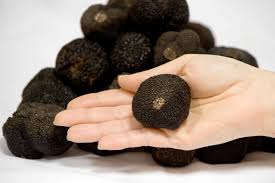
Image   Image

It is notable that in the course of less than a decade, the local food restaurants in Central Otago have significantly increased their demand for local thyme-fed rabbit, pheasant, local wines, choice cheeses, nuts, and processed condiments.  The local dining experience has become part of the tourist sector, in Central Otago, the West Coast, Nelson, Marlborough, from the Wairarapa to Gisborne, Bay of Plenty to Auckland.  That experience has also become very much part of the weekly life of local people, backed up by farmers’ markets.

The trend to discernment and taste experience is complemented by two other wider issues. The first relates to growing concerns for energy inputs and chemicals; particular as they affect freight and the debateable energy-efficiency of high-input commodity production. Vandana Shiva, the Indian food system critic, strongly argues that we are not so much eating these cheap commodities as we are eating oil: oil in transport, oil in the chemicals and fertilisers applied, oil in the manufacture and use of machinery that have substituted for methods more sensitive to the land.  Once these broader challenges are factored in to the system, these types of commodities may not be as ‘efficient’ and competitive as they may at first appear.
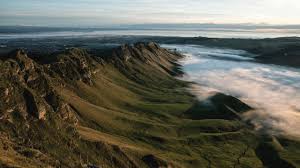
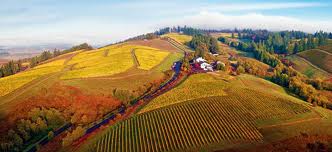
Image    Image

The second issue relates to the realisation that the ‘terroir’ of land – the special properties of topography, climate, soil and even tradition and culture that underlie practice, which are all required to produce the best – requires us to place a fine sieve on the land. It is ‘terroir’ that confers not just quality but also tradition and meaning to the exceptional wines of parts of France.  The Grand Cru wines are the antithesis of commodity.  The more production-focused species of ryegrass, Romney marsh and radiata pine may be relatively insensitive to site, but quality and the development of a mystique around fine food is anything but insensitive to either biophysical site, or local community.  The scales of these emerging food sites to which tree crops belong may be measurable in parts of hectares, rather than hundreds of hectares.

So what is our future? Arguably more opportunities than threats.  The trends in consumer preferences from price to quality are positive.  The characteristics of tree crops suiting relatively small scales are positive.  The emerging issues represent more of a threat to commodity producers, more especially to those that use high energy inputs to produce low value products.  What is a threat to them is another opportunity to the value producer.  Trees have that wonderful characteristic of not requiring high inputs, and some trees and woodlands can produce high value products.

Although we may lack a history of the diversity that Virgil and Evelyn knew, with that combination of high value and low energy input we can make our own.

Chris Perley

An edited version of this article was published in TreeCropper, journal of the New Zealand Tree Crops Assn, May 2007
Posted in Land Use, Thought Pieces | 2 Comments

Does Farming need to Compromise the Environment? Compromise? Hell!

My apologies to Jane Austen, but some have been claiming recently that it is a truth universally acknowledged that a man in possession of a farm must compromise the environment.  One newspaper commentator stated it thus: “..where our (New Zealand) reputation as an agricultural engine and our clean green image are values that certain sections of the community hold dear.  Values that, more often than not, are at odds with each other.[1]  Nonsense.  But oft-repeated nonsense, usually by those who find comfort in clichés. The commentator is not alone, and it is comforting if you say what other people have already said.  Oh, there’s another one, guaranteed to make my hair stand on end: “you can’t be green if you’re in the red.”

For Austen’s Pride and Prejudice, the theme was marry, or be poor.  For much of the thinking within the primary ‘industry’ (and calling a complex social-environmental-economic system an ‘industry’ is part of the whole damn mess) is to either mine the natural capital, or be poor.  Then let’s add the myth of producing more, whatever the effect on profit, risk, food quality, or environment, because we’re locked into a colonial mindset of feeding a Mother country (who cut the apron strings a long time ago).

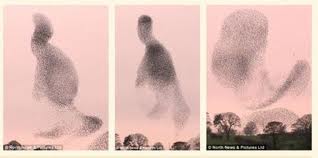
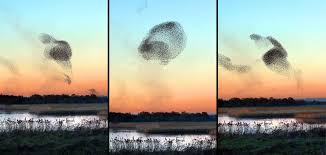
We live by myths.  The myth that a farmer must either compromise the environment or face economic ruin has three suspects.  Some wilfully act on it and don’t care if it’s true or not because they won’t be the individuals who suffer; many are at a point where they have no alternative because of the state they are in, and some believe it.  The supreme irony is that if they either believe it, or wilfully exploit, then they will degrade the capacity of the system to the point where there is only one end game – accelerated exploitation and collapse.  Systems do that.  It’s what the economists and engineers have never understood.  Life is not a machine.  It is far more similar to a long fast exhausting dance on a slippery floor, or a murmuration of starlings creating patterns in the sky that no one can predict.  The trick is to know when we are reaching the point when the dance has to change to keep our feet.

Image                                    Image

Meanwhile, back in non-metaphor land, a properly functioning environment is the farmers’ friend.  It can reduce costs, increase productivity (output per input), increase gross production, decrease the need for costly energy inputs, increase carbon, increase resilience to risks such as drought, flood and pests, increase stock health, provide the story for a product to have price-retaining market position, and increase profit.  Whew!  It can also make life worthwhile for both the farmer and downstream communities.  Lots of ‘ands’, not many ‘ors’.

Common to the examples of excellence is a way of looking at land patterns, which land is suited to what land cover, how the land covers can each support the other, soil and water functions, and rationalising energy inputs.

Why replace all that for a simplified system ever more drug-dependent on energy inputs, happily cheap for the moment, with poorly positioned commodities, a stream polluted with the dollar bills of your own precious soil and nutrients, and an unpleasant future?  Because the suppliers, agronomists, politicians, and processors encourage farmers to do so?  You compromise the environment and you end up compromising the economy, and the community.  They are integral to each other.  I wonder if it’s not a bit Calvinist.  Like saying you can’t have fun and make a decent living (make love or profit, but not both).

Though environmental compromise is neither necessary nor desirable, and yet is still a spoken belief, then it indicates a pattern of thinking that will soon get us to that terminal state, whether we like or not.  If you believe in compromise, then that is all you will look for, all you will see, and all you will get.  Then the “you can’t be green” cliché become true, because you have made it so, not because it need be so.

And then the situation gets worse and you’ll look for some more compromise.  That’s called a vicious circle, a race to the bottom.  It has to be broken.  But first it has to be broken in people’s heads.

It follows from the commentator’s oh so familiar statement above that we have little hope in creating wider landscapes that involve an ‘and’; environment ‘and’ economy ‘and’ community, all mutually supporting.  There is only room for an ‘or’, not dissimilar to the preservationists on the other side of the industrial perspective who so often argued that we can have either forests or furniture but apparently not both.  They have in the past partied up to the industrialists to debate where to place the boundary fence between industry and environment, being sure to marginalise all humanity except themselves in the process.

We must apparently look to the factory model of primary ‘industry’, and marvel at every-larger factories, and machines, and energy inputs, and farm size.  Industrial Mordor, here we come.  Our future.  Our Nirvana.  A world dis-integrated, made safe for combine harvesters, and over the fence a place where the affluent from Karori can commune with nature; another perspective not even Tolkien envisaged – The Wilderness, sans elves, unless you’re one who’s just visiting.  Between these extremes there is no room for the Shire. And the environmental functionality of the wider landscape is – well – dys (functional).  Which begs the question about the future of humanity.

This dystopia (another dys) and its either-or assumptions are worth critically examining.  There are these three situations where people either wilfully, or through necessity, or through belief, compromise the environment.  Each is a different case.

The Wilful Exploiter

The wilful compromisers are the easiest to identify.  They are the real black-hat baddies; the benighted merchant bankers of the natural world.

If you think only about short-term personal wealth creation and choose to make a Mordor in someone else’s backyard while living in the Tuscany of your choice, then you can do so.  Within various natural systems, especially those that take many years to develop – forests, soils, fisheries – we can make a lot more money in the short-term by liquidating natural capital.  We can log a forest to extinction before reinvesting in, say, drift-netting a fishery to death, and then move on to mining the capacity of our rural landscapes to make them more resembling of the bony, dry hills of Greece, gasping for hopefully forever-cheap artificial inputs (“We need more irrigation dams!!  We need perpetual cheap oil!!!  Frack more, it’s our only hope!!”) to make up for what they used to provide for free.  Sounds like international finance, with dirt.

There are probably people who would defend these actions; the Tea Party, the ghost of Milton Friedman, our own usual corporate and finance apologists, the politicians who attract the most multi-national corporate support.  I don’t know to what audience they are directing their excuses, but it is not to us.  If we have any interests in making a successful enterprise to pass on to later generations; a successful local community; a successful country; then one-off short-term ‘wealth’ creation by liquidation of natural capital and taking it elsewhere, lacks a certain perspective.  More GDP though.  Environmental destruction, like an earthquake, is good for GDP.

History has all sorts of lessens that demonstrate how such short-term thinking and personal greed lead to an eventual system collapse.  Some obviously think it fine if that’s the risk.  They may either live in the now while the problems lie in the future, or they may live elsewhere.  Not my problem.  Divorced from the consequences.  The great (retch) ‘philosopher’ Rand said act like a reptilian vampire and the world will be a better place.  The ‘greed is good’ brigade demonstrate often enough that, while the ‘market’ (I put inverted commas around it to emphasise that it’s an abstraction, not a god – as in “Our Lord Market, hallowed be thy name”) may work well with most short-term localised feedbacks (when the power of corporates and aristocrats is substituted by the power of meaningful local democracy – oh, the neo-liberal economists forget that part), the ‘market’ (“all [DON’T] hail”) can be appalling where time and space has a bit of scale attached.

The market won’t do it alone.  That is why we need to judge heavily those that wilfully exploit land or people.  Ethics matter.  I once had an interesting discussion with an economist of a particular neo-liberal persuasion when I explained that the ‘rational’ financial choice is NOT to manage a long-cycling system sustainably.  It was to mine a forest then march off to legally hoodwink another unsuspecting chief in the Solomons.  “Your forest is not that valuable.  Tell you what, I’ll take the mess off your hands for you.  And I’ll throw in a jetty and some mud tracks that will turn into a liability in a few years time.  You want a couple of four-wheel drives?  Ok, done.  You drive a hard bargain.  Have a beer.”

Repeat until stinking rich, and hopefully happy.  The same applies to social systems.  Exploitation works.  At least for some decades, until the Malthusian press takes things to the point of revolution and people start dreaming of Madame la Guillotine.  The wheel of fortune is real.  If you don’t balance ego and power with some ethical concern for others, then you risk a major fall.  But who needs such wisdom in the age of financial and ego extremes.  And if the wheel falls on someone else ….. then it’s someone else’s problem??

Image

Sustainability for long-running natural systems is underpinned by an ethic.  For ethics, family farms are best because the people live in the land, have children, and generally care a little more about the community and the next generations.  They have at least the basis of the necessary perspective.  Corporate agriculture and Alpha male megalomaniacs do not. Combine that with an unhealthy obsession with power, and the only long-term solution is to recognise their sociopathy and ecopathy (I just made that word up) and control their power.  If we had to recognise the ultimate cause of potential social, environmental and economic collapse, then this Ayn Rand style despotic reptilian egoism is a prime suspect.  Am I being too harsh?  Is greed and exploitation good?

The Desperate Compromiser

Even in the short-term the market can create the problem where the hammer of price reduction comes up against the anvil of rising costs, and people have nowhere else to go.  This is the second case for environmental harm. They must degrade their natural capital, or externalise their costs, just to survive.

The Dust Bowl conditions in the US mid and south west in the 1930s is perhaps the most famous example.  There are many more.  Faced with the hammer of declining prices for wheat and the anvil of an interest bill from the bank, farmers actually increased production because they needed the revenue.  Most economists would expect the reverse; a drop in production because of lower prices.  If farmers had options other than wheat, that may have happened.  But they had no options, so sowed more wheat on already tired land, and broke in more short-grass prairie, desperate to pay the bills.  The price dropped again from yet more over-supply.  President Herbert Hoover praised their enterprise in tough times, demonstrating the usual political ignorance regarding land.  They broke in more prairie, and then more.  If someone charged them with adversely affecting their environment, they would argue necessity, quite correctly.

They continued to exploit the land’s natural capital.  Continuous wheat farming is no friend of the soil.  It reached a point where the soil had no more resilience left, and was then ripe for a disaster: a rise in interest rates; another lowering of price; a devastating flood; a drought.

They got the drought.  The camel broke its back.  A classic socio-ecological system collapse. Pretty Boy Floyd robbed banks and burned mortgage documents and became a local hero.  Steinbeck wrote a great book.  Dennis Glover’s poem The Magpie, with all the quardle oodling, presents the same story in a different (NZ) setting, though without Pretty Boy Floyd.  The end is the same.  The banks own the land, and only the crows or magpies remain.

When something is in this state, a major rethink is required.  The land may not suit the vegetation cover chosen.  Practices need to be reconsidered.  Poor choice of land cover to site is also the case within farms, erodible steep faces and dissected gullies being the obvious ones.  New Zealand – socially at least – is a young country, still with a colonial mind-set.  We have yet to learn about the integrated land use patterns that are evident around the older world.  In many regions, if you plant trees you remain a bit suspect.  We are bombarded by monomaniac ‘experts’ wanting a ‘tidy’ 1000 acres of one thing.  Pattern?  Heaven forbid!

The Believing Compromiser

The third case is where people degrade the environment because they believe and are continually told that that is how it has to be.  This is a crisis of culture, a point well made by Wendell Berry in his classic The Unsettling of America.

Image

Compromise is seen as necessary.  That’s the myth. That’s the way it is.  It is often accompanied with statements about the need to feed the world, or how gross production of commodity is the measure of success.  Think of all the undifferentiated commodities we can sell to the world for an ever declining price, and God damn the greenies for trying to put us out of business.

Never mind profits, resilience to risks, lifestyle, or community.  Never mind the potential of land to provide a range of products and services and high value local processing chains.  A whole research, policy, education, supply, media and processing industry has a vested interest in this myth.  They perpetuate the commodity trap, and seek solutions within the same thinking that created the problem.  We need a techno-fix.  More GE.  Another chemical.

The myth discounts all the examples demonstrated by Farm Environment Award contestants, farm foresters, the experience of the Raglan catchment project, niche marketers, and many others that look at their land differently and create highly profitable lower-cost farms, with lower energy inputs, lower risks, greater resilience, and many multiplying benefits to the local community.

Where we have declining natural capital in New Zealand, it is the desperate and the believing compromisers that predominate.  But we have a few wilful exploiters as well.  It is mostly a crisis of culture, whether because we have got ourselves into a poorly positioned commodity trap, or because the received wisdom is that compromise is necessary.  Stating otherwise is risky.  You may be called a hippy.

Where environmental damage is occurring it needs to be acknowledged, and the drivers understood.  The drivers are mainly social.  So are the solutions.  Openness to new ideas would be a start, as would a few broader strategic debates.

When people say you can’t be green if you’re in the red, then there is no room for seeing, let alone examining, far less realising, the potential the environment can provide for us.  We perpetuate a myth that promises nothing except a bleak future, because it positions humanity as somehow outside the environment, instead of within it.

Chris Perley

Chris Perley has been called a hippy as well as a ‘make love not profit’ flower child.  He wonders why people think you need to make the choice.


[1] Michael Forbes (Dom Post 17 Sept 2011 A15)

Posted in Land Use, Resilience Thinking, Thought Pieces | 9 Comments

NZ Primary Sector Strategy: an Alternative to the Race to the Bottom

Irrigation NZ CEO Andrew Curtis (NZ Farmer’s Weekly 25th Nov p 3) highlights one of the big problems with the New Zealand primary sector; our continued focus on producing large volumes of cheap commodities for international markets.

We’re not to blame for the declining water quality because the big bad markets want cheap stuff.  He uses this as a reason – or rather an excuse – for discounting the PCE report on Water Quality in New Zealand: Land Use and Nutrient Pollution.

Producing lots, cheaply, is apparently our preferred strategic position.  First we fed Britain and were taught by our agricultural colleges to maximise production – never mind the negative effect beyond the optimum production level on profit and risk.  Britain paid us relatively well because we were inside the family, so to speak.  But when Britain did a runner into the EU in 1973, we did not change our thinking and decided to feed the world cheaply instead.

The PCE report highlighted one of the consequences of this worst of all strategic positions; our declining environmental standards.  There are other consequences, including our lack of market position, which means we have to ‘take’ the price offered instead of ‘make’ the price. That means that every ‘cost efficiency’ gain we make on the land is quickly gobbled up by the stronger buyer; we save a dollar, and our prices come back a dollar, or more.  All benefits are temporary, and the costs come in the medium and long term beyond the annual budget.  Then we make more cuts in costs and standards – environmental and social – to maintain our margins for the short term.  And still we are generally getting poorer, and we have less family-owned farms and people living in our rural communities.

Agricultural commoditieWorld Bank

The obvious message ought to be that market position is far more important than a focus on gross production.   But our education, policy and research focus remains on producing the new highly-bred highly-fragile thoroughbred of GE grass and converting our gullies and swamps into the same because we cannot see the opportunities and benefits they can provide.

There’s a problem with this idea of land as a uniform production factory; when your focus is on measuring the wee grass plant at your feet in the metaphorical paddock of agriculture, you’re not really well placed to point out to the students either the potential in the shrub next to it, or that there is a grave danger of a metaphorical, and largely unpredictable, bull surprising the living daylights out of you when you least expect it.  “What bull?”

But what a trip!  We produce more (to save the world and all those billions of people earning less than $2 a day); the agricultural commodity prices come down; we desperately seek to cut more costs even if it means over-capitalisation and debt (praise be for the irrationality of land values that reflect production not business profit/risk); our overheads climb and with it our business risk; margins squeeze and we amalgamate family farms seeking scale; homogenise and industrialise the land; corporatise and relocate our head office from RD 2 Waipukurau to Symonds Street Auckland, reduce labour costs and call them ‘units’; bring them in from overseas; and demand the right – nay, the need – to pollute.

And state that reports by the PCE highlighting a problem contain nothing new and ‘don’t blame us.’  So boo sucks to you other New Zealanders that want to swim in your own rivers.

And we wonder why the public is a little tetchy.

It’s a bit like a bunch of engineers in a factory still running on colonial grounds responding to a drop in value by saying, “I know, let’s build a bigger factory, argue for reduced working conditions, reduce the quality of the product, who’ll notice?, throw some costs over the fence or into the future, and job’s right for another quarter.”  Yeah, that’ll work.

Andrew Curtis is arguing for ‘Business as usual, but better’, along the lines of the factory owner above.  There is no challenge to our commodity strategy, just a shrug that that’s how it is, and we like it that way.

That won’t cut it any more.  There was another PCE report of almost a decade back, Morgan William’s Growing for Good.  It argued for a redesign, a change in strategy.

Poet, novelist, essayist and land use philosopher Wendell Berry of the US made the same call back in the 1970s in the face of corporate agricultural expansion at the expense of family farms.  He referred to the crisis in agriculture as a “crisis of culture.”  He was right.  That was in 1978.  No one listened.  New Zealand is now going through the same trends a few decades later, and people would be well advised to read of Berry’s observations and philosophies.  We are repeating the same mistakes, with the same excuses.

More recently, in 2010 a special United Nations Rapporteur Olivier De Schutter has argued for the vital need to shift away from this failed strategy, and the need to shift from industrial agriculture to one that focuses on agro-ecological systems.  Deafening silence.

So here’s a thought for the NZ primary sector ‘leaders’ out there.  How about we get off this low price corporate-trending commodity race-to-the-bottom, and focus on holding and increasing our prices.  We should not feel guilty for charging Madame in New York $150 for her lamb cutlet marinated in free-range kiwifruit yogurt, laid out on a happy-forest Totara platter.  I’d charge her for the platter as well.  The more the merrier.

There are a number of things to consider in any strategic shift.

First, get rid of gross production as having strategic relevance to a modern NZ primary sector.  That will give many Lincoln and Massey agronomists apoplexy, but that’s what they gave me 30 odd years back, so fair’s fair.  It’s about value, not volume; and if are going to maximise anything, then we should be using our smarts to maximise long-term value, not volume.

Emphasise market position and price making, especially in relation to the mega-trends of food safety, environmental quality, and community values.  Market the hell out of it and sell on quality and ethics, never, ever, on price.  Horticulture doesn’t get a premium on Chile because the markets like us.  It’s because we push quality.

Control as much of the value chain as possible from paddock to plate (or sheep’s back to soft wool lingerie).  Don’t let the middlemen wide boys make short-term deals that make our people the losers in the long term.  Increase, diversity and localise the value chains.  Maybe even shift back toward niche local processing by decentralising our cooperatives – back to the future.

Think productivity (output per input) within the farm gate – which means re-building the services the environment provides for free.  The environment is the farmers’ friend in both increasing price and in reducing costs, so please, no more empty clichés like “you can’t be green if you’re in the red.”  A substitution back to nature and away from a scary junky-like reliance on high energy inputs which are currently nice and cheap – currently……

Rethink the design of landscape systems within the farm – there are savings to be made and revenue to be earned if we get out of this fixation with 1000 acres of pure ryegrass and 1000 acres of pure radiata pine.  Build diversity and resilience in the face of an uncertain future world.  Homogeneity’s bedfellow is mediocrity.

A rethink of primary sector strategy is far more important than justifying poor water quality to a more and more sceptical public, or another “we need to increase production” clarion call, or any self-justification by blaming it on the commodity markets.  We need to get off the whole commodity gambit, or at least as much as we can, and take back control of, and diversify, our supply chain in the interests of our farmers, our communities and our future.

Anything else that emphasises ‘business as usual’ is just another justification for mediocrity and a lemming-like march toward some future cliff.

Chris Perley

Submitted to NZ Farmer’s Weekly

Posted in Land Use, Resilience Thinking | Tagged , , , | 2 Comments

The Loss of the Napier-Gisborne Rail Link: Things fall apart, the centre cannot hold

This article criticising the current government’s decision to close the Napier-Gisborne rail line was published in the NZ J Forestry in December 2012.

================================================================

Turning and turning in the widening gyre

The falcon cannot hear the falconer;

Things fall apart, the centre cannot hold;

Mere anarchy is loosed upon the world,

The blood-dimmed tide is loosed, and everywhere

The ceremony of innocence is drowned;

The best lack all conviction, while the worst

Are full of passionate intensity.

WB Yeats. The Second Coming

The Napier to Gisborne rail line is closed.  A storm created the final straw, a cost of a few million to repair.  There are ironies in that a storm became the excuse, but you need a bit of history and breadth to see them, and Yeat’s ‘passionate’ men do not usually see irony, so intense is their fervour and belief.

Therefore, with fervour, and a little spin, one of the peripheral transport network strands is cut from the central rope because, if you look at the costs and returns internal to that one strand, at this time, in this place, a case can be made to trim.  And so we do.  And words like ‘efficiency’ are bandied about, meaningless without context (Whose efficiency?  Efficiency relative to what?).

There are decision-making frameworks of course; but they are the same ones that rationalise the loss of historically-developed heavy engineering capacity of the Hillside Railway workshops, and buying cheap from overseas.  Short-term expedience, and an almost pathological avoidance and perhaps fear of thinking strategically about our long-term future, the retention and development of value and legacies, or of building social and economic capacities.  We become less resilient by following this legacy-destroying path, but someone will be better off.  Someone always is.

A forest decision-making analogy is the destruction of the Kauri, a rape that Sir David Hutchins referred to as “one of the saddest features in the history of this fair earth”, suggesting it will go down in history as “a dark blot in the story of Anglo-Saxon colonisation[1]”.  Like a mature Kauri forest, these rail values and capacities extend far beyond the dollar, slow to develop and very easy to destroy.  And then, as with the Kauri, we look back on the loss, and wonder why it happened, and why didn’t those people we trust to make the right decisions act in the people’s interests over the temptation of the short-term shilling.  There is a lesson in our butchering of the Kauri; lessons we still haven’t learned, and so we keep repeating them.  Hutchins’ comments are as relevant today as in 1916.

That framework that destroys rather than creates legacies is about thinking financially rather than strategically; about considering only the short term; about not thinking beyond the books to service or the future of New Zealand or the regions; about taking what you can, when you can; about cutting expenditure rather than building capacity and custom; about a central government ideology of market and private in all things; where there is no need to ‘strategise’ about transport or the future price and availability of energy, or regional development, because the ‘market’ (mythical omniscient entity be praised) will do all that anyway.

We may analyse things, and cut them up into ever smaller pieces, and then presume we are providing reasons, and meaning, and some basis for sound judgment.  That is one of the myths of the day; that by wilfully ignoring any but the thing that stands in front of our narrow vision – disconnected, reduced to quanta of our own subjective choosing, held forth without a shred of irony as some objective truth by passionate men – that we can make a path to the other end of the field.  Better still to look at our feet while doing so.

It is difficult, therefore, to look at the loss of the Napier to Gisborne line without touching on some of the ‘passionate intensity’ ideas behind it all.

Network Economics

The study of the folly of narrow technocrats ought to be sufficient to light a beacon of warning against their possession of decision-making power.  Ultimately, the real world tests all hypotheses.  But, as Jane Jacobs[2]  proclaimed in reference to the abandonment of our search for truth and understanding rather than religious application of one method (the preserve of the passionate men), when the answers from the real world seem to come slowly (climate change, the planetary limits, the future price of a low-grade commodity, an economic theory based on false assumptions, etc.), then:

“it is seldom the evidence itself that is slow to appear; rather, observers are blind to evidence or emotionally can’t bear to credit it.  This is why the crashing of the Berlin Wall was required as an exclamation point, after unheeded evidence of many decades reported that Marxism was untruthful as an economic theory.”

Even large shocks haven’t changed our decision-making bias of short-term narrow expedience and faith-blind arrogance from a less and less Earth-bound hierarchy.  The Auckland CBD, New Zealand’s commercial hub, lost power for five weeks after a positive cascade effect of failure begeting failure.  The subsequent inquiry into the management of Mercury Energy identified issues around corporate governance, risk management, contingency planning, asset management and lack of responsiveness to what engineering staff had warned was at risk.  You need not listen or consult if you know you know it all.  In the midst of the debacle, the company chairman repeatedly stated in a riveting radio interview that the company was “well-run”, to the near apoplexy of the interviewer Kim Hill.  Under his narrow definition, it was.  He knew.

In 2008, we saw another great collapse that exposed the pseudo-rationalism and benevolence of the Lord Market as deeply flawed, other than for those zealots who – like their communist brothers in faith – insisted that it would all work once it was a ‘pure’ free market.  But the thinking in New Zealand, if anything, has become poorer yet with more short-term finance, and less long-term strategy.

Rail has had its own debacles.  A story within strategy circles tells of the effect of reductionist accounting on the UK rail systems.  Primary and secondary lines made profits.  Many third and fourth order lines did not.  So the obvious decision if your god resides within a spreadsheet is to close the unprofitable lines.  The result was the collapse of the profitability of the next order lines up the chain.  Things fall apart; the centre cannot hold.

Rethink followed crisis.  Within network economics, the peripheries feed the main trunk routes through hubs, whether in roads, shipping, rail, or air transport.  You make decisions based only on the figures of a peripheral line at the risk of the whole.  If that was our approach, a high percentage of our county roads would not be financially viable in and of themselves.  And without them, New Zealand would not be financially viable.  So you have a choice: a financial analysis ‘internal’ to the parts of the system, or a strategic approach around other decision making frameworks such as ‘resilience thinking’.

We don’t close down unprofitable peripheral road networks because transport links are strategic, not financial, and because – if and when you apply economic arguments – network economics is the narrowest potentially useful framework.

And yet, another feeder line has been cut with the Napier to Gisborne line, which now makes the Palmerston North to Napier line less viable, and potential unrealised.

Resilience Frameworks and Transport Strategies

Line-specific financial frameworks for decision making within transport networks has not basis for intelligent decision making.  Network economics is better, but still too narrow.  There are considerably more complete frameworks than even network economics.

Far from the narrow expedience side of the decision-making complex sits the ‘resilience’ framework[3].  The principles are similar to those required for the successful survival of a species.  The capacity to cope with a shock whether localised, or universal; the capacity to adapt should the unforeseen occur, as it inevitably will; the capacity to shape a new future; if possible; the capacity to foresee possibilities, to retain capacities, and to build those we may need to both reduce uncertainty and cope with shock.  It is inherently long-term in its focus, accepts uncertainty and uncontrollability rather than predictability and quantifiable risk as the essence of any future.  You cannot model uncertainty because by definition it isn’t there; not even stochastically.  Resilience thinking is the opposite of what we generally see from the technocrats, though more and more the spin doctors will throw in the word to appear hip, without any appreciation of what a culture change it represents.

Many of the capacities necessary for resilience relate to: integrated infrastructural systems; diversity in options (the ‘many rivets’ argument); the integrity of localised nodes or modules that have some decentralised functionality; a multi-functional landscape rather than a single-function factory of paddocks and compartments; a vibrant social ‘knowledge system’ where those at the top are disabused of the delusion that they represent all wisdom; social collaboration; and the values of innovation and improvisation.

All of these capacities are destroyed by the very prescriptive thinking that goes hand in hand with narrow expedience, command, control and faith in quantitative prediction.

Resilience was a key idea of the past Labour-Greens government’s transport strategy.  It emphasised the future probability of future fossil-based transport fuel constraints, the need for energy conservation, the disruption of positive feedback loops building growing energy-dependency (the motorway-suburban spall-motorway-spall feedback), creating options including coastal shipping and rail, and regional modularity with transport committees taking an overview.  Better yet, it emphasised public transport, walking and cycling, the linking of communities to open spaces and the transport system, as well as integration with the renewables and decentralisation-focused energy strategy, and adapting to climate change.

With the change of government in 2008, as the Global Financial Crash suggested such resilience thinking was at least worth a second thought, policy went into reverse.  Motorways were emphasised.  The regions were put back in their place and Auckland given its rightful dues.  Climate change was barely mentioned.  Expanded oil, gas and lignite extraction was a new hope to stave off any suggestion of the need for thinking change; or simply thinking.  Transport strategy was decoupled from energy, climate change and regional development.  Decision making was centralised where it could be better controlled.

Through all this, rail was an embarrassing failure of privatisation; an underfunded system, bled white first by private sector owners until the public once again was forced to bail out yet another corporate beneficiary, and secondly by the government.

Vulnerability of Northern HB Gisborne – Transport and History

The Napier – Gisborne railway is a personal journey, as all journeys are.  This is a route on which in days past you could ask the driver of the railcar to drop you off at Matahoura Station, just over the viaduct, and it would be done.  It was over these viaducts that road traffic was diverted after the road was cut after the Napier earthquake of 1931.  My own grandparents made that trip, and there are stories of unsympathetic husbands stopping their Model T Ford in the middle of the Mohaka Viaduct to get a rise out of the newly betrothed.  But that was a different New Zealand.

The rail system has suffered from major underinvestment and deferred maintenance since it was privatised during the 1990s and purchased by a benighted merchant banker amongst others.  The poor asset management that Mercury Energy were charged with applies as well, if not more so, for the Napier-Gisborne rail.

The levels of travel on the rail are no indicator of potential.  Only in the last year was tunnel work undertaken to better enable container trade.  This arrested development approach of the short sighted is not new to the governing board of rail.  In the 1990s, requirements for log-carrying rolling stock maintenance lead to a choice between upgrading the stock or discontinuing the service which was due to grow with the expansion of the Otago-Southland forests.  They chose to discontinue, much to the bemusement of the local forestry sector.  For these growers, rail was an important tactical choice for producers who transport long distances and want price competitiveness.  The same applies for particularly Gisborne enterprises.

The country from Napier through to the East Coast is steep, erodible, and subject to major storms.  We also enjoy earthquakes.  The road and rail have a history of being cut.  Sometimes both, often one or the other.  Most recently, the Manawatu road access to the east was cut while the rail still ran.  The Waioeka Gorge, another major access point for Gisborne, was temporarily cut in the 2012 autumn.  It is not inconceivable in this landscape for Wairoa and Gisborne to be cut off at any one time.  This is more likely in the future in a climate where the incidence of storm events and in particular the frequency of south-tracking tropical storm systems, is expected to increase.  Given that possibility, the option of rail is obviously strategic, and internal costs and returns to rail are mischievously insufficient; more justification of political will than any attempt at truth and understanding.

Conclusion

Yeat’s was presenting his scenario of a dysfunctional world as the basis for some second coming of goodness and purpose.  That dysfunctional world is here.  The ‘best’ perhaps lack all conviction both because a broad and long view raises the fuzzy contingency of time, place, point-of-view, and meaning that cannot be logically or easily reduced to a few dimensions; and because the ‘passionate intensity’ of the zealots that have no problem with logic (or deep thought for that matter) have such a dominant hold on the hierarchy of the central government and corporate minds.  The ‘best’ give up in the face of spin and con.  Don Quixote was one of the ‘best’, but the windmills he tilted at moved mechanically, oblivious to all but their own functioning.  It is doubtful whether many of the mechanical technocrats behind many of the policies we have endured over the last 30 years have ever sort to understand the philosophy behind what they do.  Technocrats follow their preferred method, like the worst of science, with their models acting as guide dogs for the blind rather than one of many considerations for the thoughtful.  They have lost the ability, and certainly the wider organisational ethos, to seek truth and understanding.

In so doing, they do great harm to our country and to the long-term success of their own organisations.  When they are blind to their own failure to think is bad enough, but when they no longer care about the right decision, and instead attempt to justify a poor decision by orchestrating public relations for political ends, then the situation becomes appalling.

And the decision to cut the Napier-Gisborne rail was political.  The government may have used the promotional cant of selectively-chosen financial data, weak and irrelevant though they were.  But no attempt was made to take a broader strategic view that considered transport as more than a piecemeal set of unlinked financial entities expected to stand on their own feet outside a wider network.  Absolutely no attempt was made to consider this rail link within a broader strategic framework, certainly not one that aligned with ‘resilience thinking’, perhaps better expressed as ‘basic evolutionary survival strategies’.  The fear with that is that Jane Jacob’s real world “exclamation points” are not always as trivial as a wall coming down.

In a recent paper to the NZAIA Conference 2012, Geoff Bertram from the Institute for Governance and Policy Studies at Victoria University shifted the challenge from the promoters to we the public[4].  He strongly advocated that we beware of the vested interests of the promoters; proclaiming that New Zealand’s greatest psychological weakness is gullibility when faced by promoters often using big numbers, and that promoters will only be honest and open in a policy environment where honesty and openness pay, and where naked propaganda doesn’t.

For that we need the ‘passionate intensity’ to be the chosen preserve of the ‘best’.

Chris Perley

FNZIF

chris@thoughtscapes.co.nz

Published NZJ Forestry  2013 57(4): 39-41


Referenced in Roche, M  Sir David Hutchins and Kauri in New Zealand.   http://fennerschool-associated.anu.edu.au/environhist/links/publications/anzfh/anzfh2roche.pdf .  Accessed 10 December 2012

[2] Jacobs, J. 2004. Dark Age Ahead. Random House, NY Chapter  4. Science Abandoned. p66

[4] Bertram, G. 2012.  Lessons from Think Big.  Conference paper at NZAIA Conference 2012,Wellington

Posted in resilience, Strategic thinking, Transport strategy, Viewpoint | Tagged , , , , , , , , , | 1 Comment

Instead of Dam Thinking from the 50s, Look to the Landscape

In the lowlands of the Otago Peninsula, within the hill streams that flow into the harbour, there are water wheels.  They stand as monuments to what once was, to what ‘functions’ there once were within our society, and – vitally – within our water landscape.

For these water wheels now lie within dry stream-beds, redundant, and could only function now immediately following a rain when the streams flush full.  As the bush was cleared, the wetlands (‘swamps’) removed, the tussock replaced with short English grasses, as soil and organic matter were lost from the land, so the ability of the land to slow and store water steadily reduced, and the streams flowed more intermittently.  And now when they do flow it is with a more extreme pattern of potentially flash-flood and dry bed.  The total water that exits these catchments is probably higher than it once was, but the pattern of flow reduces the resilience to floods.

Lyndfield Park, NSW

Lyndfield Park, drought prone New South Wales, where the farmer went to higher covers and shrubland associations to both reduce evapotranspiration and dramatically improve soil infiltration and water holding

In the Waitaki Valley, older men of the land recall when the streams whose source was in the upland tussock once ran year round, cool, clear, and flush with koura.  As the tussock was removed, the functionality of the stream reduced, whether because of the reduction in rainfall infiltration and soil water storage, or because of the loss of mist and cloud harvesting effects of tussock and other raised vegetation, as argued by Professor Sir Alan Mark, and most famously evident within the Coast Redwoods of California.

Professor Peter Holland from Otago studied the stream flow change of an area of the Canterbury Plains through three aerial photographic surveys taken during summer months from the end of World War II to the 1990s.  During that period, the loss of wetlands, woody vegetation, and soil function led to a reduction in the length of permanently flowing streams, and with it, the loss of value to in-stream ecosystems, stock and community connection, as well as to the resilience of the landscape to flood and drought.

The same pattern of change in land and water function is evident throughout New Zealand, including the drier and stormier Hawke’s Bay where the effects of that loss of function are far more severe, especially for drought.

Irrigation Dam

1950s big mill thinking, with irrigation dams seen as the solution before thinking first about land health

Government and regional council proponents of large scale irrigation dams demonstrate no understanding of these complex landscape life-supporting functions – which are its core mandate to protect.  Something has gone wrong.  Their obvious industrial ideal sees the landscape as simple: Water falls on the hills, it is shed off the hills and collected by a dam (never mind the functions described above), for distribution to irrigators and the main-stem of the river system for the dilution of pollution. That ideal is insulting environmentally, socially, economically and professionally.  It is also hung up on outdated approaches that emphasise Economies of Scale, creating diseconomies they cannot see.  There is no room for systems thinking and the trend in policy and enterprise toward Economies of Scope – build function and capacity within your community and landscapes system, and stop thinking of them as simplistic machines.Overgrazing grass physiology

A potential landscape strategy for the dry East of New Zealand should meet the environmental goals, as well as the goals of local social and long-term economic vitality that are dependent on these landscape functions.  For that, councils needs to demonstrate an understanding of these functions, and that they have clear goals.

To date, they have not, though there is some promise within the newly elected Hawke’s Bay Regional Council.  Nor, generally, have they taken the next step, which is to develop a policy framework that encompasses a landscape approach to critical issues relating to water.

Central government is arguably worse.  As a group, they lack land use systems thinking, both in parliament and in government departments – individuals aside.  They cannot see the potential of building capacities and scope through patterns and qualities – whether in economies, communities or landscapes.  And so they fall back onto the soulless and mechanical.  The only goal that is apparent is that “we need the dam.”

Worse, other potential means are ignored, strategy debate is shut down, and the very functions that we need for a viable future – such as a landscape that actually holds water like a sponge (and that is only *one* thing) – are degraded in pursuit of a factory landscape.

holistic_management_comparison_diagram

This is not the way policy development is supposed to occur.  A clear understanding of our social values, as well as the environmental, social and economic functional complexity and interrelationships is required, together with the factors that are likely to impact on our future.  Following that is the development of clear goals (outcomes), a policy framework (resilience to uncertainty), then a number of nested strategies (landscape land & water, social capital, economic focus and infrastructure) that will allow us to achieve our goals within our known constraints and unknown uncertainties.

You can’t do that in one building.  You certainly can’t do that within a hierarchical system where no one is permitted to think or dialogue except the top dog, whatever their motivations.  You need to foster dialogue, thought and goal-focused expression (oh how those have been beaten to death in the hierarchies imposed on the public sector reforms since 1988), you need to embrace the communities that know particular issues in particular place, and go in asking questions, not providing answers, even ‘draft’ answers.  Because the answers are out there.  That is the model for policy development within a democracy.  The alternative quickly degrades into a form of authoritarianism.

new-zealand-drought1-537x301

Summer Dry Eastern New Zealand

With the suppression of dialogue within our public sector organisations, it was ironic that the ones that closed down the internal dialogue then claimed that the opponents to Hawke’s Bay’s Ruataniwha dam provide “no alternatives” to the problems of drought and regional prosperity.  This is untrue.  The options have always been there, and they have been argued both within the Regional Council in the past (when discussion was permitted) and in more public arenas.  But someone is not asking, and no one is listening.

Here are some alternatives.  First, rebuild our on-farm landscape water and other environmental functions (which are synergistic across land, community and economy).  That involves both retention within soil, and within farm wetland and pond systems.  It involves embracing systems thinking and agro-ecological ideas as argued by the UN’s Olivier de Schutter, the paradigm shift in landscape thinking.

Secondly, community-led local-scale storage systems that are not designed with a corporate seller delivering water to a corporate user without concern for the either the environment or the community.  Opuha is one example of a community-led local-scale model, but there are many highly localised water harvesting systems in use around the world.  And before they are dismissed as irrelevant to the modern world, look into the first principles involved and see that they represent an opportunity to shift away from the factory view of land and people.

If these options have been exhausted and our landscape functions and values assured, then larger-scale systems are an option, but only if they do not involve a level of commoditisation and over-capitalisation that will result in land aggregation and energy-intensification, leading to less diversity and the effective colonisation, depopulation and environmental degradation of local regions as they have done through time from Ireland to Nebraska.

The real concern is that all the examples of environmental, community and economic disintegration through industrial agribusiness approaches are evidenced in the United States and around the world.  And yet we run along behind, like lemmings.  I think that is a failure of capacity within our so-called professional and policy environments.

Authoritarian structures that stifle thought and open dialogue while promoting unthinking loyalty is part of our problem.  But the view that disconnected, linear, and quantitatively obsessed specialisation is on top (rather than on tap) means we create a willing tyranny of ‘experts’, who cannot think.

Chris Perley
Thoughtscapes

An edited version of this article was published in the Hawke’s Bay Today Thursday 26th September, 2013

Chris Perley has a background in embedding himself in our landscapes and fields, in management, policy, consulting and research relating to land use, the environment, provincial economies and communities.  He is an affiliated researcher at Otago University’s Centre for Sustainability.

Donation to Thoughtscapes Blog

Donations are welcomed with my sincere thanks. You can simply click the multiples of $5 donations, then click on the Paypal or any of the Credit or Debit Card symbols. It also allows me to get rid of the pesky advertisements! And it’s a nice way to say thank you. So thank you 🙂

$5.00

Posted in Land Use, Thought Pieces, Water retention | Tagged , , , , | 7 Comments

There are Alternatives to the Ruataniwha Dam

There are Alternatives to the Ruataniwha Dam.

via There are Alternatives to the Ruataniwha Dam.

Posted in Transfer, Viewpoint, Water retention | Tagged , , , , , , , , , , | Leave a comment

Land & Water Concerns of Federated Farmers & Irrigation NZ

Land & Water Concerns of Federated Farmers & Irrigation NZ.

Posted in Resilience Thinking, Thought Pieces | 4 Comments

Land and Water Concerns of Federated Farmers and Irrigation NZ

Federated Farmers and Irrigation New Zealand Questions

Chris Perley

Ngaruroro Ward, Hawke’s Bay Regional Council

Federated Farmers and Irrigation NZ provided the following questions (italicised within text).   Here is my response.

Introduction I am passionate about the potential of our rural landscapes to provide value to landowners as well as to the communities of the region.  I believe this requires a rethink about how we look at land and primary production. Our future is not in commodity production whose values continue to decline in real terms.  Our future is not in degrading the function of our landscapes however much we mask the problem by increasing artificial energy inputs. Rather, we should be focusing on premium value from the land and within local value chains, a premium partly justified because of the environmental quality of the land from which it comes, and we should be focusing on how we increase the capacity of our landscapes to provide cost savings and resilience.  For the latter, the environmental health of the land is also important. I was born on the East Coast to a farming family and raised in Hawke’s Bay.  I have a background in land management in both agriculture and forestry, in land use policy, strategy and research.  I returned to Hawke’s Bay five years ago because I care about this land, its people, and its future.

  1. [FF & INZ] Hawkes Bay has one of the lowest rates of economic growth in New Zealand. Do you think that the regional council should have a role in driving better economic growth? If so, what initiatives would you support to create significant growth in Hawkes Bay?

Hawkes Bay has to change its thinking about “economic growth” of GDP.  Indicators of economic vitality are far more important than GDP, measures such as: start ups, diversity, value retention in the local economy, market position to maintain or increase prices, levels of cooperation, reliance on outside inputs, local value chains, and control of marketing down the supply chain to end customers. GDP measures ‘bad’ economic activity as well as ‘good’ activity.  For instance, the costs of a dysfunctional landscape (e.g. the need for more external inputs of energy and feed because our landscape can no longer provide for itself) or social dysfunction (lack of opportunities and despair leading to health, psychological services and crime prevention) all lead to more ‘ growth’ in GDP.  GDP will grow after a disaster, or if you paid an outsider a billion dollars to destroy all public buildings in Hawke’s Bay.  It is a nonsense to rely upon GDP growth as an indicator of vitality, as Bobby Kennedy pointed out so well. Our focus rather should be on economic vitality and building resilience.  The keys to this are social opportunities and environmental capacities.  The environment and people underpin the economic success of the region.  You cannot separate the health of the economy from the health of the environment.  If you reduce the health of the environment, then you will eventually reach a point where the economy – and society as a whole – goes into a tail spin.  The lessons of history are very clear on this point. Within this context, the Regional Council has a role in protecting the life-supporting functions of air, water, soil & ecosystems (the environment), for the purpose of providing for our people now and into the future.  We cannot provide for our people with an attitude that says we need to harm the environment in order to make more money.  The compromise thinking of “you can’t be green if you’re in the red” is 19th century industrial thinking and needs to change.  I discuss these points at length in the HB Today article “Realising the Potential of Hawke’s Bay”. The environment underpins the economy in two ways.  Firstly, it can save costs to the land enterprise by providing free services.  Our past reliance on free N from legumes was how we used to operate, and it is the model of what you can build within farm systems.  Secondly, it also provides our primary sector with the diverse product opportunities and – vitally – the market position that premium markets require (e.g. a brand such as 100% Pure – but really meaning it).  Within premium markets we can hold and dictate prices.  Within our currently dominant commodity market approach, the buyers dictate, and our commodity prices reduce as buyers effectively take any efficiency gains we make.  Making ‘efficiency’ gains on the farm (in many cases through some form of degradation) and then seeing those margin gains traded away, is our historical pattern  And the response of policy and research is to then try to increase ‘efficiencies’ again, rather than focus on market position to avoid price reduction in the first place. In the long run, this industrial commodity model that compromises environmental & social standards represents a race to the bottom.  It is not dissimilar to a rat on a wheel running faster and faster to stay in one place, and the bearings are getting hotter and hotter.  We need to change the essential model away from corporate commodity to smart, locally-owned producers of quality that can hold or increase price. The Regional Council should be encouraging such smart farming.  A well-resourced and smart thinking Land Management team is necessary to that end.  The Council should also work to creating community groups that can take a lot more responsibility for the water and soil within their localities, and realise the potential of these landscapes to provide value.  The Huatokitoki collaborative catchment initiative is such an example.  The Council should be encouraging more of them.  Integrated land use patterns are the future, not 1000 acres of pure ryegrass or pure radiata pine. Council has a role in encouraging that vision because it goes hand in hand with providing environmental and social values for our future generations, as well as providing economic vitality and resilience for the whole province. What the Regional Council should not be doing is encouraging land amalgamation and high-input, low-wage, energy intensive, industrialised, polluting, corporate-owned commodity factory agriculture, which will in my opinion be the result of the Ruataniwha Dam. Building the water infiltration and water-holding functions of individual landholdings, as well as community-led irrigation initiatives that are of a scale that fits in with local farm systems, are other, far more positive alternative to large-scale industrial models.

2.    [FF & INZ] Water quality is of major concern to the public. What policies do you support that will meet this growing public expectation whilst allowing growing economic activity in the Province? Your question suggests there is a compromise required – water quality while allowing for ‘growing economic activity’. There actually need be no compromise between high water quality and a highly resilient and a productive landscape that holds its moisture to alleviate drought and flood risks. The factors that reduce water quality are such things as:

  • Soil, creating sediment,
  • Organic matter (e.g. top soil and faeces),
  • Nutrients soluble or soil-borne, and including in the form of urine & faeces, and
  • Chemicals.

These very ‘natural capital’ items are also the basis of a productive and drought-resilient landscape.  Losing our soils, nutrients, and organic matter to the stream is the landowners’ loss, as well as the community’s loss (a lose-lose) – the former through loss of landscape capacities such as water retention, and other natural capital that needs to be replaced by purchasing off-farm inputs as well as through the loss of resilience to extreme weather events.  In addition, the benefits of clean stock water reticulated from high quality water sources both lifts productivity and decreases animal health costs – an increase in profit.  Meanwhile, the community loses through poorer in-stream, recreational and food gathering values.  It follows that improving the landscape function leads to a win-win. Therefore a clean stream is an indicator of a farm that is not losing money in the form of farm run-off, and one that is more resilient to future risks of weather extremes.  Such farms are also less reliant upon high-energy inputs, which will be constrained in either availability or cost in the future. In addition, water quality is reduced by changing the pattern of flow from the sponge-effect we have within landscape systems that retain soil quantity and quality, as well as water infiltration rates and water holding capacities.  Where those functions are reduced, water run-off increases, and with that increase we flush our land and its value away.  These hard plate systems are what leads to boom bust patterns of highly-destructive floods followed by highly-destructive droughts.  Pattern of stream flow is arguably as important as water quality, and both are more important than the RMA focus on water quantity (an industrial hang-up). There are a number of strategies to ensure that farmers don’t lose their natural capital and harm the streams at the same time.  Smart nutrient management (in terms of how, where, when, what type & what quantity to apply), healthy biological soils that infiltrate and hold water and provide nutrient and growth benefits (which require us to think of soils as more than just physical hydroponic-like mediums to which we simply add nutrients and water), and landscape features such as woodlands on steep faces and within V-shaped dissected gullies, wetlands/ponds within run-off channels, and riparian on flatter land.  Riparian is not as effective on hill country, and is being over-emphasised by the current Councils in pursuit – in my opinion – of a convenient measure to demonstrate a ‘result’ but not an ‘achievement’ of better water quality (i.e. riparian measures that take no account of the wider landscape complex is simply an exercise in ‘output’ box ticking rather than any focus on achieving a goal or ‘outcome’), with marginal results in terms of nutrient run-off in other than very flat land, and at great potential expense to hill country farmers. The principle for any policies developed by the Council should in my opinion be that no landowner has the right to pollute streams, and nor is it in the economic interests of landowners to do so.  Land should be managed accordingly. The Regional Council should be active in demonstrating how we can more effectively manage our landscapes.

3.    [FF & INZ] The primary sector is the number one economic driver for Hawkes Bay. Last summer (drought/water restrictions) again demonstrated the need for resilience in our productive systems. What solutions would you propose to help build this resilience? ‘Resilience’ is about building landscape and social capacities in the face of uncertainties.  We need to think of what capacities we require – such as landscape water function, adaptability, foresight, the ability to get cooperative knowledge systems and governance systems going where people talk about and demonstrate solutions.  Resilience has nothing to do with treating land and people as an industrial machine – for instance by creating an industrial landscape that is highly reliant on inputs, capital, and scale (e.g. by developing top-down large-scale irrigation systems – quite the opposite). Unfortunately, people are now using the word ‘resilience’ while doing the very opposite – i.e. by industrialising our landscapes, especially through large-scape irrigation, thereby reducing our social and landscape capacities and functions in the face of uncertainty, and by increasingly critical reliance on a number of things:

  • That costs (especially energy inputs) won’t increase within a high overhead corporate-style business model;
  • That commodity product prices won’t decrease;
  • That interest rates won’t increase too quickly or too high within a highly-geared capital structure;
  • That inputs will still be accessible within a highly dependent system with reducing natural capacity;
  • That the critical and capital intensive infrastructure (e.g. pivot irrigators) will continue to be reliable (the recent Canterbury windstorm has lead to extensive damage that could – at a more critical time – represent a crippling business risk);
  • That the ‘right to pollute’ will still be sanctioned by the public without charge or prohibition (a real threat); and
  • That water will still be made available within a highly water-dependent business system.

Yet some are saying that industrial irrigation models actually increase resilience.  They do not. The key solutions to achieving the potential of our land as both an economic driver and an environment and social steward relate to the following:

a. On-farm, especially upper-catchment design and function The major solutions to drought are the same as for mitigating floods, and for providing a farm environment that can cope with lower energy inputs.  They are to make the landscape like a sponge, rather than a plate.  That means healthy soils that infiltrate and hold water, deeper rooting pastoral & browse systems that can access deep-set soil moisture, higher covers to pastures and using shrub and shelter systems to reduce evapotranspiration, grazing practices that emphasise soil and pasture diversity & health, and landscape features such as woodlands, tall pasture systems, wetlands, and where necessary riparian plantings.  What moisture cannot be held in the soils should be held in ponds and wetlands. Note that this does not mean that the streams stop flowing.  Quite the opposite.  There is any number of case studies demonstrating that landscape water function benefits everyone, hill country farmers as well as downstream irrigators.  Eric Collier’s “Three Against the Wilderness” (and here) is a classic on the hydrological (including irrigation) and ecological effects of restoring water holding through beaver dams in Canada.  Fred Pearce’s “When the Rivers Run Dry” is perhaps the best book at demonstrating the new thinking away from large-scale industrial models of water that have proven to be disastrous in many settings, to decentralized systems that are not industrial in scale, and far more accommodating of local communities.  The work of Jules Pretty provides other examples. There are a number of land management models to draw from – some focusing on soils, others on landscape pattern.  Both are required.  Lyndfield Park is one such example.  There are many others. This is the revolution in land management that is moving away from 19th century low-value colonial ‘feed Britain or the world’ commodity thinking where the environment must be “compromised” to achieve some “balance”, to a 21st century smart agro-ecological thinking where the whole value-chain strategy and land use strategy achieve multiple positives:

  1. through thinking of market position as more important than maximising production, and
  2. through thinking of the land ‘agro-ecologically’ rather than as an industrial factory model of Lincoln and Massey agronomy.

The field of agro-ecological research and practice is gathering momentum overseas, especially within ‘brittle’ landscapes that are drought- and flood-prone.  New Zealand is so wrapped up in the industrial commodity model that agro-ecological practice and research is barely funded.  Its funding is normally through independent funding providers.  This is despite the fact that The United Nations has produced reports by Olivier De Schutter illustrating the fact that agro-ecological approaches represent the best opportunity for producing food, for decreasing our reliance on energy inputs, for mitigating climate change, and for retaining viable family farms. The Institute of Science in Society (ISIS) has just published a short report on the urgent need to shift agriculture to a new agro-ecological paradigm.  It, along with de Schutter’s report, is imperative reading for New Zealand Primary Sector policy makers and researchers. Wendell Berry wrote that our Agricultural Crisis is a Crisis of Culture.  He was right.  We have to learn to think outside the failing production-orientated model.  Radio NZ National recently aired an hour of summarised TED talks on exactly this issue.

b.           Devolving governance to communities: The debacle over irrigation consents that hit Twyford last year illustrated in part a lack of understanding of how ‘commons’ such as water can be managed by and across communities in cooperation with regulatory authorities.  Establishing such local governance models is essential to good water management.  That, and a far more adaptive rather than rigid rule-based approach from the Council and its staff.  That requires a culture change both within the Council and by growers.

c.           Efficient irrigation methods: There are a number of technologies and landscape ecological designs that can dramatically increase the efficient use of water and nutrients and the reduction in evapotranspiration.  These technologies are part and parcel of good water management.  Council needs to work with land users and researchers in pursuit of energy efficiency.  This has special relevance for the more intensive systems of dairy, meat finishing, cropping and horticulture, but is also relevant (though in a different context of scale and input) to hill country systems.

4.    [FF & INZ] Low flow levels (minimum river flow) are being debated. Do you support lifting these levels and if so, what mitigation options do you support to maintain provincial productivity and economic activity? (How do you reduce the impact on productive activity if the minimum flow is raised?) This is not simply a matter of flow versus irrigation takes, as I infer from your question.  Nor is it a matter of ‘mitigation’.  There are solutions that can ‘avoid’ the issues altogether.  Those solutions lie in rethinking our landscape land use approach, particularly within hill country areas, and to the measures discussed in Question 3 above.  Land and water are an integrated system, not a simplified industrial machine. The challenge of minimum flows requires a complete rethink about how we treat water in our landscapes. At present, minimum flow regimes relate only to the larger first-order river systems. If we change our landscape to a drought resilient (and also flood resilient) landscape, then all our streams will benefit, including not only the first order rivers such as the Ngaruroro main stem but also the smaller streams that contribute to that flow.  This leads overall to better recharge of aquifers in many situations, and to the very important and overlooked benefits to in-stream environmental (e.g. galaxiids & koura) and community values (e.g. children’s play, food gathering).  An example of a smaller stream whose values have been eroded, partly by converting it into a ‘drain’, is the stream that flows around Bridge Pa which my younger brothers treated as a playground, and now are too upset to go back and visit.  The public have a right to ensure these values are retained. Water management that increases the flows in the main stem but reduce the flows and functionality of the smaller streams and the water holding capacity of our landscape is old fashioned drainage board thinking. The solution to ensuring the ‘productivity’ (i.e. defined as ‘output per input’ – which, as contrasted with the irrational pursuit of ‘gross production’, is a good thing) of both our arable and hill country systems is to understand water within a functioning landscape system. The alternative way of looking at intensive land and hill country is to see one or the other as either a winner or a loser.  This is how irrigation management has been played out in New Zealand over the last 20 years.  Canterbury has even restricted tall woodland systems within not only hill country but also within riparian areas on the plains because their council doesn’t understand the wider system.  It also didn’t understand the role of shelter in reducing evapotranspiration, or the role of a spongy landscape provided ameliorated water pattern (rather than boom/bust flood/drought), water quality, hill country farm economics, biodiversity, increased ecological services including pollination, reduced energy use, in-stream ecological and social values, economic diversity and social values. In those situations the strong lobby for more industrial-scale commodity irrigation has lead to the very public concerns that the industrial irrigators now have to deal with.  If they think that public concern is going to go away as the public witness more and more streams polluted by industrial agribusinesses run by increasingly corporate-minded operations, then the industrial irrigators are dreaming. We need to rethink our whole irrigation approach.  Where we do have irrigation schemes, they ought to be community-led (including both farmers and other community participants).  Part of that rethink requires us shifting ourselves off this nonsense of maximizing production that so many of us were taught at Lincoln and Massey (backed up by agronomy-focused research on increasing yields without thinking beyond the data) and which leads to lower profits, higher risks, lower economic and biological diversity, less efficiency of scarce resource use, and a much poorer environment due to the higher than necessary inputs being encouraged. So in answer to your specific question: How do you reduce the impact on productive activity if the minimum flow is raised?, it is not the gross production that is important. What is important is the profitability, the risk, the productivity (output/input), the diversity, the value and value-chain resulting from the primary crop, and – very importantly – the market position of the products (those with high market position will be able to hold or even get premium prices while the commodity producers’ prices decline).

Conclusion

If I am elected to the Regional Council, then I will be working to ensure that the model of land use does not become industrialised, in the interests of creating:

  • A more prosperous Hawke’s Bay with smartly run family-owned farms and other enterprise opportunities,
  • A Hawke’s Bay with a strong environment that both attracts opportunities and provides for the market position of our products (i.e. to mean 100% pure, rather than just to use the phrase without concern for the truth), and
  • A Hawke’s Bay that retains our cultural and social strength through building the social capital capacities required to have and afford the opportunities of living in this special place.

As you can see, I have not sat on the fence in answering these questions.  And I am very happy to discuss any of these issues with any landowner or group. Yours Chris Perley Regional Council Candidate Ngaruroro Rural Ward 16th September 2013

Posted in Land Use, Viewpoint | Tagged , , , , , , , , , , , , , , | 1 Comment

Realising the Potential of Hawke’s Bay (and NZ Primary Sector)

Realising the Potential of Hawke's Bay (and NZ Primary Sector).

Posted in Letters & Opinion Pieces, Resilience Thinking, Thought Pieces | Tagged , , , , , , , | Leave a comment

Does Ozymandias Live in the Bay?

Does Ozymandias Live in the Bay?.

Posted in Resilience Thinking, Thought Pieces | Tagged , | Leave a comment

Does Ozymandias Live in the Bay?

A democratic society is based on the values of an open society, those nebulous things that don’t fit into a financier’s or an economist’s spreadsheet.  ImageThese values provide for the trust, participation, creativity, freedom and imagination that makes the good life possible.  They also provide the capacities to be resilient to future uncertainty, and to create the diversity and dynamism necessary for vibrant cultures and economies.  If the technocrats think they don’t count, then wilfully destroy them in pursuit of tidy boxes, then they destroy our future.

The opposite of these democratic values – a tyrannical top-down, instructing-rather-than-listening & discussing, command & control technocratic style – leads to rigidity,  Rigidity of thinking is linked to extinction in any world that has an unknowable future (like ours), which is why tyranny is always linked to hubris and the empty arrogance of Shelley’s Ozymandias whose only great works remain dead monuments in the sand (like, say, a large irrigation dam).  Those mighty who think only of themselves, and only the pursuit of power, will set up the structure that see their precious regime eventually fall.

The positive democratic social attributes link with the work of Robert Putnam and others on Social Capital, who argued convincingly that if you want a strong economy, then build a strong society.

These attributes also links with the social ‘capacity’ of Practical Wisdom – Aristotle’s “phronesis” that ability to make the right judgment in the right context at the right time.  Practical wisdom is based on far more than just numbers in a list however ingeniously manipulated.  It is far more demanding than the application of universally-prescribed rules and procedures, applied rigidly without consideration of context.  It requires thinking people.  It requires people to say that, sometimes, here, in this time and place, in this complex, the rule book does not apply.  In order to achieve our desired goals I must think flexibly, adapt, cooperate, listen to the wisdom of the locals, and throw away the Standard Operating Procedures of the button-pushers and lever-pullers in the big office block.

Aristotle wrote extensively, and brilliantly, about all this.  So did John Ralston Saul  in his epic “Voltaire’s Bastards: the Dictatorship of Reason in the West“.  If you forget Practical Wisdom and values, and especially if you take a procedural top-down view of the way life ought to work (or at least people ought to obey), then you’ll eventually stuff things up.

We have seen the very opposite of values and practical wisdom with the Hawke’s Bay Regional Council’s relationship with people and problems, from the debacle with the rigidly prescribed “das ist verboten!” approach over the Twyford growers having their water cut off one week before harvest, to the “I have a (rigid) dream (about – say – a very big dam costing lots of money), and it will look good on my CV and to my voters when I cut the ribbon and say nice platitudes about ‘for-the-good-of-Hawke’s-Bay’.

Apparently Oxymandias lives in the Bay.  You can always sense Oxymandian attributes when the king is more interested in having relationships with other powers than with the people.

And then there was the related sense of a command & control society we get when we hear of Health Board CEOs actively avoiding and disrupting genuine discussion and debate around fluoride and kicking over the signs of the opposing voice.  Discussion doesn’t fit well with some people, and when it doesn’t it ought to be another clear warning bell to us that something is rotten in the State of Wherever.  Cultures of fear.  Discussion means dissent.  Do as I say!  I am instructing you!

Here is your lot as a Minion to Mammon if we allow this rubbish to continue:

“My job is transactional.  I am told to do a task, and I unthinkingly do it.  I am there to Manage the Perception of the Greenies.  Don’t inspire me to work toward an aspiration goal for the good of the region and its people now and into the future, just give me a task to do, a box to tick, an inbox to empty, a procedures manual to love & obey & care for & procreate with in order to make lots more nice little procedures, for ever and ever, til death do us part.  For I know that obedience and an eye on the ticking box rather than any nebulous virtue or value-laden goal is just so much pap.  Only democrats think in that space.  Namby pamby undisciplined democrats!”

What, in God’s name, is going on in our society – regionally and nationally?  Why are governments and corporate style ‘leaders’ apparently everywhere, practicing a form of totalitarian governance on us?  Why is the only management game in town in our bigger institutions apparently ‘transactional management’ where employees are treated as contractors to perform set tasks, rather than ‘transformational management’ where people within an organisation work within a culture as an inspired team in pursuit of aspirational goals – in the case of public departments, community-agreed aspirational goals?  Culture?  Where the hell do you put culture in a spreadsheet or a task list?  Is the humanity in a workplace necessarily reduced to instructions and the hourly wage?  Is the desired corporate model a totalitarian state where only the most obsequious and power hungry should hope to rise?

Which brings me to what we all play in this encouragement of the men in tight pants and long black coats to prescribe our life and – apparently – its meaninglessness (other than to act as an unthinking cog in some hierarchical machine in order for the powerful to become ever more powerful at our expense).  Our recent GCSB bill allowing the spying on citizens (that’s you and me) is just one of a number of things that suggests something is smelling rotten, and when a Prime Minister states “If you have nothing to hide, you have nothing to fear,” repeating the words attributed to Joseph Goebbels, ex-boss of Propaganda in the ex-Nazi party – and that PM has a background that should provide him with at least some sense of history – then you have to wonder what the hell is happening to this world we thought was free.

A quote from Henry Porter of the Guardian relates: “During the cold war, we valued freedom and privacy because we compared our lives to the tyrannical conditions in the Communist bloc. Whatever the faults of western societies, we knew we were better than those societies and we knew that we were right.

George Orwell Big Brother

Now we have to ask, “Are we better?”  “Are we right?”

Do we want to become a tyranny of “Managing perceptions”, propaganda, serving not the people and our future but the new sociopathic elite (just another lot going back to the ancients)?  Do we want to bury democracy and the fresh ideas it allows to breath?  Do we want to replace it with obedience and hierarchy?

If we don’t want to live in the pages of Orwell’s 1984, or Huxley’s Brave New World, then we have to get really serious about who we appoint to positions of power.  That especially applies to those that will represent us, as well as our town clerks and departmental secretaries, our corporate chiefs, and our media heads.

We can at least vote for our democratic representatives, but as citizens we ought also to make demands and act as watchdogs on the corporate and bureaucratic heads to ensure that the unscrupulous do not harm our people, our land and our future.  Because, given the chance, and if it serves their own purposes – whatever they may be – then they will.Guy Fawkes Mask

Our role is to watch, think, decide and actively choose because, ultimately, we have the power.

Chris Perley

I’ll be on the GCSB watch-list now.

Posted in Alternative Vision, Community resilience, Democracy, Knowledge Systems, Local governance, Management Style, Social Capital, Virtues | Tagged , , , , , , , , , , , , , , , , , , , , | 3 Comments

Realising the Potential of Hawke’s Bay (and NZ Primary Sector)

Posted in agricultural strategy, Alternative Vision, Commodity trap, Community resilience, Environmental value, False clichés, Fruitbowl or Dustbowl, High value, Industrial Mindset, Land Use, Land use strategy, Landscape function, Local governance, Market position, Mordor vs the Shire, Primary Sector Strategy, Quality vs Commodity, Transfer, Water retention | 4 Comments

A Forest Flows

Forest dawnI am a forester; in the old sense of the word. I want to reclaim the name, to give it again the sense of guardianship of a people and a place which is spatial, structural, dynamic, and timeless; a guardianship which sees our short stay here as one step along a path, which sustains a place of function that gives of multiple values, and shifts in shape and form through four dimensions … and others of the mind. A forester used to be far more than an agronomist. They were verderers (responsible for the green), guardians of the forest common, and common law, and the rights and responsibilities of commoners, and with equal status to the Sheriff.

I want to reclaim that word ‘forest’, to take it back to the French forêt – even beyond. A forest was vert (green) and venison (meat), game, hunt, wolf, prey, browse, graze, forage, arable fields, villages, halls, fungi, recreation, procreation, herb, fruit, nut, of rights to mast and turbary and marl, of wild food, charcoal, fuel, wood, tool making, even refuge. A forester is, as Jack Westoby said, concerned not just with the forest, but with how the forest can serve people. Not just the mill.

Such a forest is not a ‘crop’. No forester merely ‘scientifically manages’ that crop. That we leave to the agronomic technocrats who must reduce meaning of complex natural and social beings in order to fit some delusion of concrete form that behaves within the model: the ‘fallacy of misplaced concreteness’.

Heraclitus All things flowForests are as Alfred North Whitehead argued for all objects. No forest has a simple spatial or temporal location. They shift, they extend, they change, they are influenced from their position within a geography, a history, and through the changing lens of humanity and other beasts. They are complex, adaptive, alive, and beautiful. They are verbs, not nouns. They are defined by process, not structure. “All things flow” is what Whitehead said, as all things are integrated, and inseparable from the observer. What we see, we see through the filters in our minds given to us by our culture.

It is because forests are unbounded, complex, adaptive and dynamic that they don’t behalf as factories do; they are more organic than material. The ‘forest as factory’ idea is an abstract, an ideal; it is ‘anti-real’ in the sense that it is a representation of reality made useful because it provides a working model – an illusion – for those who think in a mechanical way, with all the emphasis on hierarchy and control, and all the delusions of how the scientific managers are those that ‘know’ a forest. To think of a forest as a ‘resource’ is to dissect it, divest it of essence. To think of a forest in this way imprisons an experience of all the senses into a prison cage.

You can sense a forest. Ball’s Clearing is a Balls clearing1Podocarp-Hardwood remnant adjacent to a frost flat (the clearing) beneath the Kaweka Range, inland Hawke’s Bay, New Zealand. As a child it was nothing short of a wonderland of sense and mind-changing experience. There is energy, life, breathing, pulsing, tenor, bass and baritone sounds of boughs and birds, multi-scented, multilayered, multi-coloured, moving, swaying, height, awe, grandeur, and welcoming grace. Because I was no artist – perhaps those best at knowing and representing this sense of place – I chose a future as a forester, for the sake of forest ecology. Ball’s Clearing is a forest as a system, subjective, moving, death and renewal. There is no factory here, unless it is one trapped inside someone’s mind.

That forest-as-factory ideal is a useful mirror to reflect back to the agronomists their prior belief. And this belief is hardly, if ever, questioned, because to do so would involve looking beyond the mirror, to try to catch a glimpse of the real world where scientific method cannot go. Beyond the mirror is the realm of philosophy, experience, intuition, sense – the real world, connected, dynamic, difficult to define in any static structural sense: “Without doubt, if we are to go back to that ultimate, integral experience, unwarped by sophistications of theory, that experience whose elucidation is the final aim of philosophy, the flux of things is one ultimate generalisation around which we must weave our philosophical system,” wrote Whitehead.

Han Suyin fragmentsWhitehead even had a phrase for ‘becoming’, for being influenced by a moment such as a boy’s visit to a rich forest ecosystem. An ‘actual occasion’ is this process of becoming. It is not a mere event. In complex systems theory today we might refer to it as the adapting of a complex, me.
There have been other ‘actual occasions’. You can be taught ecology, but there is a moment when you get it – lying on your back listening to bird calls after plotting up and down the change from gullies to sunny or shady aspects. The plot data shows one ‘truth’, a snapshot. The experience of variation and connection you feel in a small forest site and how it relates to the dynamic context around you gives another, and it is far deeper.

And if you like land, and have a sense for it, you can see the same integrated patterns and processes working through space and time outside the forest, across the wider landscape.

These challenges to the definition of forests go beyond what they are. It also extends to what they do, their purpose, and what relationships they have within their geographic space, within their on-going path of history, and to humanity. Are we one inclusive part of these natural systems, or excluded outsiders who draw upon ‘objective’ forests for sustenance or the occasional visit?

The modern view would have us the latter, excluded, and the forest as ‘resource’ – the either ‘preservationist’ or ‘resourcist’ dichotomy that provides no place for people. The developer and the preservationist fight each other for where the fence will go between their two sides of the same coin, and they both fight those that try to live, nurture, and harvest within a space.

The past and – in my view essentially – the future view would have us the former, integral, included.

We need to move away from our current

Yin Yang Out of discord

Opposition brings concord.  Out of disorder comes the fairest harmony

modernist debasement of truth – the structuralism, the mechanical ontology, the simplification, the reduction and dissection, the denial of the richer parts of sense experience,
the dis-integration of people from their space. These ideas are just that, ideas. They are not only false, they are inhumane, and underpin the debasement of our natural forest systems to accommodate a desire for more easy measurement, control, ‘utilisation’, modelling, and concepts of allocation and ‘ownership’. That debasement is not ‘truth’, it is ‘convenience’. It does not maintain value and adaptable philosophical enquiry, it degrades thought and assigns tasks.

And that modern debasement applies to all land, and the people it would call ‘resource’ as well.

Chris Perley
Thoughtscapes
2nd March 2013

Chris Perley is an affiliated researcher at Otago University’s Centre for Sustainability with a philosophy, governance, research, management and policy background in provincial economies, rural sociology and natural systems.

About Chris Perley

Donation to Thoughtscapes Blog

Donations are welcomed with my sincere thanks. You can simply click the multiples of $5 donations, then click on the Paypal or any of the Credit or Debit Card symbols. It also allows me to get rid of the pesky advertisements! And it’s a nice way to say thank you. So thank you 🙂

$5.00


And I couldn’t resist quoting this ..

This is a trait I admire about foresters: they think big.  Some of the greatest thinkers about the American landscape were foresters, including Gifford Pinchot, Aldo Leopold, and Benton MacKaye. …… Maybe this bigger picture has to do with the roots of the word ‘forest’: the place outside the king’s garden, the place beyond.

Robert Sullivan 2014 ‘Forest farewell: an ode to an iconic tree’ Orion Mar/April 2014 p61


Posted in Land Use, Linkages, Thought Pieces | 24 Comments

The Perennial Values of Civilisation

Planet of the Apes - LibertyAt a time when we are governed by opportunists, expedience, selfishness and the narrowness and short-term perspectives of money, we do need a re-examination of what it is to be ‘civilised’.   I do not think we can hope to survive if our current dominant values continue to reign, as they have since what Bryan Bruce referred to as the virus of neoliberalism infected our country in 1984.

By way of contrast …. a story.

In the 1960s when a proposal was tabled to sell a Crown-owned asset, an island, the then New Zealand Prime Minister, Keith Holyoake asked, “But what will we tell our grandchildren?” The proposal was then taken off the table.

That is about as good a seven-word description of ‘sustainability’ as you will find. Not just in terms of a goal – create legacies for a future society – but also in terms of a process – think about whether an act is good before you do it – not for selfish expedience, but for a confident future; for our grandchildren.

It is more than being sustainable.  To be sustainable is to be civilised, at least in the eyes of historian Kenneth Clark who thought a ‘sense of permanence’ was what separated opportunists like the Vikings from civilised folk.   dalai-lama-life-purpose-quotesMore than that even, thinking about our grandchildren represents what it is to be ethical in the sense that almost all ethical theories are concerned with doing the right thing by a community and not just for yourself.

Well, ethical in almost all theories. There is Egoism – care about no one but yourself – extolled by neo-liberal economists, those corporate-funded fundamentalist faith-worshippers who have driven policy in New Zealand and internationally since Reagan and Thatcher.

Yes, yes, they’re still here. Never mind that ‘trickle-down’ was a hilarious con. It has been a gush upwards at the expense of the bottom 80 percent.  Never mind crash after crash, market con after market con, various debt-fuelled Ponzi schemes, the ever-extending
creed of corporate inhumanity.  That little boy keeps pointing out that the neo-liberal emperor is stark naked, as well as stark raving mad, but it’s just not working out like the fairy tale.

Our values have shifted since Holyoake’s time from the civilising values espoused by Clark, to the values of short-term expedience.  The depression and war generation valued development for the common good, generally building legacies to create a more resilient world for their children.  Many of their children then grabbed hold of egoism and short-
term thinking for their own ends, and mined those legacies.  We get the rise of cynicism and the fall of confidence in who we A great civilisation destroys from withinare.  The loss of purpose created by working within an autocratic money-obsessed organisation destroys our sense of self, as well as culture.

The consequences of losing grasp of fundamental values – the perennial philosophies of good – are dire.  Ariel Durant observed those patterns in history.  So did Clark.  In The Big Short, a film about the excesses and corruption that led to the 2008 Global Financial Crisis, Steve Carell’s character points out that for 15,000 years fraud and short-sighted thinking have never worked.

Civilisation has its critics. Many writers refer to the historical loss of connection with nature that has resulted from our shift into the city.  Whether that loss is due to civilisation per se, or to the industrialisation and objectification of people and place – reducing them to mere ‘resources’ without moral consideration – is a moot point.  Those writers against civilisation are more against Schweitzer - civilisationa type of civilisation that emphasises hierarchy, control, colonialism, exploitation, objectification of others, and the loss of a sense that there is more out there than just the physical.  If the only meaning is money and market transactions, then there can be no hope.

Many think civilisation is necessarily pathological.  But any solution that requires a return to the hunter-gatherer is ridiculous.  A return to a value-based civilisation that neither objectifies people, nor denies community, nor sees land in some vile factory image, is a far more promising and realistic project.  Agrarianism and the City perhaps.

Writers like John Armstrong and Clark take a more philosophical than historical approach to the virtues of civilisation.  The real underpinnings of civilisation, argued Clark, were particular human values.  Not ‘resources’ properly priced by the Lord Market, but the energy that comes from a belief in a culture.  social-justiceSane social and economic thinkers like Robert Putnam, Elinor Ostrom, and Amartya Sen argue a similar line – build social capital (trust, participations, etc.), justice, social behaviours, social capacities – not policies to encourage those who see no culture and objectify people and place.  Lose social justice, checks on excesses of power, social norms that control exploitation, engagement, participation and trust, and you will go under – as a community, an environment ….. and an economy.  This, even the billionaires now realise, as they clamour to ‘buy’ what is a apparently a commodity of ‘citizenship’ in New Zealand.

Social CapitalThe work of Sen et al. demonstrates that if you want a strong economy, then build a strong society.  Since the neo-liberals believe there is no such thing as society, and we are all greedy, calculating individuals out for ourselves, then it follows – for them – that there is no need to build anything that is social, let alone a social quality.  So they degrade it, or they ask with smirking superciliousness to give us a value for these things so they can put them in their models (true Oracles apparently).  What nonsense.  What price do you put on trust, or justice?  (I once replied, OK $17 Trillion.  To which they replied, you’ve made that up, it has no relevance.  To which I replied, and so I have, just as you made up zero.  We are both wrong – though mine might still be an underestimate – but our choices are logically the same – a baseless choice of some random number, where the whole model and number is completely irrelevant to governance.)

Civilisation is not founded on failed autocratic attempts at ‘efficiency’ that reduce humanity to wage bills and prescriptive job descriptions.  It is built on the confidence, aspirations and inspirations that makes people visualise and then lay the first stone of a cathedral they’ll never see finished, or a tree they’ll never see at its flourishing best.

Critical values, said Clark, included both this social ‘energy’, and ‘confidence’ in themselves as a people. But the most important value of all was what he called ‘a sense of permanence’.  That means thinking about all of our grandchildren as Holyoake did.

Conversely, the biggest threat to civilisation is a loss of belief and confidence, resulting in an exhaustion and fear – at its worse when weClark - lack of confidence destroys are so tired of it all that we do nothing constructive.  We become destructive.  We lose our sense of permanence.  Rather than adapt for the uncertainties of the future, we cling to the relative certainties of the now.  Rather than strategise and think, we count our beans and hoard for the inevitable disaster; like the bookkeeper or Treasury official who believes that what is cheapest is best, who prink and save until all falls about them.  Or we go the gold rush and the Viking way; drilling, mining, selling, exploiting, degrading.  Clearfell the mighty Kauri forests for the benefit of a few today and the loss to many, many more, now and into the future.

Rather than building legacies for our community’s children, we sell those legacies our grandparents built for us. The greater focus on self overrides any sense of belonging to something more permanent than our own short-term thrill of the gusher, or the hope of the pokie win, both fuelled by greed and fear, even despair.  We lose our confidence and energy, and then we inevitably lose what we most fear losing, living the good life.  Examine history and all the lessons of expedience are there: the Viking raiders; the rush-to-destruction mentality toward natural ‘resources’; those who attempt domination without self-restraint.  All resulting in civil, environmental and economic collapse.

Build a legacy - plant a treeFrom the days of Holyoake, the values within politics in New Zealand and around the Western World have steadily devolved from the sense of a functioning community and place that were reinforced by the trials of the depression and WWII, into a sales job to justify short-term immorality.

The perennial values of civilisation has no room for a dominant culture of neoliberal opportunism.  We need a shift in values from a focus on the Viking raids of expedient fortune.  We need to do once again what is civilised, sustainable and ethical.  We need a strategy that builds value rather than destroys it.  We need to ask Holyoake’s question of policies, “But what will we tell our grandchildren?” again, and again, and again.

If we cannot tell them honestly that we are building legacies, then we should pause, and think again.

Chris Perley
Thoughtscapes

Chris Perley is an affiliated researcher at Otago University’s Centre for Sustainability with a governance, research, management and policy background in provincial economies, rural sociology and land use strategy. 

Donation to Thoughtscapes Blog

Donations are welcomed with my sincere thanks. You can simply click the multiples of $5 donations, then click on the Paypal or any of the Credit or Debit Card symbols. It also allows me to get rid of the pesky advertisements! And it’s a nice way to say thank you. So thank you 🙂

$5.00

Posted in Building Regional Economies, Socio-ecological Systems, Thought Pieces | 6 Comments

Adapting to Climate Change – What Change? What Levels of Response?

Initial notes as the basis for a presentation to the Hawke’s Bay Royal Forest & Bird Society, February 2013

What adaptations do we make for climate change? The question of adapting to a future that is inherently uncertain – as contrasted with some measure of stochastic risk probability we can model – leads us to all sorts of levels of response. And that is as it should be.

We can adapt at various levels: we can change our practices – for instance on the land; we can reframe our policy frameworks – to a more functional and integrated view of land, community, transport, energy, economic focus, social justice, etc.; we can change our political power structures – decentralised with increased levels of local resilience where the outside elite don’t capture the gains and socialise the costs; or we can change our whole core belief systems – ideas of what constitutes knowledge and where it resides, of what is ‘good’ and what we ‘ought’ to do, what things and relationships we acknowledge and emphasise, even how the whole cosmos works.

That’s a challenge to a whole ‘world view’, not some technofix within a paradigm we think is fine (“business as usual, but better”). It is a challenge to us all. We all have a world view, loaded with prejudgments and beliefs and ideas of what represents good and bad, success and failure. Most of us don’t even acknowledge we have that internal space within which we implicitly and subjectively define in our own minds what we presume to be ‘rational’ and ‘objective’ (subjective objectivity – ah, yes), preferring not to contemplate on the meaning of life. Being gets in the way of doing. And we think the solutions, and the sensible thing, is to do, not think; to simply act without considering the significance of it all. And so we do.

Assimilate into the collective. Once there, you won’t even know you’ve lost your individuality, and will resist being unplugged. You will be happy. We will feed you reality TV, and a thing we call ‘current affairs’, propaganda so subtle you will think it the truth, various forms of Huxleyian soma to sedate us. We will call it “civilisation” to differentiate it from those more barbarous alien savages over yonder water. In the choice between an overtly authoritarian Orwellian future of 1984, or the more covert authoritarianism of Brave New World, Huxley has won the argument. We are at risk of making ourselves and our children slaves to a non-thinking, non-participating approach to life. Erich Fromm and Theodore Zeldin do a great job of dissecting the human condition. Or if you feel like a more radical dissertation, check out John Zerzan or Edward Abbey.

Herein lies the dilemma. In order to adapt fully to climate change, to change ourselves, we need a sea-change in our core beliefs, and with them (whether before or after) the politics and power structures of economics and knowledge that currently prevail.

So how? If we actually want to achieve long-run solutions then we have to go deep to that core. It is from that core of ideas and beliefs from which are generated the power, politics, policy and practice that creates and perpetuates the problem. They are all linked, as Levin & Lewontin argue. In some connected dialectic of action – reaction, where the central idea has priority. Where that central idea acts as the generator. One field of thought influences the other in a self-organising cycle – the education begets the policies, which begets the science, begets the practice, begets the markets, begets the advertising, begets the demand, begets the money, begets the politics, begets the education ….. and so it moves on. In the case of land use, it is accelerating – a focus on production leading to industrial ideals, leading to more energy inputs, leading to energy dependency, leading to money for suppliers, research around the symptoms and problems generated, PhD factories, vested interests, commodity products, the promotion of the myth that we are doing “God’s work” to feed the world starved by geopolitics not low production, over-producing, reducing prices, marginal economics, environmental mining of soils, biodiversity, water quality, life-supporting capacities, free ecosystem services, generator of NOx and CO2, pressure to amalgamate and homogenise for ‘efficiency’s’ sake, lost diversity, lost high-value opportunities, lost communities, wealth concentration to the corporates at the expense of the local people, more demand for irrigation and fertiliser, the denigration of less financially resourced alternatives (fringe, weirdo, unscientific, won’t feed the world, hippy, homespun, backward, peasants), no matter how much better in outcomes social, environmental and economic.

The industrial idea of land creates the practice and all the self-reinforcing cycle of perpetual motion (and emotion) that makes up a real, fair dinkum blinkered, purblind, way of ‘seeing’ the world. There’s the trap, the cause, the problem, the invisible conceptual apparatus of the collective mind, producer of technocrats and boring cubicle-based lives, where scientists can measure poo production and fertiliser responses, or the new GM techno-fix. This industrial model of land use is analogous to a hamster on a wheel, going faster to stay still, yet still slipping backwards, pumped full of drugs and energy from a finite source, with an increasing dose, until … one day … the bearings will seize … or the hamster will simply stop.

So what is our role as individuals? As a community? We are told – constantly – that the people have sovereignty. We can influence by our ‘consumer choice’ – if you can read those words without slight queasiness. We are told we live in a democracy. Spin and advertising are merely informing us, no conditioning us. We are told, you need to read these text books by these great (irony alert, just in case you don’t get it) philosophers Rand and Friedman.

Our role? Four options perhaps – if you ignore the option of not bothering to change unnecessarily because ‘the Lord Market’ or something equally bizarre will save us. Four horsemen perhaps.

First, Levin & Lewontin might support the view that by ‘being the change you want to see’ we will influence change. Perhaps we can create a new perpetual motion/emotion machine. But without the money and the political clout, to date. That is at least a working hypothesis. And there is no doubt that enough people acting in a particular way can and have forced change.

Secondly, the rational argument. A number of scientist and technocrat colleagues believe (why?!!) in the rationality of humanity, that ‘factual’ information and ‘logical’ argument will win the day, and that all the political master who spend money on their chosen parliamentary puppets will through self-interest and a moral sense, see the light. Hmmmm. Whose paradigm? Whose facts? Whose logic?

Thirdly, a modification might be to not believe in rationality, and focus on the non-rational argument; getting the message across through the arts and humanities, those disciplines whose utility is often questioned by the technocrats. To appeal to the sense of people, not their deeper knowledge of, and trust in, mathematics and logic. I have far more faith in appealing in peoples’ sense than their use of mathematical/logical symbols.

Or, lastly, we can wait for the crisis, when all bets are off and people are in a position to ignore the powerful, and we reorder a new world view. But that better world view had better be ready, because the Terror is perhaps as likely as a new constitution between our people and our planet.

The point, perhaps, is to acknowledge the need for adaptation in all these levels of response, and to create ‘resilience’ for whatever surprise may occur, in both our physical environment and within our society. But resilience requires a new way of thinking.

Resilience involves the ability to foresee, the robustness to take a hit, the capacities to innovate and adapt, to visualise an alternative system, and to collaborate for change. That is a whole new world of relationships and understandings, and requires completely different thinking than the Brave New World collective we have been seduced into accepting.

The very idea of a ‘Resilient’ landscape and society is in itself a challenge to a hierarchical and authoritarian order – in both corporations and government organisations. It is a challenge to those that feed the hamster on the wheel and profit by it. Resilience demands thought, debate, innovation, and the collaborative group- and self-motivation to shift direction quickly, not keep this, and only this, wheel turning. That sits at odds with a corporate world where people are far more focused on the obedient performance of pre-set tasks than thought and debate relating to what outcomes we need and in what way we ought to achieve them. We need urgently the thought and debate, not the compliance of pale wan men and women living life in a physical and emotional cubicle.

Uncertainty has replaced predictability; the idea of a Complex Adaptive System has replaced mechanical determinism, presumably knowable through reduction to the essentials; socially-inclusive ‘transdisciplinary’ knowledge systems have replaced the idea of top-down instruction from the ‘experts’; judgment that takes into account local conditions is replacing the idea of universal ‘laws’ of practice; non-linear threshold effects, emergence, self-organisation and new attractor points (many not so attractive to humanity) have replaced the idea of an inevitable linear progress to heaven on Earth; the limits of our planet is replacing the idea that “the market will provide” (though the priests are not listening); and an intolerance of exploitation is replacing the idea that we can do nothing about it.

The best practical step, at least, is to act within those new ideas ourselves, in our own particular place, and to stand up against any ideas that prescribe any attempt at universal thought and action. The days of Newtonian mechanical God-given laws are nearly over.

Chris Perley
Thoughtscapes
3rd March, 2013

Chris Perley is an affiliated researcher at Otago University’s Centre for Sustainability with a governance, research, management and policy background in provincial economies, rural sociology and land use strategy. 

Donation to Thoughtscapes Blog

Donations are welcomed with my sincere thanks. You can simply click the multiples of $5 donations, then click on the Paypal or any of the Credit or Debit Card symbols. It also allows me to get rid of the pesky advertisements! And it’s a nice way to say thank you. So thank you 🙂

$5.00

Posted in Land Use, Resilience Thinking, Thought Pieces | Tagged , , , , , , , , , | 10 Comments

A ‘Sense of Place’ is not a Utility: Moving beyond Utilitarian Ethics in Natural Systems

forest-dollar

There were two moments in the past when I realised that some people saw the world through distorted lens.  The first was at a conference where a money man discussed forestry finance with me.  He thought all rational decisions relating to forests were financial.  I doubted there was such a thing as a ‘rational’ financial decision.  There are always both a particular world view, and assumptions, which few financiers even recognise explicitly, never mind question.  I suggested that finance rationalises rather stupid strategies, precisely because their world view and assumptions are so incredibly bad.  Just look at the success of most publicly-listed New Zealand forestry companies` … if you should happen to find one anymore.

I added that almost all solely financial decisions relating to what he would have called ‘natural resources’ and I would call ‘natural systems’ ended up with greater loss than gain, and potential social, economic, and environmental collapse.  I may have mentioned complexity and time, and the fact that his approach measured only the short-term feedbacks and the dollars today (more bread tomorrow), whereas the long-term feedbacks he puts in play could actually kill him, or if not him then his children.  Many of those feedbacks are too complex to measure, and defined by uncertainty more than quantified risk.

overallfoodforest.gifThe world is more complex system than machine, so expect tipping points and uncertainty.  Seek the lessons from history.  Easter Island and Sumeria.  Grand Banks cod.  The repeated ecological and social collapses of environmentally-fragile Asia Minor at scales from valley systems to states.  The appeal by the Athenian political revolutionary Solon to control soil erosion in 600 BCE to no avail, repeated by Plato’s lamenting a lost Arcadia through human folly.  But if you are ‘rational’, ‘asocial’, and ‘utility maximising’ – three bizarre tenants of the Chicago School economic church – then the future beyond our life doesn’t really matter.

The forest people.jpgThe upshot is that a professional forester is marinated in a ‘virtue’ or a ‘duty’ ethic to sustain the yield of a forest.  Otherwise, what is the point, where is the need for a first principles understanding of what makes up a forest system?  Just cut, and move on.  Sustainable yield and multiple use are the themes – or were thirty years ago – though even these themes limit the imagination of a forest to a ‘set of resources’ to measure and whose cut is allocated annually.  There are many, many problems with that ‘scientific management’ view.  Thinkers such as Arun Agrawal, Vandana Shiva, James Scott and Ramachandra Guha have done much to challenge that perspective, ironically during a time when the drive to narrow the perspectives to ‘monocultures of the mind’, and to use dollars as justification for exploitation, has probably gained influence.

Many foresters – like Aldo Leopold, and even the arch-protagonist of scientific management, Gifford Pinchot – shifted beyond their own mental thresholds when they realise the limits of such a factory view.  However inadequate the metaphysics, choosing to ‘sustain’ a ‘yield’ within the constraints of a forest’s ecology involves an ethic that goes beyond calculating utility.  Sustaining this admittedly mechanical view of a forest system, rather than the dollar, is the point.  Those forestry companies who lose that point of view of sustaining the forest last a short time in the sun, burning bright, and then they die.  This is a recurring consequence of our continuing and ingrained pathology of resource management, where utility and centralised command and control trumps local institutions and virtues.

The Green Man.jpgPast that threshold view of forests where machines, resources and factories give way to broader systems, and a new ethic applies.  A new duty.  A new virtue.  Do not dare to count today’s dollars here and presume to make the ‘good’ decision.

Forestry, soil, fisheries, the water holding and regulating capacity of landscapes, energy efficiency of healthy soils, greenhouse gases, free money-saving-opportunity-providing ecosystem services, biodiversity; all work within a context of human generations, and across spaces that can never be confined by the economists’ solution of private ‘ownership’.  The complexity and large-scale dimensions of time and space are entirely inconsistent with a self-centred generational view.  Take that society-today view to an individual view – the idea that what is good for the Trumps of this world is good for the world – and self-centred utilitarianism is nothing short of a recipe for annihilation.

I pointed out that the money man’s utilitarian approach justified the simplification and destruction of complex systems and was arguably unethical.  Unethical utilitarianism? – the most popular form of ethics practiced today – at least by the technocrats who worship the god of spreadsheets.  How could that be?

………..

The second moment of realisation was when a young economist said something to the effect: “The free market provides the best environmental solution.”  I responded a little abruptly.  I said something like this:

“Do you know what the ‘best’ thing to do with a forest is if you want to ‘maximise your Net Present Value’, and weight yourself and today more than nature, society and tomorrow?!  Do you manage it within its natural complexity and dynamism?  Or do you simplify it to the ‘useful’ bits, discard all the parts you neither understand nor care about, and with them all the essential functions you don’t know exist, creating an industrial landscape? 

No, it’s neither!  The *best* thing to do for any but the fastest cycling systems is to pillage it and turn it into cash.  Then you find a fishery to driftnet to death.  Then you con some Solomon Island chief out of his forest because he has no idea of its value and you rationalise your vice by saying that it’s just business and arbitrage.  Anything slow-cycling, you destroy.  And once you’ve mined to your heart’s content, wrecked landscapes and communities, you can find a nice place to live in Tuscany, or some New World wine valley where the coffee is good, claim you’re ‘successful’, and donate to your favourite political party.” 

………..

I’m paraphrasing.   And I may have raised my voice.  For faster-cycling systems such as agriculture, a selfish utilitarian may choose to simply industrialise, mining the long-cycling soil, biodiversity and water values as you go.  For long-cycling forests and fisheries, you either shorten the cycles to fit your agronomic utilitarian mind – short rotation plantations and aquaculture – or you rape and move on.

Man belongs to the earth.jpgThe point is, this happens.  It particularly happens when short-term greed and power trumps the local social virtues and duties and meanings of a place.  The justification is almost always utilitarian – the practice of applying ‘utility’ to a system, defined as a dollar (the reference to the referent ‘happiness’ – stifled gag), heavily discounting the future, and assuming that the ‘good’ thing to do is what comes out at the bottom of the spreadsheet, bolstered by the number being at least three significant figures, providing the delusion of truth.

The world is outside ourselves.  It belongs to us, like a thing apart, an uncle’s warehouse.  We do not belong to it.  The earth is a set of ‘resources’, not a functioning system.  Utility appears blind to the immeasurable contingency and complexity of the dance that is our functioning and meaningful life, so let us focus on counting the stores that we can.  Let us presume life is a measurable machine so that we can live within the delusion of life as a predictable march.  Let us, god forbid, ever love.

These are the assumptions.  Expedient and rationalised destruction is the consequence.

Love is a choice Carter HeywardWe live in the age of utility and what is referred to as the ‘rational choice’ theory of policy making, where individuals ought to act as selfish utility maximisers, and we are lead to believe they truly do act this way.  The irony is, of course, that all the rhetoric actually encourages this Ayn Rand world view.  Our love affair with rational choice is in part because Western policy making at least is dominated by the power and ‘thinking’ of a narrow brand of economics, and big finance.  In many contexts, that policy theory is fine.  It can work.  But as a universal approach it leads to unintended consequences that can encourage contrary behaviour to that expected.
Utilitarian ‘rational choice’ approaches are most problematic where complex systems of land and community come together.  This realm is where the long-cycling commons, taking generations to bear fruit and renew, meet communities embedded within their landscape.  And those communities are not a collection of ‘utility maximising, asocial, selfish, dollar-rational’ individuals.  They have deeply felt social values and social ‘institutions’ – norms of behaviour, conventions, what local people consider virtues and duties to each other, to the land, to future generations, and what Pierre Bourdieu referred to as ‘habitus’; actions you do or avoid doing implicitly (like eating or not eating a dog, or one of your own neighbours).  These habits are held together by beliefs about the nature of knowledge, relationships, the universe and your place in it, and the meanings people confer to land and those around them – including those that have passed on or yet to be born, or present in some metaphysical form – that are far beyond any exploitable ‘resource’.

Add to that the work of James Scott’s and other anthropologists that in traditional societies the implicit strategy is not to maximise, but rather to avoid the famine, the killer shock.  These societies closely align with resilience thinking, essentially the strategy of evolution; set up society and its relationship to land in such a way that it will survive the inevitable surprise – diversity, adaptability, fitness to current and future conditions of time and place.

Trickster-Runes

The utilitarian person does the opposite.  They lose the cosmology of the ‘trickster’, always out to play mischief with people who think themselves bigger than the gods, and they lose reverence for the complexity and uncertainty of the physical world.  They lose the ‘sense of place’ and their place within it, and replace it with what is measurable.  They lose the necessary virtues and cosmologies, and that wider sense of what is ‘good’, and by so doing set themselves up to fail.

Utilitarian ‘cap and trade’ policies, as well as privatisation and pricing of commons, have the potential to do more harm than good in many situations.  They can destroy the ethical associations and sense of place necessary for a local functioning landscape – these ‘socio-ecological’ systems.  By reducing the complexities to dollars, they set up new associations and meanings; replacing those that are fit for today and tomorrow, with the ones that suit the individual, today.  They encourage us to see land and people as ‘resource’, and to make decisions not because they are ‘good’ but because they are expedient for us as individuals, today.  With these world views and motivations, we destroyed the amazing Kauri forests of New Zealand by 1920 in an orgy of pillage, and with it all its incredible beauty, value and potential – economic and otherwise.

Lady_Justice01.jpgWe have already seen the perversity of utilitarian policy models with the 2012 reduction in the price of carbon.  Rather than encourage social institutions that recognise land-based carbon in the form of soil humus, wetlands and woodlands as positive from all value sets – ethical, practical, environmental, social and financial; for the present and the future – we narrow the view to the financial and the present.  Then when carbon prices fall, people are perversely incentivised to remove their pesky carbon, which they now ‘see’ as only valuable because they can trade it – not because it confers buffering against shocks, opportunities, reduced costs, improved returns, and happiness.  Utilitarian approaches destroy or fail to build values, virtues, and a sense of duty to land and community – a land ethic – and encourage their very opposite.  Never mind the land and community.  It’s all about my bottom line today, and never mind tomorrow.  Until tomorrow comes.

There is an alternative, or at the very least an additional, approach to the utilitarian rational choice model for ‘incentivising’ and ‘disincentivising’ behaviour – primarily by using ‘market mechanisms’ and regulations.  We can also actively build behavioural change through working with communities and their social institutions – ethics, world views, learning systems.  Such approaches are not new, and many such systems that did actually exist – e.g. the past knowledge systems between science, policy, and land-based interests present in New Zealand – were destroyed by the utilitarian economic reforms of the 1980s and 1990s.  Their history goes back beyond Aldo Leopold, extension theory, and more recently has been developed through the work of Elinor Ostrom, ‘late-modern’ complexity theory, Resilience Theory, Fourth Generation Assessment, Action Research, and Socio-Ecological research such as is presented within the on-line journal Ecology and Society.  These methods are more about mutual learning than linear ‘tech transfer’ from an arrogant authority.  They are about asking engagement, decentralisation, collaboration, questions and listening, mutual agreement, setting frameworks and goals, and building knowledge, adaptability, responsibility, motivation, and a cultural ‘sense of place’.

Build values, virtues and duty ethics then.  People are part of a landscape.  They are part of a community.  The future will surprise.  Things will bite back.  Decisions you make today will impact in the future.  You never do one thing; there are always unforeseen consequences.  Choices are contingent and place-based.  You will make mistakes, so try to make them small ones, and learn.  You cannot know the world through numbers alone.  Take the long-term and the broadly connected view.  It is easy to do something bad, and harder to do something good, so the most important thing to ask is whether it is good.  Never measure ‘good’ through utility alone.  Adapt and learn, look and listen.

You may get a sense of what a place is and how to live within it through active physical engagement – nurturing and harvesting – or by following the wise as they walk, or through listening or writing a poem or a story.

The risk of not getting a sense of place may be the rationalisation of its destruction.

Chris Perley
Thoughtscapes
10th February 2013

Chris Perley is an affiliated researcher at Otago University’s Centre for Sustainability with a governance, research, management and policy background in provincial economies, rural sociology and land use strategy. 

Donation to Thoughtscapes Blog

Donations are welcomed with my sincere thanks. You can simply click the multiples of $5 donations, then click on the Paypal or any of the Credit or Debit Card symbols. It also allows me to get rid of the pesky advertisements! And it’s a nice way to say thank you. So thank you 🙂

$5.00

Posted in Land Use, Thought Pieces | 2 Comments

Reflections on Wisdom, and the Log from the Sea of Cortez

Wisdom comes from connecting.  In order to connect, we first have to see what there is around us, what past lessons apply, and to know what matters, in this place, at this time.

Only the open mindedJohn Steinbeck’s Log from the Sea of Cortez tells the tale of a marine survey expedition to the Gulf of California on the eve of the Second World War.  The marine biologist Ed Ricketts, better known as ‘Doc’ in Steinbeck’s Cannery Row, leads the team.  Up until his recent renaissance as a greatly underestimated scientist, Ricketts was much vilified by those who prefer a narrower method because he refused to specialise, just as Darwin on the Beagle refused to, connecting biological diversity with local history, community, and geology.  Darwin and Rickett’s shared approach was to focus on understanding the changing patterns and connections of particular places, rather than what Steinbeck refers to with disdain as ‘exact and narrow thinking’.  Their declared intention was to go into the Gulf without limits to their curiosity, sea-of-cortez.jpgto avoid at all costs the trait of specialists who see nothing they didn’t come to see.

This sort of approach has always struck a nerve with me. Some of us were privileged from a young age to trail on the heels of hunters, stockmen, or woodsmen.  The best of these were always generalists who could comment on history, soil, animal habits, as well as practice.  You can learn a lot by having eyes opened to the patterns they saw and upon which they continually acted.  F David Peat gave an excellent illustration of this in his Blackfoot Physics.  Young tribesmen ‘come to know’ not by explicit lessons learned in a classroom, but by living within a place, following on the heels of someone already initiated.

You learn at these heels that land is linked to people and the past, and that it is a complex, more dynamic-organic that predictable-machine.  To the people steeped in landscape, a hill country paddock or a forest stand was never a uniform thing from end to end, best represented by statistical averages.  They continually change with the actions, interactions, and local conditions of soil, climate, animals, vegetation, and people.

Sea of Cortez boat

Land and Seascapes of the Sea of Cortez

I never felt I ‘knew’ these places as well as those who had spent time living within the land to which they, in many senses, intimately belonged.  It does need time to become intimate with land; it needs time to ponder and remember and to connect the dots of this with that, so that you appreciate that if there are these particular conditions, then this contingent thing is likely to follow, over there, or some time in the future.  You cannot teach many of those patterns but through experience.  Complexity, contingency, conditionality, context and connection are not something you understand through instruction alone, just as riding a horse or raising a child are not classroom subjects.  Intimacy also needs a mind that does not see only one thing.  You could say it is a view of land that is in essence more poetic than technocratic, where meaning and acting go far beyond measurable things.

The technocrats will focus and measure a narrow range of things; one or two dots, which they are prone to treat as newly discovered laws, reliably accurate and precise.  That delusion would be laughed at by those often more humble people who could quickly point out what conditions make those apparently regular numbers a charade.  Being trained as a technocrat, I like to think that they are useful, but I’ve long since realised that they can create a dog’s breakfast if they don’t connect with the deeper ‘knowing’ of those who spend time on the land.  If you’re a technocrat, be one not obsessed with numbers, broaden your horizons, try to develop at least some intimacy so you can stop pretending to have some mythical ‘objectivity’, and learn to ask a few questions rather than just provide answers.

Am I being too harsh on the narrower technocrats?  We’ve had our obsession with narrowness over the last few decades.  The arch-technocrats in Treasury – and a few politicians who usually failed in land management – thought that better management came from focusing on one or two things.  It didn’t matter whether it was those most complex of things – like people or land – defining them as dollars, or production units would do the trick. Well, nice theory, but you actually do at least three things that make management worse.

People I have never seen - SteinbeckThe first is a failure to see opportunities under your very nose in the belief that having more than one value will inevitably involve a trade-off, a lose-lose – like clean water and farm production, profit and biodiversity, or community and economy.  Focus too much and too narrowly, and you don’t see where all such things can co-exist; that we can create landscapes where we can combine functions and build mutual values.  A case in point is a New Zealand forestry company that actually had a valuable mushroom present under some stands.  When the stands were due to be felled, the highly valuable mushrooms were too much for the technocratic decision maker.  The stand was felled because it was in the cutting programme.  They could have had both but for the focus on the ‘efficiency’ of one.

The second effect is to fail to see consequences, even those that come back to bite us.  You never do one thing.  The old shepherd or woodsman who can better connect and therefore judge, might shake his head at some action, but the technocrat has faith in the numbers and fixed mechanisms – the effects of variations of A on B and never mind the rest of the alphabet – apparently objective and certain.  Pick any story you want; the business that fails because it treats its people poorly in pursuit of output or cost reduction for profit; the farm that removes shelter (a waste of ‘effective’ farmland) before the fatal storm; the fisherman and logger that continually overexploit.

Sea of Cortez Dolphins

Aristotle understood this.  He considered mere fact (‘knowing what’ – episteme) and technology (‘knowing how’ – techne) inferior to his ‘queen of the intellectual virtues’ practical wisdom (‘knowing how to act in this particular context’ – phronesis).  For that judgment you need more than mere facts and know how, you need to appreciate what is ‘good’ and have an intimacy with the complexity and meaning of place and a time.

In our technocratic age we give the kudos and the power to the quantitative technocrats of science, commerce and technology, who often have no intimacy with complexity, and have never considered what is ‘good’.  The numbers, they presume, tell them that.  So utility trumps both virtue and wisdom.

The proponents of science and technology have this overbearing belief that analysis and deduction is superior to synthesis and induction; the latter, the gift of the arts and humanities.  Analysis and deduction can leave us swimming around within a goldfish bowl while deluding ourselves that we are learning more and more about the outside world; working on ‘Normal Science’ solving small puzzles put to us by the great mad visionaries who gave us this gift of an idea – ideas they got from Synthesis and Induction!!, and perhaps some intuition and the collective unconscious as well.   Synthesis and induction lead to new things; leaps of knowledge and understanding – New Paradigms Found!

The third effect of our obsession with narrowness and cutting things up is perhaps the most serious; we reduce the capacity to think of other options; to adapt and innovate in the face of uncertainty and inevitable change.  We reduce our resilience.  If you cannot think outside the box, then you’ll probably end up at some point being buried in it.  We see this with our environmental strategies, our economic strategies, our land management strategies.  We have given the world to the narrow tacticians and their corporate-minded breeding labs, and left few places for the visionaries, and the strategists, and heaven forbid the wise.

Which is why we do the world, and ourselves, Only connect - Forstera favour when we connect to complexity; when we put a little of ourselves into a place by nurturing and harvesting both ‘vert and venison’, by sitting and listening to the wind in the trees and how people ‘see’ and live within this microcosm, and by sharing stories and songs.  We connect to people and place, sense things beyond the boundaries of the box, connect to values we may not have realised existed, and, if blessed, grow wise.  “Only connect,” wrote E M Forster.  Though I never did finish Howard’s End.

Humpback whale Sea of Cortez

Humpback Whale – Sea of Cortez

Chris Perley
Thoughtscapes
4th February 2013

Chris Perley is an affiliated researcher at Otago University’s Centre for Sustainability with a governance, research, management and policy background in provincial economies, rural sociology and land use strategy. 

Donation to Thoughtscapes Blog

Donations are welcomed with my sincere thanks. You can simply click the multiples of $5 donations, then click on the Paypal or any of the Credit or Debit Card symbols. It also allows me to get rid of the pesky advertisements! And it’s a nice way to say thank you. So thank you 🙂

$5.00

← Back

Thank you for your response. ✨

Posted in Thought Pieces | Tagged , , , , , , , | 5 Comments

Discovering Great Land Minds

My first blog post! All happened serendipitously. You start with this nagging thought that goes on for months and months. You love writing but love procrastination more. People prod you to produce prose. You are a mild technophobe, wonder about why, life’s purpose, who would care, would I have the commitment.preisner Requiem.PNG

And then it all comes together one sunny morning
when you’re listening to Priesner’s Requiem for my Friend and cicadas.

So a quick one.  Introducing a few great minds whose books have stirred something within, and set you on a path.  The first was Eric Collier’s Three Against the Wilderness. A story of the restoration of a piece of land and a community within the Fraser river catchment of British Columbia.  Read it first in high school.  The library probably thought it was a ‘boy’s own’ type read, but it was so much more than that.  Then I lost all reference.  I had been searching for it ever since.  Thirty years Three against the wilderness.jpgwithout the author or the title, just this memory of this amazing read so significant to my early path in life – to understand land.

Then I was in a home town book sale thinking about the possibility of finding it again, and there it was!!  You don’t have to think it’s spooky, but I did, and I do.  And it was as amazing a read the second time through as the first.  It inspires you to heal a place, and to understand the keystones that can make it happen; in Collier’s case the beavers and their dams.  In my place, Hawke’s Bay, New Zealand, it is holding water in the land, going for value and diversity not volume and sameness, Diversity cloud 1and keeping ownership and community decentralised.  Resilience is the way.  No, that does not mean a large centralised irrigation dams and corporate ownership.  It means the opposite.

Second big shock was discovering Aldo Leopold’s essays and A Sand County Almanac. Where Collier was about practice particular to a place, Leopold was about experience, many different places, a personal journey of mind, and philosophy.  A challenge to assumptions, especially to those of this oh so modern Who is the land - we areworld where it is all about mechanical determinism and the treatment of people and place as a ‘resource’ to allocate based on a utilitarian quantity you think is more real than a virtue such as care.

Reading Henry David Thoreau’s Walden really stirred. I kissed that book after finishing it.  Sent prose to the forestry journal that described what a forest *was*. Not some measured piece of structural parts, but a functioning, dynamic, socially-connected wonderland that you could not begin to ‘know’ with a calculator.  The quanta are one dimension, one perspective; like looking at the Eiffel Tower from the plans.  

The revolution against my science training I went to the woods to livehad kicked in.  Reinforced by a life event that put me in a chair with wheels, and forced me out of the scents and sounds and wider ‘sense’ of being within a forest, within a community, within a landscape, within a universe of energy.  I could commune in all but the former, and so perhaps the experience was heightened.  And I had great people around who would haul me under canopies to commune.   Then I discovered and studied philosophy, a natural home.  And doors opened in policy and academia which connected me to people with great minds, and exposed to me the many, Henry-David-Thoreau-quote-on-finding-ourselvesmany locked-in paradigms of belief (Thomas Kuhn has it right!) and new ideas.  It’s not until we have lost something that we find some things.

Then Rachel Carson … then Wendell Berry, who keeps getting broader and deeper. The Unsettling of America is hard to beat. But his later essays often hit a higher note.  Prose to praise aloud and underline, to note down and expand and from which to digress. Then more recent discoveries, Edward Faulkner, and Louis Bromfield (whose ‘Pleasant Valley’ sits before me).

There are others; Wes Jackson, Ikerd,

Will Durant Revolutionaries

Will Durant

Klein, Logsdon, Edward Abbey, the Orion Magazine and all its contributors, poets, philosophers, anarchists, quiet revolutionaries of the mind standing against this modern aberration of mechanical DYS-integration of life and love. What will they think of our myopia decades hence?

Of real significance is that, firstly, all these people could write like angels.  Their hearts and souls come through their prose.  Secondly, they all write with a reverence (Woodruff’s  “Forgotten Reverence a forgotten virtue.jpgVirtue”) that suggests some spiritual connection.  Do they channel? Years ago, I would have scoffed, but I have felt something like that, and a sense of incoming energy that you could call a collective unconscious, or love.  Or perhaps it’s the drugs they put you on when The earth has a soulyou are induced into a coma?  Or the body’s own euphoric chemical broth brought on by meditation, or extremes of stress.

We are taught to rationalise a material explanation.  It is a very hard value to break.  But the important thing to realise that such rationalisation is a value, not some justified true belief!  Where would poets, writers and musicians be if all was material rationalisation?  So, perhaps we channel, and the most wise are those that are open to this wider universe.

Which touches on the other great teacher, experiences.  I ‘got’ ecology lying on my back in a forest seeing the dynamism (temporal and structural) within a small patch through a kereru’s eyes (NZ wood pigeon).  All the theory fell into place, and the limitations of statistical stratification into scales that completely missed the microsite and landscape, and the contingency of time and place and chance coinciding events, and small initial conditions easily overlooked, was revealed.  Read Daniel Botkin And Tom Wessels.  They’re best at describing this.

Then two years ago a brush with death,Jung If no outer adventure.jpg 11 days in a coma, and an awakening to something bigger than what we can perceive through the five senses.

Logsdon said you can go home again …. and so I did.

I said it would be a quick one!

Chris Perley
Thoughtscapes
3rd February 2013

Chris Perley is an affiliated researcher at Otago University’s Centre for Sustainability with a governance, research, management and policy background in provincial economies, rural sociology and land use strategy. 

Donation to Thoughtscapes Blog

Donations are welcomed with my sincere thanks. You can simply click the multiples of $5 donations, then click on the Paypal or any of the Credit or Debit Card symbols. It also allows me to get rid of the pesky advertisements! And it’s a nice way to say thank you. So thank you 🙂

$5.00

Posted in Land Use, Socio-ecological Systems, Thought Pieces | Tagged , , , , , , , , | 4 Comments